


The Unseen Dynamics: Putin, Modi, and Xi at the China Summit
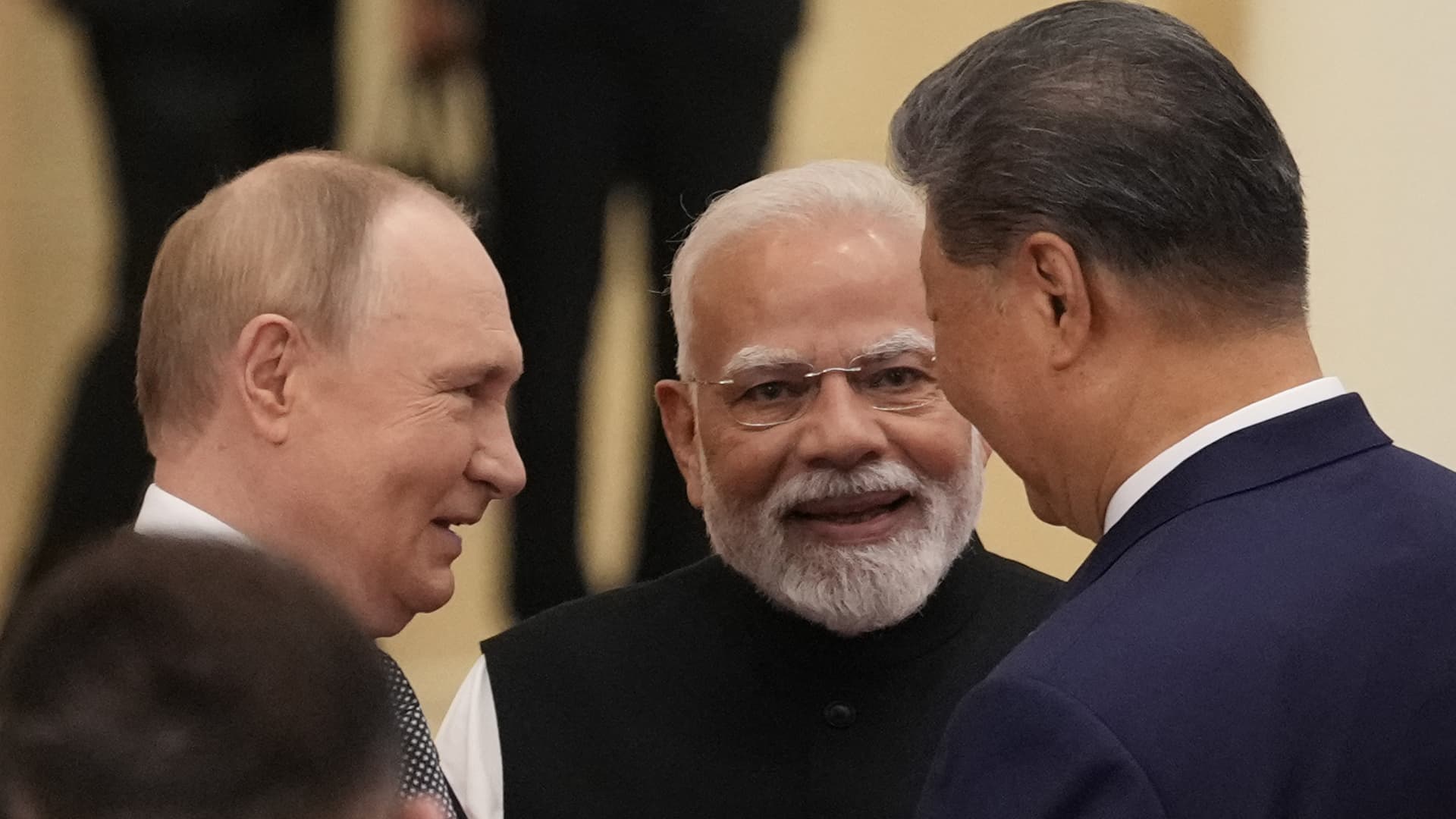
A single photograph sometimes encapsulates stories better than official statements or announcements. The recent viral image capturing an exchange of laughter between Chinese President Xi Jinping, Indian Prime Minister Narendra Modi, and Russian President Vladimir Putin in Tianjin tells such a tale.
At first glance, their interaction might appear cordial; however, experts suggest it reveals underlying rivalries and evolving geopolitical power plays. According to Gautam Bambawale, a former Indian ambassador to China, the metaphorical dance between China and India remains tentative, with both nations cautiously assessing their bilateral implications. The path to rebuilding their relationship is expected to be gradual.
The stumbling blocks are apparent; the unresolved border disputes dating back to clashes in 2020 and Beijing's deepening ties with Pakistan exacerbate the complexities of Sino-Indian relations. Beyond economic collaborations, China and Pakistan's partnership extends into defense and intelligence sectors, thereby limiting the potential progression of India-China relations.
The photograph's context is amplified by the Shanghai Cooperation Organization (SCO) summit, which is expanding its reach but questionable in relevance, as noted by Jeremy Chan from the Eurasia Group. Although broadly dubbed as a security coalition, the SCO largely avoids military affairs and has taken a backseat in significant global conflicts such as those in Ukraine and Gaza.
Held during a time when then-U.S. President Donald Trump was disrupting global markets with tariffs, the summit underscores Beijing's focus on fostering ties with the Global South. Chan suggests that Trump's actions inadvertently rejuvenated the summit, allowing China to position its diplomatic efforts as more stable compared to U.S. unpredictability.
In light of these developments, the U.S.-India trade tensions surfaced with Trump's comments on India's high tariffs and one-sided trade relationships, highlighting India's significant imports from Russia compared to the U.S. Despite India's offer to reduce tariffs, the rift remains politically charged.
In the U.S., media coverage of the summit's photograph emphasized its symbolism, pointing out Moscow's objective of revitalizing ties with India and China. The image of camaraderie between Modi and Putin, exemplified by their joint arrival at a meeting, contrasts with India's traditionally cautious diplomatic stance, which has been challenged by Trump's tariff policies.
Interpreting Multipolarity in Modern Geopolitics
From an economic standpoint, the SCO's relevance is profound, gathering economies representing a significant portion of the world's population—central to trade and energy pathways. As trade tensions threaten supply chain integrity, political summits such as these provide insights into evolving alliances, even with limited tangible results.
For India, the interactions at the summit served as a signal to the U.S., demonstrating India's willingness to engage with Beijing and Moscow while continuing relations with Western allies. However, India's choice to skip the SCO military parade signaled the constraints of improving relations.
Chan points out how India navigates this geopolitical landscape by signaling indirectly to Washington of its strategic alternatives through its engagements in both Beijing and Moscow. Modi's swift departure, following engagements in Tokyo, underscores India's enduring commitment to its Asian alliances linked to the U.S.
The core of the summit's dialogues was centered on "multipolarity," a concept differently construed by India and China. Beijing perceives it as a shift reducing U.S. influence, allowing China to assert more regional dominance. However, India envisions multipolarity as a balanced distribution of power, with no single nation holding sway, as explained by Chan.
Meanwhile, for Putin and Russia, the SCO provides a rare platform free from Western condemnation, highlighting Russia's lasting connections with pivotal Asian counterparts despite sanctions from the West.
Ultimately, the photograph conveys much more than it visually represents. While the smiles suggest unity, they veil the complex realities and nuanced tensions underlying these diplomatic interactions.
Leave a Reply