


Reimagining Gaza: U.S. Plans for Post-War Transformation
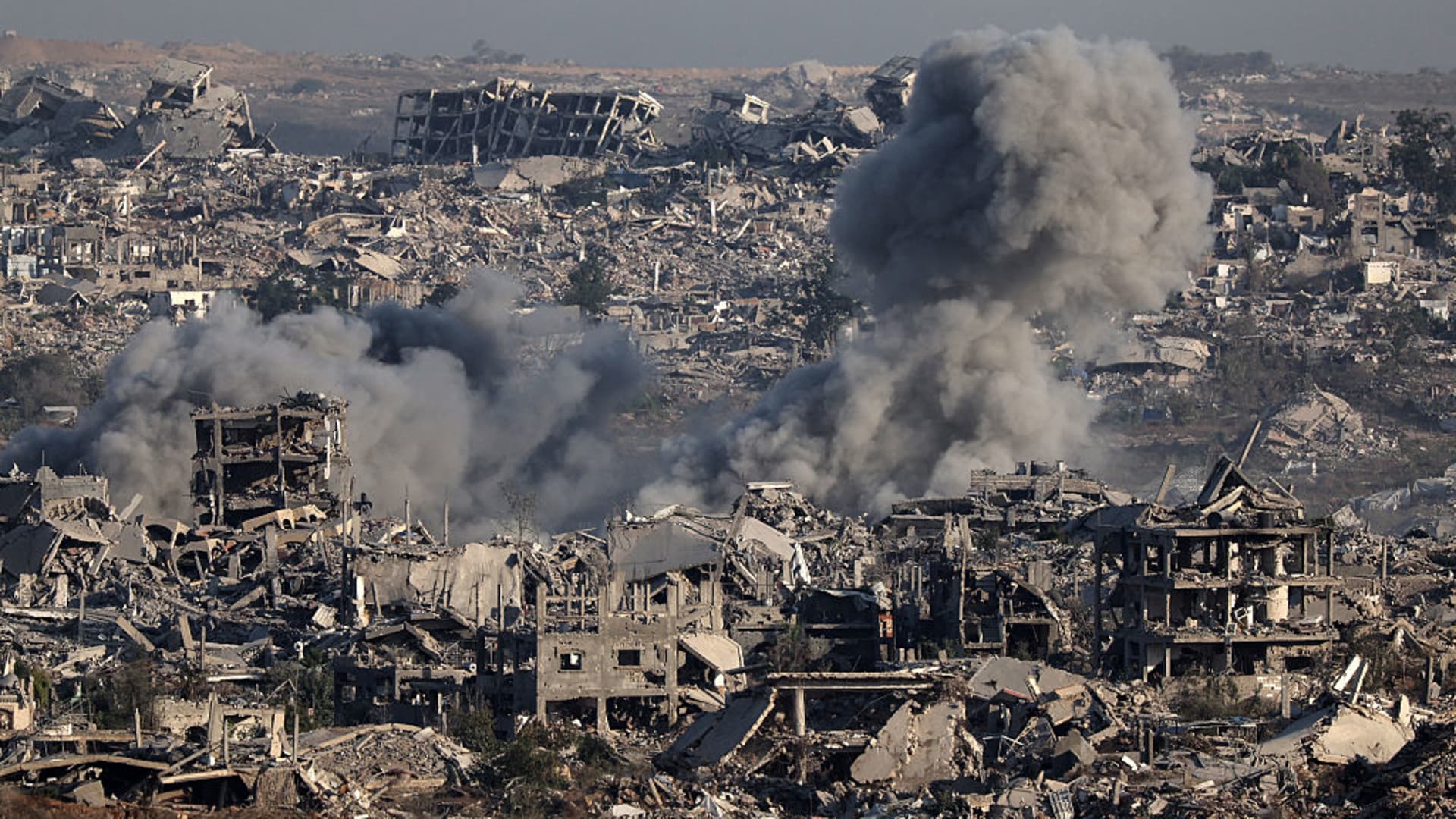
A proposal has been put forth to reforge Gaza in the aftermath of war, transforming it in line with former President Donald Trump's vision for a 'Gaza Riviera.' This ambitious plan involves significant resettlement, integration of advanced technology, and a projected decade-long U.S. administration over the besieged region.
Reportedly considered by Trump's team, as per The Washington Post, the blueprint suggests 'voluntarily' resettling Gaza's populace in return for digital currency, and creating six to eight technologically advanced urban centers, along with a production facility named after the entrepreneur Elon Musk.
Mass Relocation and Temporary Accommodation
The proposal necessitates moving Gaza's entire two million residents, either to another nation on a temporary basis or relocating them to provisional settlements within the territory during its rebuilding phase.
This plan is attributed to a faction of Israelis linked with the contentious U.S.-Israeli-endorsed Gaza Humanitarian Foundation, critiqued by U.N. officials for its alleged use as a front for covert operations contravening international protocol.
Inquiries to the State Department and White House from CNBC yielded no responses at the time of reporting.
GREAT Trust: A Vision for Economic Revival
Under the proposed Gaza Reconstitution, Economic Acceleration and Transformation Trust (GREAT Trust), U.S. oversight would last approximately ten years, leading to a renewed Palestinian governance. This initiative promises to overhaul the enclave, obliterated by conflict since the onset of the Israel-Hamas battle.
Boasting a prospective $324 billion boost to Gaza's economy, the plan emphasizes an upgraded living standard. An initial U.S.-Israel agreement sets the stage, granting Israel dominance to satisfy its security considerations.
Responses to commentary requests from relevant U.S. agencies remain pending, according to CNBC.
Financing Ambitious Initiatives
The crafters of this strategy propose funding through private sector engagement and public investments, targeting impressive projects such as tech hubs, luxury housing, and coastal resorts, eschewing reliance on federal budgets.
Intending to utilize approximately 30% of Gaza's publicly-leased land for nearly a century, the plan marks that territory and incoming contributions as an estimated $300 billion foundation with self-sustaining revenue prospects.
Incentives and Controversy
Gazan citizens opting to settle abroad would receive a $5,000 resettlement deal, along with help on rent and food for a limited duration. Predictably, 25% would seek departure, with three-fourths deciding not to return.
The outlined method asserts savings per resettled Palestinian against expenditures incurred for those remaining. It remains silent on global statutes, Palestinian disapproval, or Arab world dissent, which insists on sovereignty and self-governance for Palestinians.
Ultimately, the goal is a self-managing Gaza within the Abraham Accords framework, fostering Israel ties, yet it excludes formal Palestinian statehood acknowledgment.
Property owners vacating their holdings would garner a digital asset via the GREAT Trust, convertible into ownership upon the completion of renewed buildings.
International Reactions and Criticisms
February saw Trump reveal his 'Gaza Riviera' idea, sparking swift global outcry from leaders, including key Middle Eastern nations, who together denounce the vision. Human rights advocates charge Israel with ethnic purging and systematic violence, accusations it firmly refutes. Meanwhile, Israel's Prime Minister Netanyahu has welcomed Trump's proposal.
The U.N.'s April figures reported a significant rise in casualties since the conflict initiated by Hamas's attack, triggering a strenuous response from Israel. In contrast, Hamas rejectingly criticized the plan, emphasizing Gaza's irreplaceable role within the Palestinian domain.
Leave a Reply