


Novo Nordisk Uplifted by Wegovy Trial Outcomes Amid U.S. Challenges
Recent trial findings show that Novo Nordisk's weight loss medication, Wegovy, surpasses competing treatments in reducing heart-related risks, presenting a positive development for the Danish pharmaceutical leader as it navigates obstacles in the crucial U.S. marketplace.
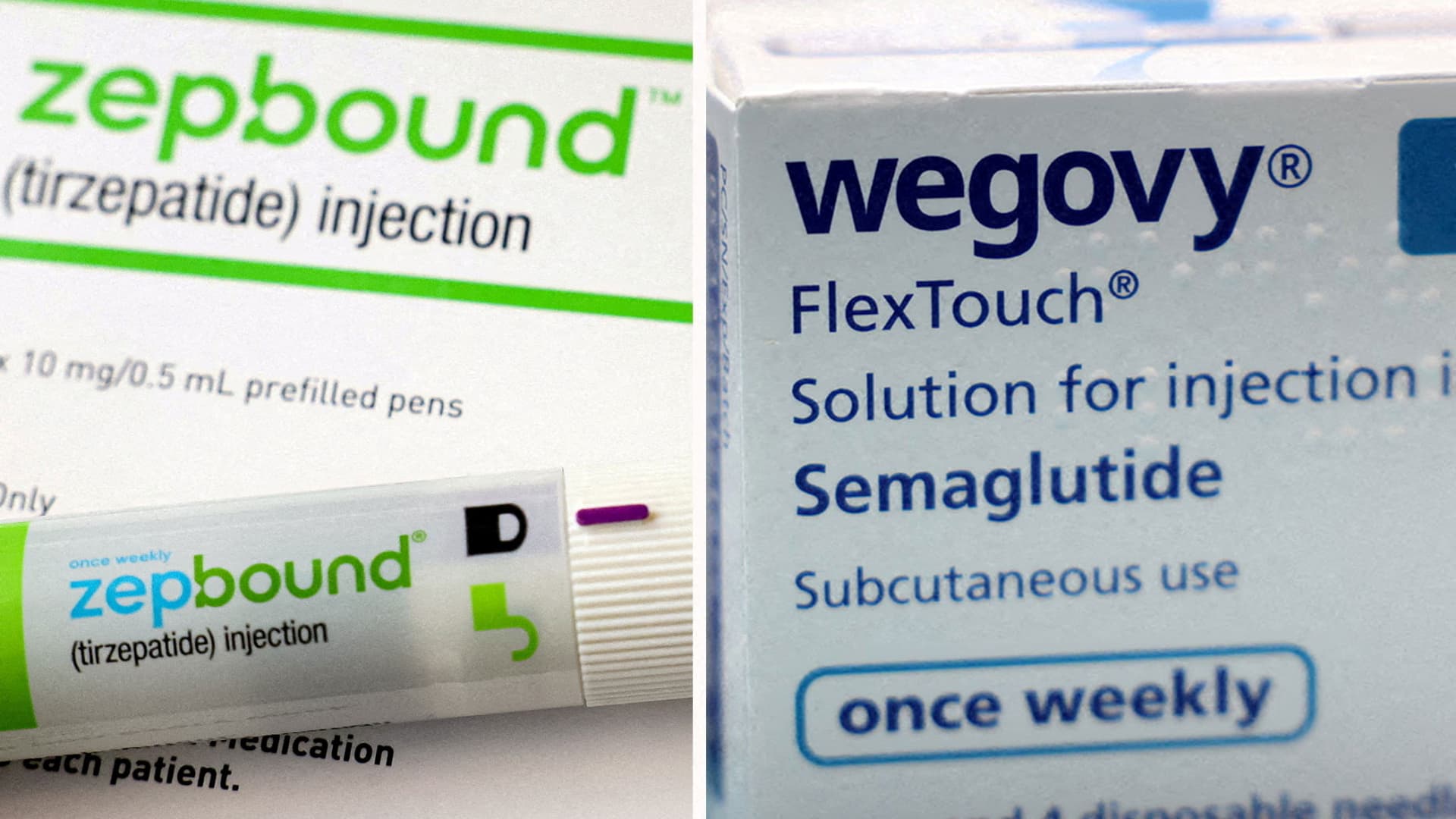
The company declared on Sunday that prolonged use of its weight management drug semaglutide, marketed as Wegovy, led to a significantly higher reduction of 57% in the risk of heart attack, stroke, or death in individuals with obesity and cardiovascular conditions or those who are overweight, compared to users of tirzepatide.
Comparison with Competitors
Tirzepatide forms the active component in Zepbound and Mounjaro, the products manufactured by American corporation Eli Lilly, one of Novo Nordisk's primary competitors in dominating the weight management drug market.
Novo Nordisk pointed out that these results emerged from a real-world study rather than a randomized control trial, which is considered the benchmark for assessing treatment effectiveness. The incidence of such events was quite low, registering 0.1% among Wegovy users and 0.4% among those on tirzepatide.
Nevertheless, the company highlighted that the study contributed to a growing body of evidence that the heart-protective benefits associated with Wegovy are unique to the semaglutide molecule and cannot be assumed to apply to other GLP-1 or GIP/GLP-1-based medications.
Overview of GLP-1 Medications
GLP-1 receptor agonists, known as glucagon-like peptide-1 agonists, encompass a class of drugs used in the treatment of type 2 diabetes and obesity by replicating hormones found in the gut to diminish appetite and regulate blood glucose levels. This includes Novo Nordisk's renowned semaglutide-based drug, Ozempic, initially developed for type 2 diabetes management.
The rapid expansion in the use of weight loss medications has captured investor attention in the continuous quest for leading treatment options and innovations.
Stock Market Reactions
The observation of trial data regarding various medications' influence on weight reduction and other health issues has often triggered shifts in stock prices. Investors have been examining the measures taken by Eli Lilly and Novo Nordisk to explore alternatives to injectables.
Novo Nordisk's shares advanced by approximately 3% on Monday.
Michael Field, the chief equity strategist at Morningstar, regarded Wegovy's substantial lowering of heart attack risk as a potential "game-changer" for Novo Nordisk, although he noted that Monday's stock market reaction showed the market was "encouraged, but maintaining caution."
Expert Analyses
Field remarked that even though these are preliminary trial results, the healthcare sector, despite being one of Europe's most economical, can surprise with its capacity for innovation, particularly as the interest in traditional pharmaceutical giants wanes. "It's imperative not to underestimate these firms," Field stated, highlighting their innovative potential.
Sheena Berry, a healthcare analyst at Quilter Cheviot, labeled the fresh heart disease data a "positive advancement" for Novo Nordisk but warned against hastily forming conclusions about Wegovy's efficacy relative to tirzepatide in the Novo Nordisk versus Eli Lilly competition.
"Following a challenging phase, it aids Novo Nordisk in marketing efforts. Consequently, stock prices saw an uptick today, and stakeholders will be observing closely to see if these developments spur further improvement," Berry elaborated in her commentary.
Novo Nordisk's U.S. Market Performance
The triumph of Wegovy and Ozempic propelled Novo Nordisk to the pinnacle of Europe's major stock-listed firms by late 2023, largely fueled by its U.S. market expansion.
However, the company lost this status following a decline of 10.6% in share value in 2024, with an additional 40% reduction observed in 2025 so far. Denmark recently revised its annual economic growth predictions, partly due to Novo's decreased U.S. market presence and prospects for reduced pharmaceutical exports.
Novo Nordisk has been embroiled in the industry's tremors related to U.S. trade tariffs and policies pressuring firms to slash drug prices and possibly move their production to the U.S. The global competition over weight loss solutions continues to intensify, compounded by the challenge of generic drug competition.
Last month, Novo Nordisk reported robust yearly sales growth but noted possible downturns in U.S. sales growth forecasts for the latter half, committing to concentrating on direct consumer sales to mitigate competition from imitations.
Denmark also revised its economic forecast last week, reflecting decreased growth predictions for Novo Nordisk. While firms like Novo gained some tariff predictability, unpredictability regarding U.S. administration policies remains a concern, as per the country's economic ministry.
Leave a Reply