


Ukraine's Battle with Electronic Warfare: A Drone Dilemma
The sky over Ukraine is filled with drones, creating a challenging environment where Ukrainian forces, aiming to block Russian drones, inadvertently interfere with their own.
Dimko Zhluktenko, who operates drones for Ukraine's Unmanned Systems Forces, shared with Business Insider that his team recently experienced a case of 'friendly electronic warfare.' This is a frequent issue as both Ukrainian and Russian drones often operate on identical frequencies.
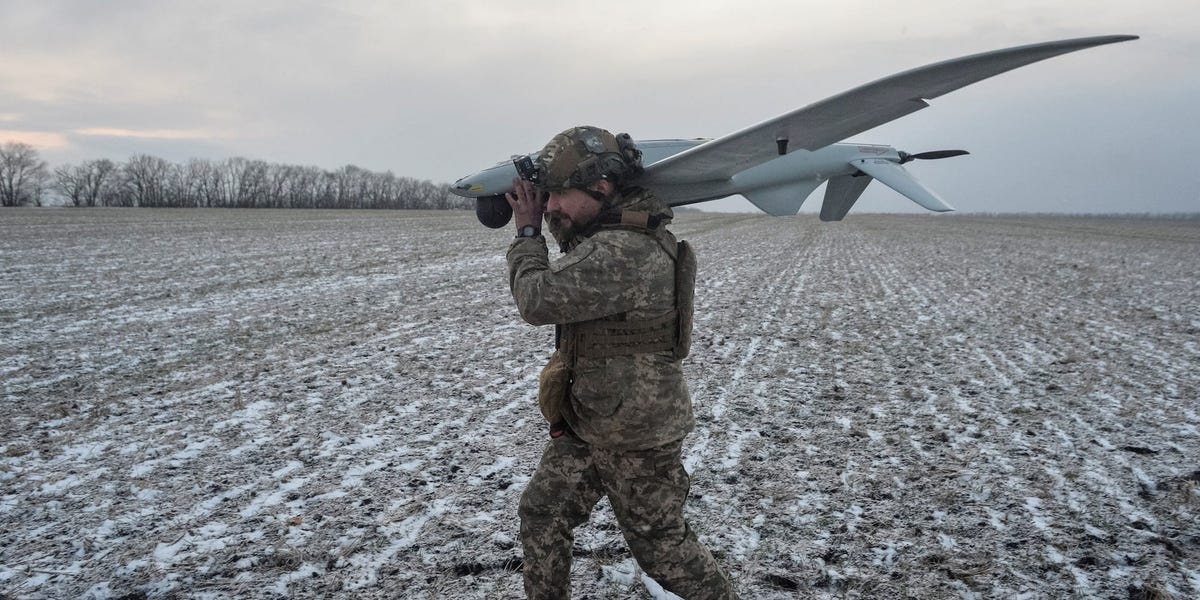
For example, Ukraine’s Shark and Russia’s Zala drones share similar frequencies. Thus, Ukrainian attempts to jam Zala drones often lead to the unintended jamming of their own Sharks.
The Shark drone, crafted by Ukrspecsystems, plays a key role in spotting targets for Ukrainian forces, while Russia’s Zala drones perform similar tasks for its forces.
The sheer abundance of drones in the conflict has precipitated massive electronic disruptions, introducing new layers of complexity by scrambling connections and disorienting operators.
Operational Chaos and Frequency Battles
With an overwhelming number of drones, Ukrainian soldiers must carefully schedule drone flights to minimize self-inflicted electronic interference.
In small front-line areas, there can be dozens of drones overhead, complicating the identification of friend or foe, which sometimes causes soldiers to open fire on all drones indiscriminately.
Zhluktenko recounted that this confusion can lead soldiers, panicked by the confusing airspace, to activate all available frequencies in an attempt to neutralize any threats.
As Western armies integrate smaller drones into their strategies, concerns about these mid-battle identity crises have come to the forefront, as seen in the intense on-ground footage capturing soldiers uncertain if overhead drones pose a threat.
The Drone Arms Race
The current conflict marks the highest level of drone use in warfare's history. These machines vary from large reconnaissance models to compact strike drones equipped with lethal arms designed for both intelligence missions and combat.
This widespread use of drones has ignited a technological race between Russia and Ukraine, as both nations strive to outpace each other with innovations. Support from international allies is driving this evolution alongside home-grown advancements.
Ukraine increasingly depends on producing its own drones to contend against Russia's superior military strength and to alleviate shortfalls in international military aid. These drones span from industrially manufactured units to those built in small workshops.
Last year, Ukraine reportedly manufactured over two million drones, targeting a production goal of four million this year. Meanwhile, Russia is accelerating its drone production efforts to gain an upper hand in its military operations.
The high volume of drones is causing unpredictable scenarios such as inadvertent jamming and the accidental interception of enemy drone feeds, which can unintentionally reveal sensitive information.
These operational challenges compel Ukrainian and Russian forces to rapidly adapt, yielding tactical lessons that could inform the nature of future military engagements.
Leave a Reply