


House Republican Tax Proposal Benefits Affluent Americans: Key Gains and Implications
A significant discrepancy emerges between the financial impacts on higher earners versus low-income families in the newly passed tax bill by House Republicans.
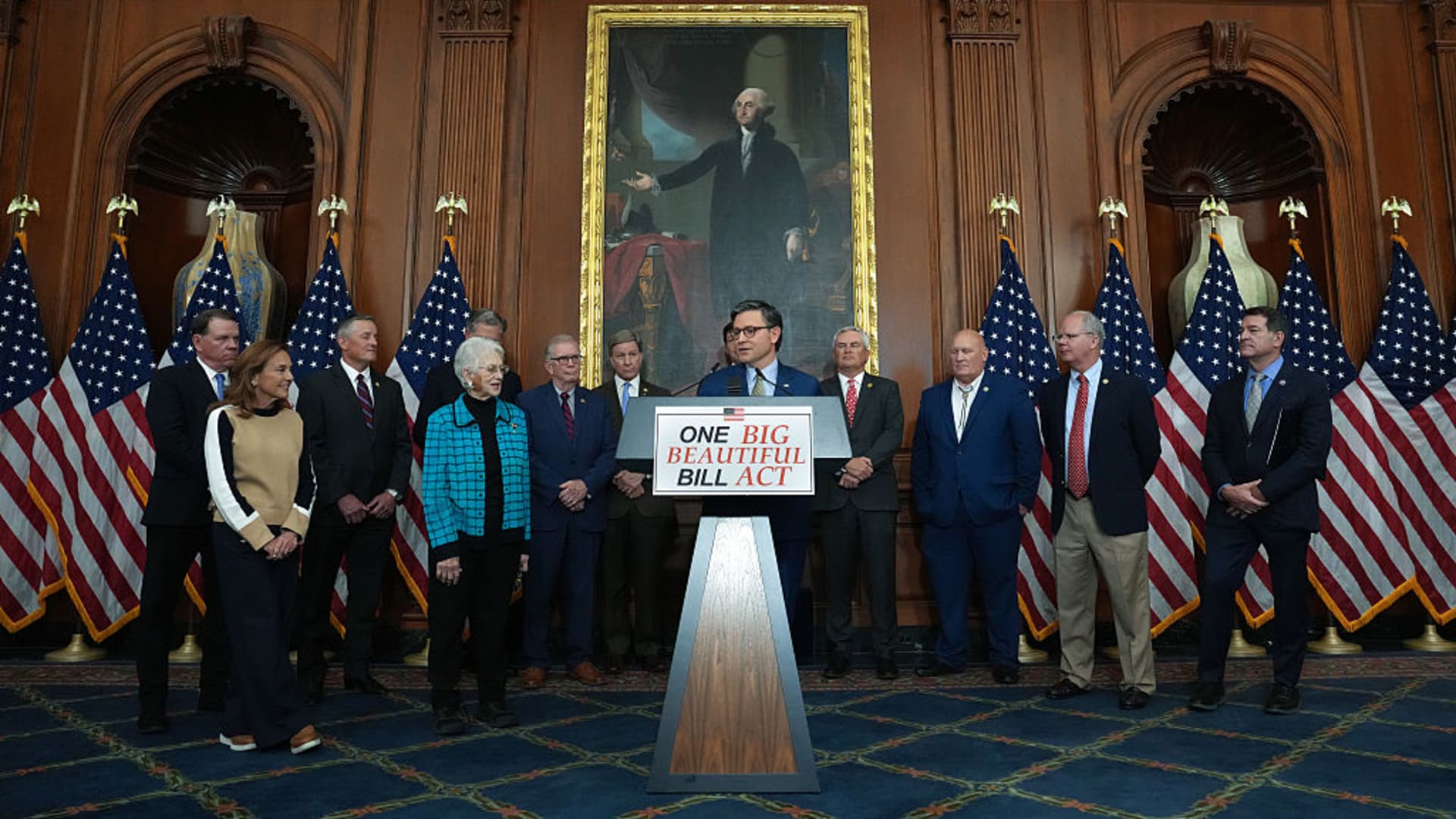
Dubbed the "One Big Beautiful Bill Act," this legislative package largely benefits America's wealthiest, featuring tax reductions aimed primarily at business owners and investors, according to expert evaluations.
Conversely, many individuals in lower income brackets may find themselves disadvantaged, largely because the Republicans plan to counterbalance these tax reductions—projected to cost upwards of $4 trillion—by implementing cuts to crucial social safety net programs, including Medicaid and SNAP (Supplemental Nutrition Assistance Program).
Significant Wealth Bias Within the Legislation
The nonpartisan Congressional Budget Office projects that, under this bill, the lower ten percent of households will see a decline in income by 2% in 2027, increasing to 4% by 2033.
In stark contrast, the top ten percent of earners are projected to enjoy income increases of 4% in 2027 and 2% in 2033, as identified by the CBO.
Research from the Yale Budget Lab mirrors this disparity.
For instance, households in the lowest fifth percentile, earning under $14,000 annually, could see a $800 reduction in their yearly income by 2027, based on Yale's findings.
In contrast, those in the top 20% income bracket, earning over $128,000, might experience an average increase of $9,700. Those within the top 1% could gain around $63,000.
These analyses do not factor in recent amendments to the House legislation, which include tougher work prerequisites for Medicaid.
"The bill significantly favors the wealthy," remarked Ernie Tedeschi, director of economics at the Yale Budget Lab and a former key economist at the White House Council of Economic Advisers.
Analysts argue that the bill exacerbates the economic disparity established by the previous administration's trade tariffs.
Tedeschi noted, "If you factor in the Trump administration's tariff increases, the imbalance against lower-income families becomes even more pronounced."
Predominantly, Tax Reductions Favor the Wealthy
Multiple factors contribute to the bill's wealth-favored tilt, experts suggest.
These include expanded tax exemptions linked to business revenues, deductions for state and local taxes, and leniencies in estate taxation.
These tax perks tend to disproportionately benefit the affluent. For example, a proposed increase in the SALT deduction cap from $10,000 to $40,000 largely aids the wealthier segments, according to the Tax Foundation.
The bill maintains a lower highest income tax rate, sustained at 37%, originally set by the 2017 Tax Cuts and Jobs Act, which was set to sunset.
Additionally, investors can continue avoiding taxes on capital gains by allocating funds into "opportunity zones."
Introduced under Trump’s 2017 tax reforms, this allowance aims to draw investments into underprivileged areas deemed needy by state governors.
The Tax Policy Center estimates that 60% of the bill’s tax savings would go to the top 20% of households, with over one-third benefiting those making $460,000 or more annually.
Impacts on Lower-Income Families
Nevertheless, a majority—more than 80%—of households would see a tax reduction by 2026, states the Tax Policy Center.
Lower-income citizens gain through a raised standard deduction and temporary tax breaks related to education expenses and car loan interest, for instance.
Yet, several of these benefits might appear less substantial upon closer inspection. For instance, about a third of tipped employees do not owe federal income taxes, meaning they miss out on proposed tax deductions applicable to tips.
Furthermore, reduced funding in Medicaid, SNAP, student loans, and ACA premium support would disproportionately affect low-income individuals, as noted by Kent Smetters, an economist at Penn Wharton Budget Model.
Provisions such as mandatory work conditions for Medicaid and SNAP beneficiaries would decrease federal expenditures on these programs by approximately $700 billion and $267 billion, respectively, through 2034 as per the CBO.
Notably, "if you're low-income but do not receive Medicaid, SNAP, or ACA support, you might see marginal benefits," Smetters acknowledged.
A Complex Picture for Some High Earners
While it's expected that the wealthiest benefit the most from the bill, there are complexities.
The U.S. stands as one of the most progressive taxation landscapes globally, according to Smetters.
Currently, the top 10% of earners contribute around 70% of all federal tax revenues, and this cohort would receive roughly 65% of the bill’s overall monetary advantages, Penn Wharton forecasts.
Curiously, 17% of the top 1%, who earn at least $1.1 million annually, might face increased taxes. This arises from limitations in fully deducting state and local taxes coupled with restrictions on top-bracket deductions.
Leave a Reply