


Combat Sports' Role in Expanding White Nationalist Groups
According to a study by the Southern Poverty Law Center (SPLC), certain combat sports clubs have facilitated the recruitment for a white nationalist hate group.
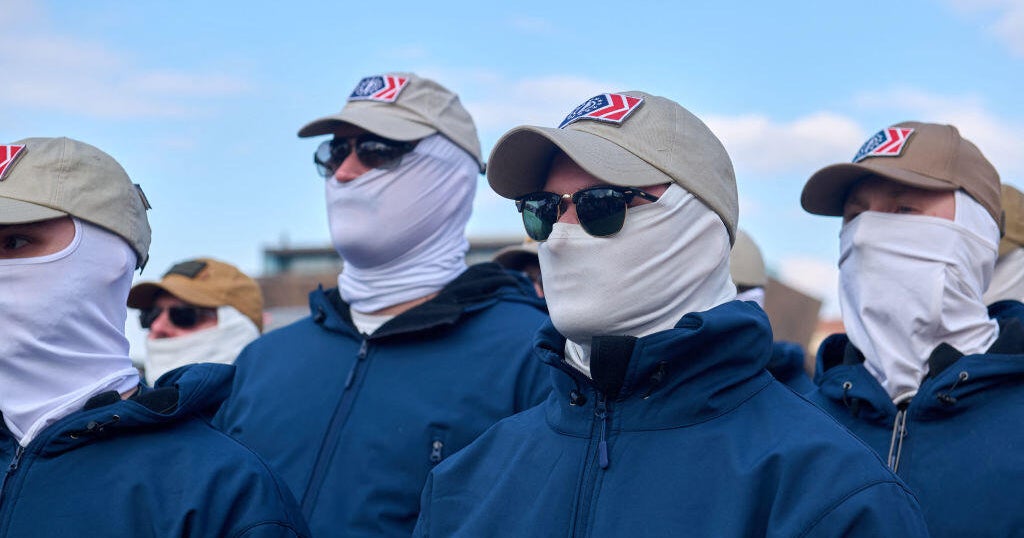
The study focuses on activities of the Patriot Front, a prominent player in the white nationalist scene, founded soon after the violent Charlottesville rally in 2017. They have notably capitalized on Active Clubs to attract new adherents.
These Active Clubs consist of smaller, informal coalitions of white supremacists engaging in mixed martial arts, using these settings as breeding grounds for their ideological beliefs. The SPLC highlights that these clubs enhance recruitment through their substantial online visibility, which works to radicalize young men. Patriot Front is leveraging these networks to widen their influence while keeping a low profile to avoid attention from investigators and law enforcement.
Jeff Tischauser, the SPLC report's author, explains these groups act as a clandestine arm for the Patriot Front's activities.
Influence and Growth of Extremist Groups Nationwide
Patriot Front and similar white nationalist factions are propelling the proliferation of extremist entities in the U.S., with command over numerous clubs countrywide. The SPLC monitors approximately 1,430 hate and anti-government factions, noting a marked increase since 2023.
Active Clubs have taken root across at least 34 states, such as Arizona and California, serving as hubs for recruiting by conducting training events and producing propaganda. Experts state that these groups emphasize male dominance ideology, engage in fitness oriented activities, and ready themselves for demonstrations and confrontations.
Robert Rundo, based in Southern California, is attributed with the Active Clubs concept. His
In 2021, Rundo commenced an 'Active Club Podcast,' promoting the creation of similar clubs. Coupled with his notion of 'white nationalism 3.0,' this approach signifies a more dispersed and localized recruitment strategy.
This approach, akin to leaderless resistance tactics, gives these factions the guise of brands, notes Jon Lewis, from George Washington University’s Program on Extremism.
Federal law enforcement pursued Rundo, leading to his 2023 arrest in Romania, where he faced extradition to the U.S. on riot charges. He received a reduced sentence and was released in late 2024.
Reactions and Controversial Perceptions
Within the right-wing sphere, Patriot Front encounters skepticism, with accusations of being federal operatives. Tischauser clarifies they employ Active Clubs to foster new recruits into deeper involvement without attracting attention.
This narrative reached Elon Musk, who expressed his doubt on social media by questioning the authenticity of the group's arrests, fueling conspiracy theories about undercover operations by FBI agents as right-wing activists. A survey by The Washington Post and the University of Maryland reflects that many Americans harbor suspicions regarding FBI's involvement in politically charged events.
CBS News sought comments from the FBI and Patriot Front’s leader, Thomas Rosseau, via email.
Lewis highlights the normalization of conspiratorial and hateful rhetoric, pivoting from fringe areas to mainstream, exacerbated by influential figures mentioning them publicly.
Challenges in Maintaining Recruitment
The decentralized nature of these clubs poses hurdles for Patriot Front in maintaining strong recruitment pipelines.
Lewis adds that these factions strive to present an image far exceeding their actual capacity to garner attention and credibility within the far-right milieu.
Leave a Reply