


Unusual Evidence Suggests Barefoot Killer in Minneapolis Crime
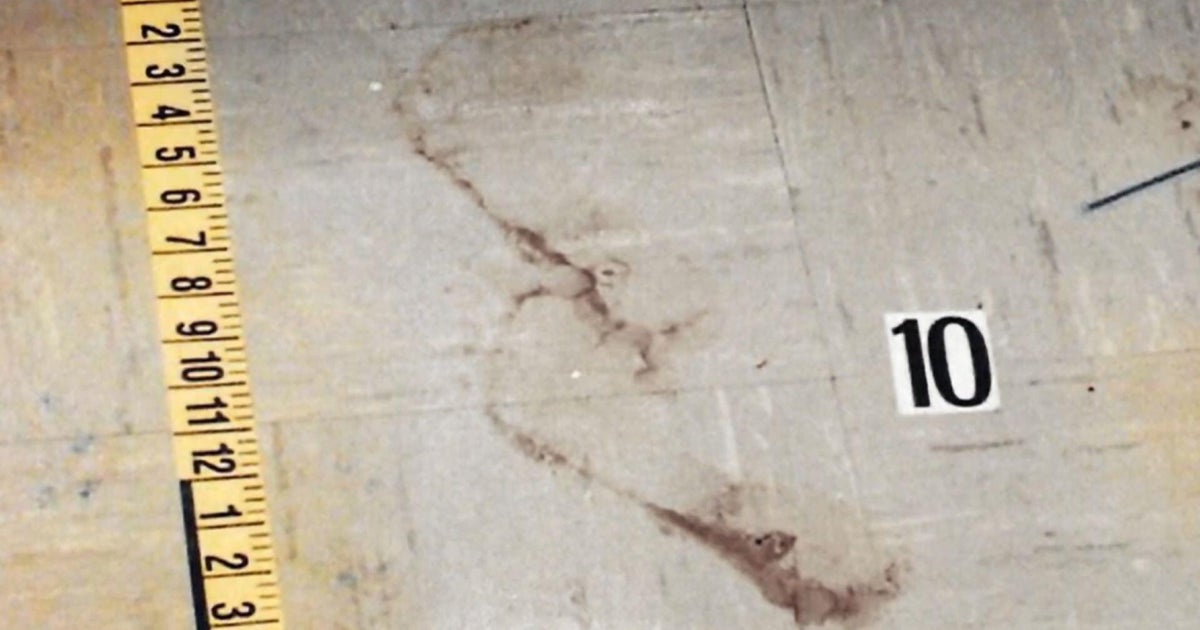
Law enforcement officials arrived at a chaotic scene in a Minneapolis apartment on June 13, 1993. They were investigating the brutal homicide of Jeanie Childs, aged 35. Her lifeless body lay partially under the bed amidst a room that showed signs of struggle, with bloodstains marking both the walls and the floor. She had suffered over 60 stab wounds. In this troubling investigation, a singular and rare piece of evidence was uncovered: bare, bloody footprints leading through the bedroom.
Bart Epstein, now retired from forensic science, was particularly struck by this discovery. Interviewed by Erin Moriarty on “48 Hours” for CBS and Paramount+, Epstein remarked on the rarity of such evidence at crime scenes, especially those featuring footprints left by blood-stained bare feet.
The authorities deduced these prints must be from the murderer since Childs had socks on when she died. Hence, the perpetrator must have trodden through the fresh blood in the immediate aftermath. These indicators were meticulously recorded in photographs by the investigative team.
According to retired FBI agent Chris Boeckers, the footprint evidence was not only crucial in pointing fingers but also in ruling out potential suspects. It served to exonerate those mistakenly under scrutiny.
Police went on to compare the footprints to various individuals linked to the case, including Arthur Gray, Childs’ companion then. Reports mentioned a strand of hair, stuck to Childs’ hand, matching Gray’s DNA.
However, Boeckers noted the case against Gray was weak; he had a strong alibi. Friends verified he was in Milwaukee, engaging in his passion for motorcycles. Furthermore, forensic examinations ruled out his involvement based on the footprint evidence.
As time marched on, hoping for a breakthrough, the case went dormant for years. In 2015, forensic scientist Andrea Feia identified an enigmatic DNA profile tied to several items from the crime scene, such as fabrics and bathroom fixtures.
Turning to modern methods, the investigators used genetic genealogy, leading to potential familial matches. Boeckers mentioned that a forensic genealogist found possible ties to two brothers in Minnesota. Among these was Jerry Westrom, a businessman and devoted hockey dad.
In January 2019, officials diligently trailed Westrom to a hockey game to collect items he had used, such as a napkin and a food tray, seeking DNA comparison. The analysis was affirmative, connecting Westrom’s DNA to the crime scene.
Subsequently, in February 2019, Johnny Westrom was apprehended and charged with Childs’ murder. During proceedings, he rebuffed any connection to the crime, denying ever visiting the apartment or knowing Childs. Following the arrest, authorities acquired his footprints for further comparison.
Although Westrom’s DNA was identified at the scene, establishing a match to the bare footprints was critical, given other male DNA also surfaced at the crime location.
Mark Ulrick, an expert in the Minneapolis Police Forensic Division, emphasized the significance of the footprint evidence. He explained the uniqueness of friction ridge skin on feet, akin to fingerprints, which were thoroughly compared against Westrom’s and others'.
To ensure accuracy in the findings, Westrom’s defense retained Alicia McCarthy, another forensic analyst. This development promised further revelations on the mysterious footprints, as detailed in the segment “The Footprint,” scheduled for May 17 on CBS and Paramount+.
Leave a Reply