


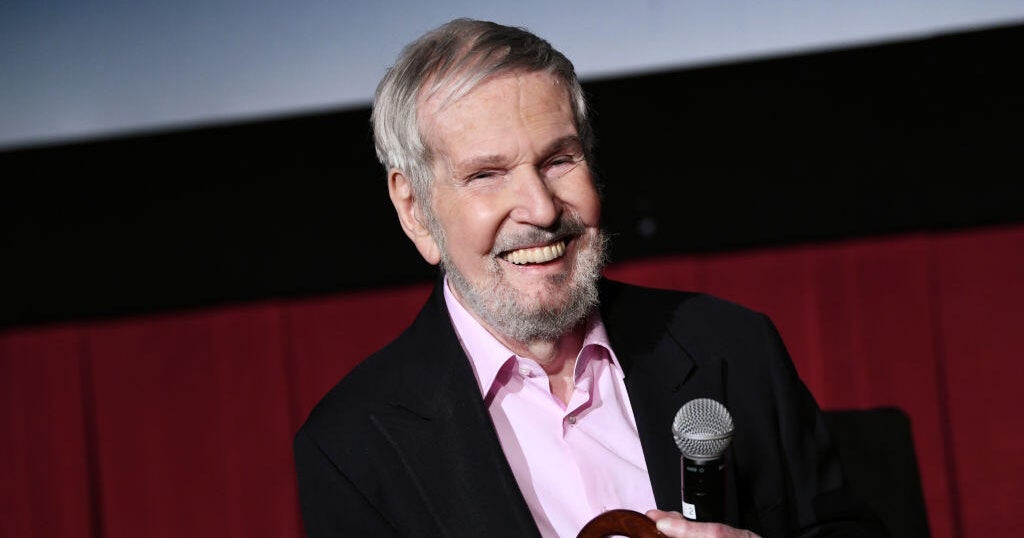
Renowned Filmmaker Robert Benton, Famous for 'Bonnie and Clyde,' Passes Away at 92
Robert Benton, an acclaimed filmmaker who left a significant mark on Hollywood cinema with his role in creating 'Bonnie and Clyde,' has died at 92. Benton, also known for writing and directing 'Kramer vs. Kramer' and 'Places in the Heart,' passed away from natural causes at his Manhattan residence, according to his son John.
A Storied Career with Oscar Recognition
During his career that spanned four decades, Benton, originally from Texas, earned six Oscar nods, securing three wins. His talents shone in both writing and directing 'Kramer vs. Kramer,' as well as writing 'Places in the Heart.' He had a reputation among actors for his supportive and insightful directing style, guiding performances that won Oscars for Dustin Hoffman, Meryl Streep, and Sally Field.
Despite a childhood hindered by dyslexia, Benton excelled in creating adaptations of works by notable authors such as Philip Roth and E.L. Doctorow.
From Magazine Art Director to Cinematic Innovator
Benton began his creative journey as an art director at Esquire magazine during the 1960s. Fueled by a passion for French New Wave cinema and crime narratives, he partnered with Esquire editor David Newman to craft a film treatment about Depression-era criminals Bonnie Parker and Clyde Barrow, envisioning them as precursors to 1960s counterculture.
Although the project endured several rejections from directors like Francois Truffaut and Jean-Luc Godard, it finally reached fruition when Warren Beatty took on the dual role of producer and star. 'Bonnie and Clyde,' directed by Arthur Penn and featuring Beatty and Faye Dunaway, overcame early criticism for its graphic violence to become a symbol of 1960s cultural shifts and sparked a new wave of creativity in Hollywood.
Cinematic Impressions and Beyond
The original draft by Benton and Newman was groundbreaking, with Clyde depicted as bisexual and involved in a complex relationship. However, Beatty and Penn opposed this narrative, resulting in a reworked version of Clyde as impotent, further refined by writer Robert Towne's uncredited adjustments.
Benton continued to find success, though not at the same level as 'Bonnie and Clyde.' His writing portfolio featured hits like 'Superman' and 'What's Up, Doc?' He also directed 'Bad Company' and 'The Late Show,' the latter earning him an Oscar nomination for screenplay.
Benton's career reached new heights with 'Kramer vs. Kramer,' an adaptation of Avery Corman's novel. The film depicted a father's transformation into a devoted parent and earned critical praise and five Academy Awards, which reignited Hoffman's passion for acting.
Personal Reflections and Legacy
'Places in the Heart' marked another Oscar endeavor for Benton, inspired by personal nostalgia and family anecdotes. Set in 1930s Texas, the film follows a determined widow struggling to keep her family together.
Born in Waxahachie, Texas, Benton inherited a love for cinema from his father, Ellery Douglass Benton, who preferred films over discussing homework and regaled family with stories about notorious local figures like Bonnie and Clyde.
Life Beyond the Silver Screen
Benton's education spanned the University of Texas and Columbia University, after which he served in the U.S. Army. His early career included launching the Dubious Achievement Award at Esquire and a personal relationship with Gloria Steinem. He wed artist Sallie Rendigs in 1964, and they had a son together.
In later years, Benton faced some setbacks with films like "Billy Bathgate," yet found triumph with the comedic drama 'Nobody's Fool,' featuring Paul Newman in an Oscar-nominated role. Reflecting on the nature of industry recognition, Benton once described the Academy Awards as a gathering of a diverse 'family' spanning both adversaries and allies.
Leave a Reply