


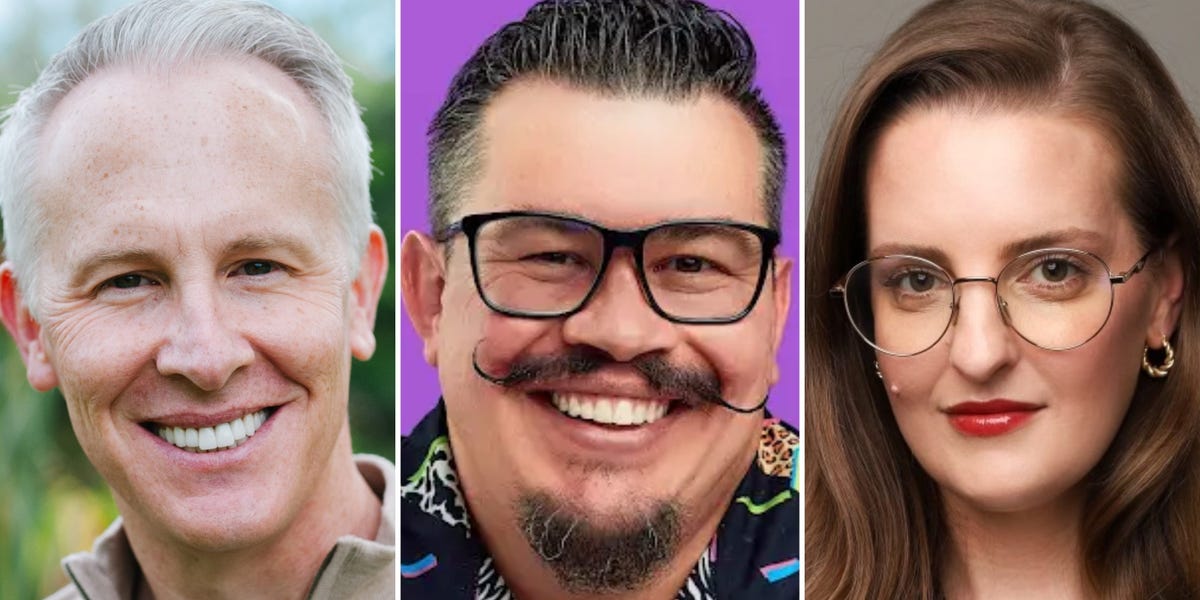
The Key Executives Behind YouTube's Top Creators
While Anthony Padilla and Ian Hecox are the familiar faces of Smosh, a YouTube comedy collective, their team of 64 is actually managed by someone behind the scenes.
In 2023, the duo appointed Alessandra Catanese, who long served as Padilla's manager, to the role of CEO. This adjustment allowed them to concentrate on developing creative content for their channels.
Catanese now oversees both daily operations and the broader business strategy for the company.
"Not every YouTuber requires a CEO, but equally, not all creators have the skills to become one," Catanese discussed with Business Insider.
Smosh’s approach isn't unique, as many creator-led organizations have recently appointed external executives to senior roles. For example, the well-known sports content creator Jesser selected Zach Miller as its inaugural president in 2023. In the following year, Jimmy "MrBeast" Donaldson, who holds the title of YouTube’s most-subscribed creator, chose Jeffrey Housenbold to lead as both CEO and president.
Donaldson represents a wave of young YouTube talents who rose to fame quickly, often without traditional employment or higher education. Bringing in experienced leaders helps creators like him bridge skill gaps and build effective teams to rival the entertainment industry.
Increasingly, top YouTubers are leveraging the expertise of CEOs, presidents, and high-ranking executives from talent management, Hollywood, and startups to make informed business decisions and manage expansive production operations.
Sean Atkins, who took on the role of CEO at Dhar Mann Studios and previously worked with MTV, remarked, "Many creators have scaled their operations to the point where extra management support is indispensable."
Building Competitive Businesses like Hollywood
A new era of YouTube executives is emerging, aiding creators in building teams, exploring mergers and acquisitions, securing investments, and addressing growth challenges.
Last year saw Timothy Salmon promoted to president at CatFace, the company behind Aphmau, a YouTuber with a dedicated audience of over 23.6 million. Joining in 2018, Salmon brought his post-production expertise from TV and film to the table.
He manages a 93-member team out of Austin, easing the creative load on Jessica Bravura, allowing her to focus on writing and planning content. His efforts ensure the team stays aligned with YouTube’s frequently changing algorithms.
"YouTube is a constantly shifting platform," Salmon commented. "Failing to adapt can leave creators struggling to keep up."
Meanwhile, in Los Angeles, Catanese dedicates her time at Smosh to meetings with colleagues and business associates. Her role includes leading hires to transition Smosh’s content to TV and capitalize on YouTube's competitive stance against streaming services. She has also promoted Kiana Parker to Executive Vice President in charge of programming strategies.
Strategic and Operational Oversight
Sean Atkins splits his work between New York and LA, scrutinizing audience engagement through metrics like viewership and click-through rates to refine Dhar Mann's strategic approaches.
"First thing each morning, I assess our statistics," Atkins explained. His role extends to managing hires and initiating new brand movements, including tours and mergers. This February, Atkins' team welcomed a strategy chief to assist in structuring and negotiating potential deals.
Elsewhere, Dude Perfect has recruited Andrew Yaffe, a former NBA executive, as CEO. Yaffe’s skills include building partnerships, talent acquisition, and steering long-term plans.
Housenbold, steering Beast Industries for MrBeast, is engrossed in capital fundraising, likening the company’s future to Disney when enticing potential investors.
Navigating Creator Control and Collaborations
Appointing a CEO or president also necessitates creators to relinquish certain control— a challenging shift for those used to managing everything independently.
"The nature of the content creation industry fosters a do-it-yourself mentality," Catanese noted.
Ultimately, the personal brand of a creator remains vulnerable. According to Salmon, sometimes the creator's intuition contradicts a team’s strategic direction on partnerships or sponsorship presentations.
"Collaboration with content creators can be incredibly engaging and yet also demanding," Salmon said. "These ventures reflect their identities, so it’s natural for them to be selective about brand representation."
Burnout is a looming threat for creator businesses; bringing in CEOs and executives can mitigate this by redistributing the workload.
"I advise creators to construct teams and frameworks that allow scalability without reaching exhaustion," Atkins commented. "Many creators are accustomed to multitasking beyond their limits without taking time off."
Enhancing, Not Altering Established Successes
A crucial aspect of executive roles is maintaining creators’ confidence that successful elements will remain unchanged. In creator-driven ventures, the content's authenticity stems directly from the creator.
Atkins emphasized, "It's vital to remember who laid the foundation. My mission is to develop it further, without altering the essence."
Leave a Reply