


Scientists Leaving the US: Funding Cuts Drive Talent Abroad
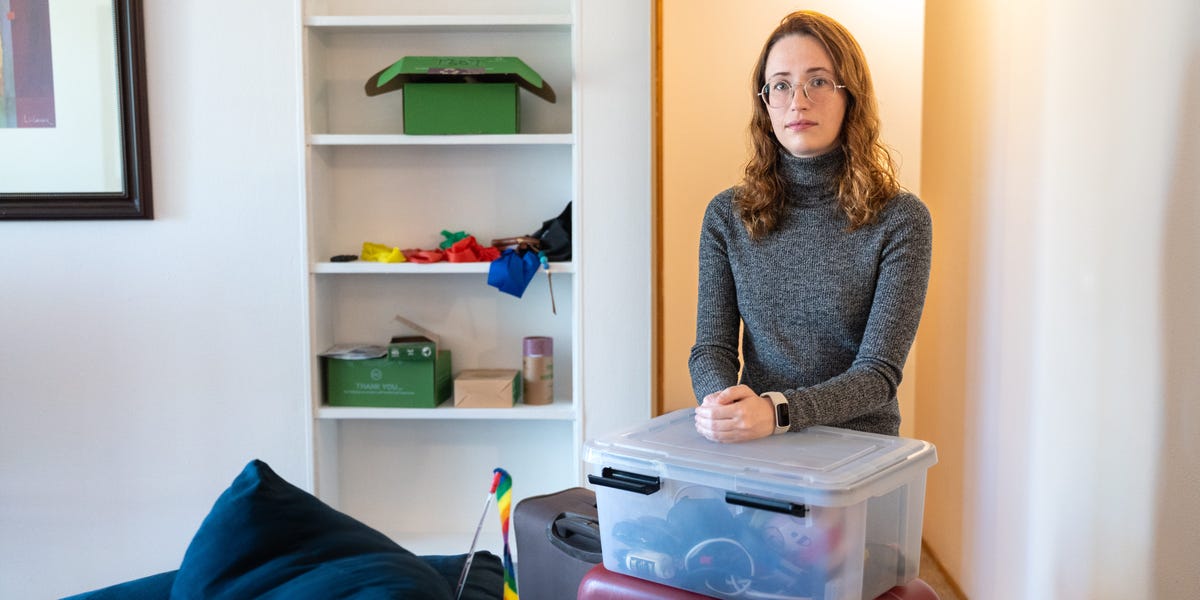
Danielle Beckman crossed over from Brazil to the United States in 2017 to advance her Alzheimer's research. Now, eight years later, she's charting a course away from America.
Reflecting on her aspirations, Beckman shared, "I envisioned settling here permanently, gaining a professorship role, and establishing my laboratory. I hoped to weave my existence here." As her work expands into long-COVID investigations, she laments the lack of recognition from the government, stating that the importance of their research is no longer acknowledged.
Recently, Beckman learned that her substantial five-year research grant from the National Institute of Health, amounting to $2.5 million, will not be renewed. The grant's inclusion of 'COVID' marked it for cancellation following policy changes under President Trump's administration affecting higher education funding.
Confronted with this financial roadblock, Beckman concluded her scientific pursuits couldn't sustain without these funds. Consequently, she accepted a research role in Germany and is also looking at options in France that might offer her the financial support she needs.
Exodus of Scientific Minds
Recent months have seen a significant retraction in university funding by the Trump administration, targeting institutions not aligning with its policies. This action prompts a concern among scientists of an impending 'brain drain,' as alternative nations seize the opportunity to attract American researchers through compelling programs.
Madi Biedermann from the Department of Education expressed a view that researchers might prefer environments free from disruptions like persistent protests or unrest. She claimed that universities upholding academic responsibilities and adhering to federal laws have little trouble securing taxpayer-funded support.
Beckman expressed dismay over the exodus saying, "While my research holds global value, it's unfortunate that it's not valued here in the US." Feeling undervalued since moving from Brazil, she perceives her efforts as no longer necessary to the country.
Considering Overseas Opportunities
Ursula von der Leyen of the European Commission announced a substantial funding package intended to lure scientists globally, emphasizing science as a crucial pillar for the future. Concurrently, during a media briefing, Josie Osborne, health minister of British Columbia, highlighted the potential for healthcare professionals to migrate north amid the unrest in the US.
As conditions remain in turmoil, a researcher from the US stays updated on international job opportunities, contemplating an immediate relocation if the chance arises. Although he has yet to secure a position abroad, he perceives his ability to even consider relocating as a privilege given the significant financial and procedural barriers involved.
Researchers Contesting Funding Reforms
While some researchers opt for overseas opportunities, others pursue legal avenues. For instance, Peter Lurie, whose NIH funding for HIV studies was terminated due to specific language used, articulated that the US faces a risk of falling behind in medical research excellence. He foresees scientists searching internationally for support where they might no longer find it domestically.
Moving Towards Stability Abroad
Alyssa Adams, a researcher for a Japanese lab focused on artificial intelligence, plans her permanent relocation to Japan shortly. Her work environment in Japan hasn't been directly impacted by recent US funding cuts, but their ripple effects can't be ignored, pushing her towards seeking financial assuredness by collaborating with Japanese entities instead.
Adams noted significant interest from US scientists looking towards her lab after funding uncertainties. She described the discomfort of remaining in the US as the environment for scientific pursuits has shifted, making foreign soil more appealing for continuing her work.
Columbia University, faced with these cuts, recently announced layoffs impacting 180 employees whose projects were tied to federal funds. University President Claire Shipman expressed that the decision was not taken lightly, underscoring their dedication to fostering innovation and discovery.
Despite these challenges, Adams mentioned that researchers are persevering, advancing knowledge wherever they feel supported and welcomed—a reality she feels is increasingly rare in the US.
Leave a Reply