


Challenges for Texas Farmers Amid Water Treaty Issues with Mexico
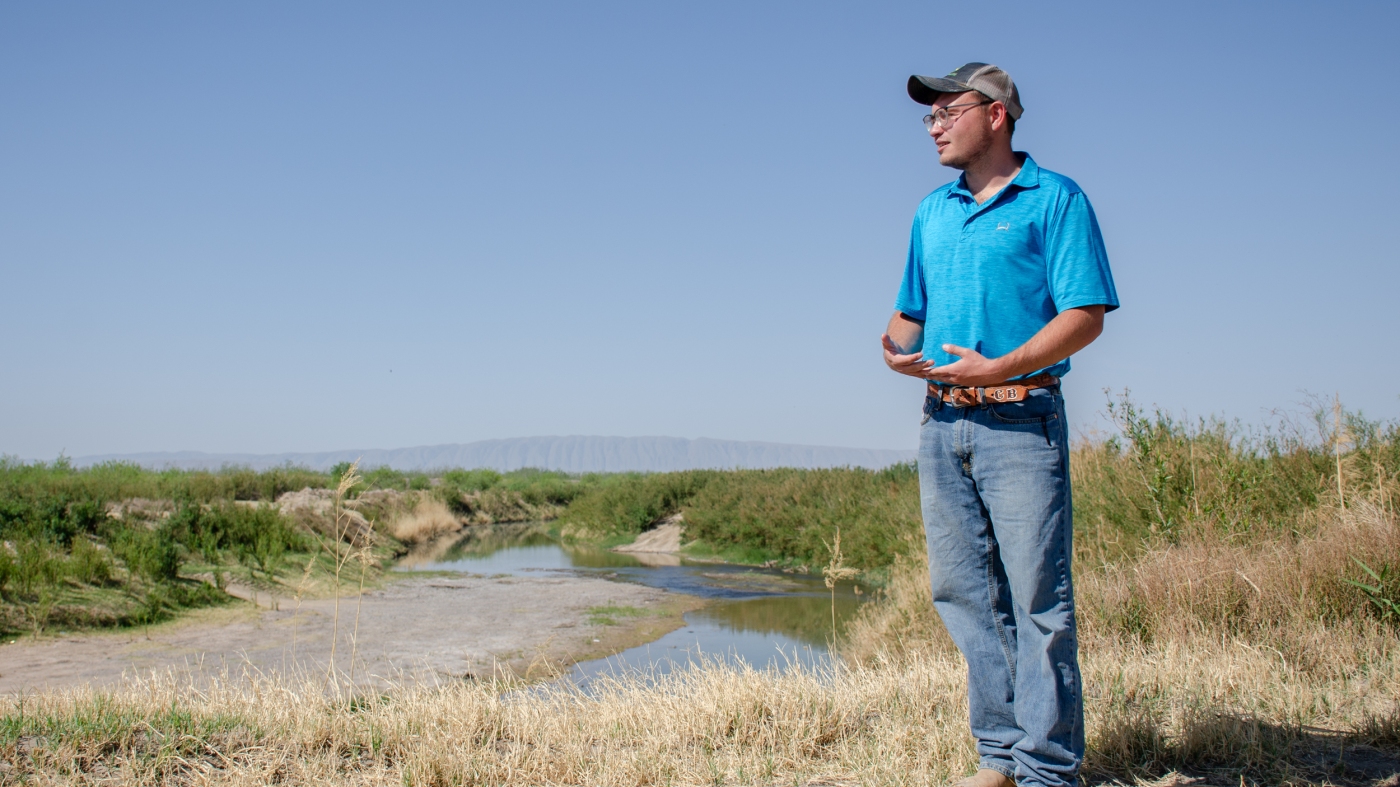
Chris Bell stands beside the Rio Grande in Presidio, a young agricultural enthusiast eager to cultivate alfalfa and turfgrass to rejuvenate an area known for its fertile lands.
In Presidio, Texas, crucial water from Mexico’s Rio Conchos joins the Rio Grande, providing a lifeline to drought-stricken farms along the U.S.-Mexico border.
Referred to as La Junta de los Rios, this area marks the confluence of two rivers vital for irrigating what is known as the oldest continuously farmed land in Texas.
"This land has supported agriculture for centuries, long before biblical times," Bell remarked, reflecting on the valley's longstanding agricultural significance. "Its bounty sustains us."
Drawn by the fertile ground and river access, Bell aspires to revitalize the production of turfgrass and alfalfa in this historically abundant area.
However, Bell faces significant hurdles: the United States and Mexico grapple with a treaty demanding Mexico deliver billions of gallons of water to the U.S. every five years.
"Getting enough water has been a struggle," Bell noted. "We face reduced rainfall and numerous changes impacting availability."
In recent times, Texas farms have suffered financially, losing vast sums due to Mexico's delays in water delivery, exacerbating their difficulties.
Efforts to compel water transfers have included threats of tariffs, yet the situation persists inadequately addressed.
Rosario Sanchez, a senior scientist at Texas A&M University, highlights the need for dependable water resources—a consistency Mexico hasn’t achieved in over a decade. "Unpredictability persists," she confirmed, "owing to sheer scarcity."
"Financial constraints limit solutions," Sanchez noted. "Political pressure cannot conjure water from thin air." She emphasized, "This is a universal issue, impacting everyone, not just one region."
In Presidio, Bell has begun clearing his land, preparing to sow alfalfa and turfgrass, relying on the Rio Grande for irrigation.
With the treaty’s five-year deadline looming, Mexico has increased water transfers, yet doubts remain about meeting the total owed.
Mexican President Claudia Sheinbaum pledged to fulfill the terms, driven not by political coercion but by commitment.
Yet, Valentin Sanchez, a fellow alfalfa grower in Presidio (unrelated to Rosario Sanchez), perceives these efforts as temporary fixes.
"Relief might span a month or two," Valentin expressed in Spanish, predicting another water shortfall thereafter.
Valentin noted the drought's widespread impact on crops statewide, stressing its broader consequences.
Originating in Colorado, a significant portion of the Rio Grande’s flow toward Texas originates from Mexico's Rio Conchos, converging in Presidio.
Valentin might face abandoning farming if conditions stay dire, as fields he’s tended for years languish without water.
"The impact is extensive," Valentin asserted. "It affects more than just the border; it reaches every facet of life here."
Ahead of the October treaty deadline, U.S. and Mexican officials plan to assess water and rainfall conditions, evaluating progress.
Adjacent to Chris Bell's land, a large pump stands ready to draw water from the Rio Grande, integral to his farming operations.
Leave a Reply