


Achieving Fitness at Any Stage of Life: Insights from a Sports Scientist Studying Seniors
An expert focusing on athletes over 50 reveals strategies for staying fit regardless of age.
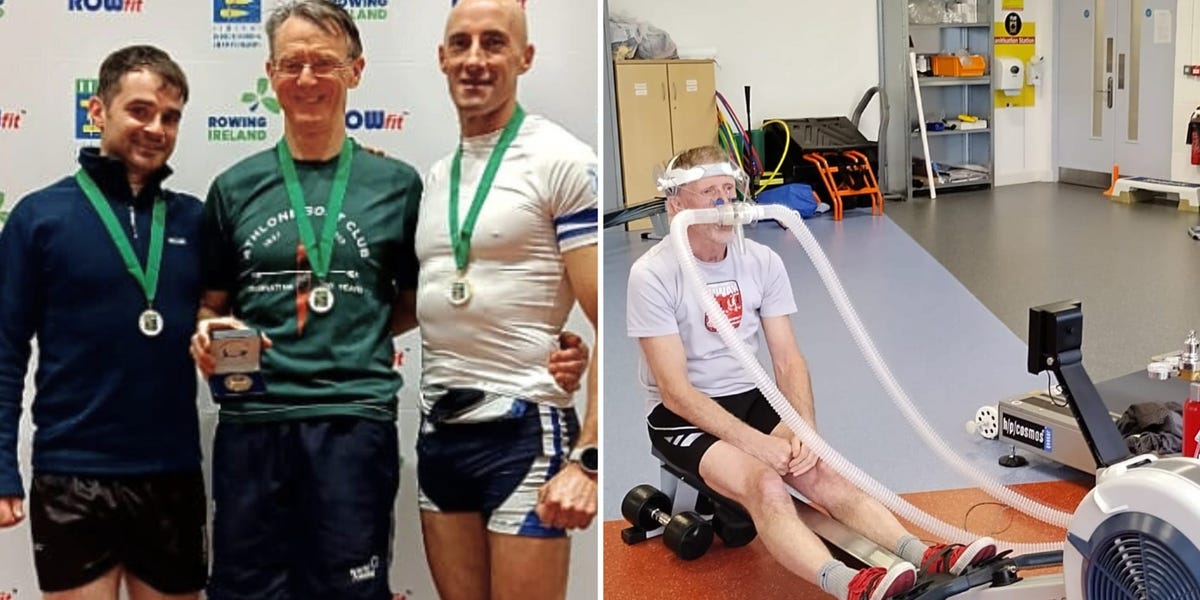
Based at the Technological University of the Shannon in Ireland, lecturer Lorcan Daly explores the impact of aging on the physical performance of senior rowers. His research suggests that age presents no barrier to achieving excellence in rowing, provided there is adequate muscle and endurance development.
For instance, Daly highlights his grandfather, Richard Morgan, who began rowing at 73 and subsequently became a four-time world champion by 92.
“Ideally, one would engage in rowing throughout life with only slight performance dips. Nevertheless, significant improvements are possible even at later stages,” Daly remarked.
Daly emphasizes the encouraging notion that starting to exercise is always timely.
Integrate Both Endurance and Strength Exercises
“Ensuring your workout plan includes both endurance and strength training is crucial,” Daly expressed, noting that this combination forms a comprehensive fitness regimen.
A 2022 study from the National Cancer Institute involving around 100,000 adults aged 66 to 76 revealed that 150 to 300 minutes of weekly aerobic and resistance training significantly reduced mortality risks by 41% compared to inactivity.
Daly advises those who are inactive to alternate activities such as brisk walking with multiple sit-to-stands, gradually advancing to more challenging exercises.
Small Efforts Have Big Payoffs
Incorporating even minimal physical movements into your day can vastly enhance life quality, according to Daly.
“It’s easy to feel inadequate compared to professional athletes, yet any small increase in activity can greatly benefit health,” he stated.
Research in 2023 with over 12,000 participants above 50 demonstrated that just 10 minutes of moderate-to-intense activity daily, like walking or cycling, reduced mortality risks by up to 55%, despite prolonged inactivity.
Make Exercise a Habitual Part of Life
“Claiming there’s no time for exercise is like saying you can’t fit in teeth brushing. Instilling exercise as a habitual practice is crucial,” Daly advised.
He suggests integrating physical activities into daily routines so they require minimal conscious motivation, akin to brushing teeth.
Pilates expert Supatra Tovar recommends anchoring new habits to established ones, like pairing a traditional coffee ritual with a 20-minute exercise session.
Utilizing technology to gamify tasks and offer rewards can also support habit formation.
Add a Social Element to Your Workout
Engaging in physical activities with friends or family not only boosts accountability but also enjoyment, shared a Harvard paleoanthropologist.
While Daly’s studied rowers belong to a club, similar benefits can be attained just by exercising with peers.
Leave a Reply