


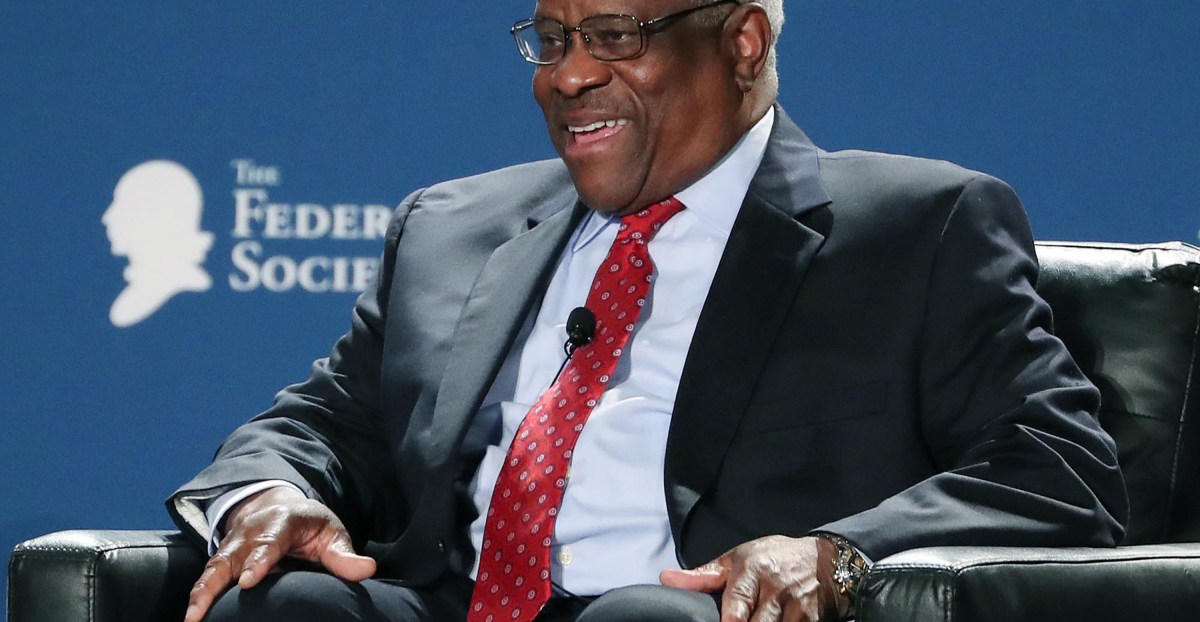
The Federalist Society's Mixed Feelings About Trump
Many experts suggest the Federalist Society was a significant beneficiary of Trump's administration, particularly evident in his judicial appointments.
During his presidency, Trump pledged to appoint judges who align with the Federalist Society, and it resulted in three Supreme Court justices chosen from their ranks.
Meeting Reflections
Despite such influential appointments, attendees at a recent Federalist Society event focused on executive branch discussions exhibited less enthusiasm about the prospect of another Trump term.
While there was limited criticism of Trump's policies, his tariff decisions received notable disapproval from attendees for contributing to what has been described as 'chaos' within his administration.
This disorganized approach is feared to diminish opportunities for reduced regulations, as warned by experts who say past achievements in deregulating policy have been minimal.
Implications and Concerns
These critiques imply a belief that procedural and bureaucratic hurdles will largely withstand any changes Trump attempts to implement.
Speaker discussions conveyed concerns that regulatory changes are intricate and require knowledgeable personnel, who are allegedly being dismissed under the new government's efficiency strategies.
Additionally, there seems to be a desire to curb Trump's authority, with some speakers advocating for a power shift away from the presidency towards the judiciary.
Judicial Supremacy Aspirations
Over the years, the Federalist Society has pushed for judicial supremacy, a trend still evident at the conference under discussion, even when contemplating Trump's controversial tariffs.
A significant focus was on potentially leveraging the tariffs in legal challenges to diminish executive power and enhance judicial influence.
Path Forward
It is evident that while the Federalist Society disapproves of certain Trump policies, they are not yet aligning with resistance movements, though differences in vision are clear.
The Federalist Society's Critique of Government Efficiency
Kristine Simmons, with a Republican Senate background, offered a pointed critique of federal workforce management, arguing the current system impedes efficiency and performance.
Her criticism targeted recent initiatives intended to enhance government efficiency, which she claims have exacerbated issues rather than resolve them.
In particular, the removal of promising new employees and the rescinding of conditional job offers previously incentivized by educational funding were highlighted as problematic.
The notion of transitioning experienced government workers to private sector roles was met with caution, as others suggest it could thwart conservative goals.
Navigating Workforce Changes
Without Congressional collaboration, minor White House reforms risk disappearing after the current presidency. Legislation and regulation changes require extensive groundwork and are open to judicial reviews.
The attainment of substantive policy changes necessitates competent public servants capable of articulating coherent policy justifications, a concern amidst current administrative upheavals.
In seeking to 'drain the swamp' of workers supposedly counter to administration goals, there's a risk of inadvertently hindering policy implementation.
Prospective Gains Amidst Challenges
Despite challenges, the Federalist Society anticipates continued gains from Trump's presidency as they capitalize on judicial appointments.
Closing remarks by Harmeet Dhillon underscored shifts within the Justice Department towards policy goals such as ending affirmative action, reflecting strategic alignment despite broader ambitions for greater influence.
Controversial Tariff Decisions
Trump's trade wars, particularly tariffs, drew criticism for their unpredictability, perceived as a potential leverage to expand judicial power through nondelegation doctrine discussions.
Debates over judicial vs. executive powers continue, fueled by dissatisfaction with Trump's tariff policies, with potential implications for future presidential administrations.
Concluding Observations
The Federalist Society remains a formidable force, pursuing strategies for judiciary empowerment regardless of presidential alignment.
Leave a Reply