


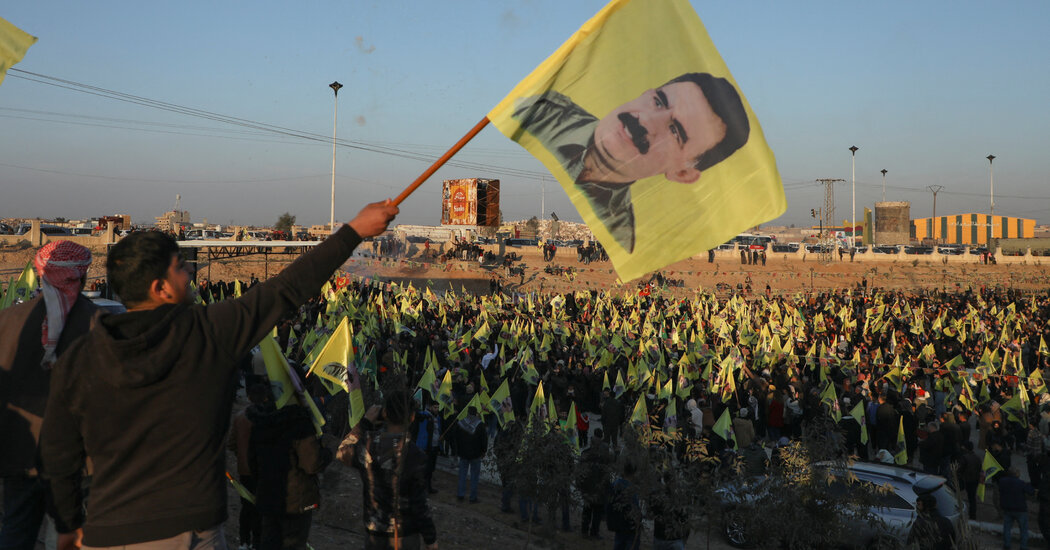
PKK Announces Intent to Cease Hostilities with Turkey
On Monday, the Kurdistan Workers’ Party, or PKK, declared its intention to put an end to its armed insurgency, a move that could impact several countries in the region.
Decades of Conflict
For nearly forty years, the PKK has engaged in a violent struggle against the Turkish government. Now, this organization is opting for a significant shift by ceasing its militant activities, a decision that might significantly influence neighboring nations.
This transformation follows a statement from Abdullah Ocalan, the PKK's leader who is currently imprisoned. Recently, he indicated that the organization's armed efforts no longer served their original objectives.
Origins and Evolution
The PKK initially fought for the establishment of a sovereign state for Turkey’s Kurdish minority. In more recent times, their goals have shifted towards advocating for increased Kurdish rights within Turkey.
The group issued a declaration on Monday, affirming that it has advanced the Kurdish cause to a stage where political solutions are viable, thus achieving its mission in this regard.
A Role for Ocalan and Turkish Parliament
The PKK expressed that Abdullah Ocalan should spearhead the disarmament procedure and encouraged Turkey's Parliament to engage in the process.
A Potential Breakthrough
The announcement could potentially resolve a long-standing security challenge for Turkey and result in a notable political advantage for President Recep Tayyip Erdogan.
Bringing an end to this struggle may also conclude a conflict that has led to over 40,000 deaths.
Regional Implications
The PKK's announcement could significantly affect other Kurdish factions, especially in Syria, and alter the geopolitical landscape beyond Turkish borders.
The Kurdish People
The Kurdish population, numbering around 40 million, is spread across Turkey, Syria, Iran, and Iraq. Although assurances were made for their own nation post-World War I, these promises have yet to be realized, leading to multiple uprisings.
Kurds have consistently faced governmental repression of their language and cultural expressions in most regions where they reside.
Effects on PKK Strongholds
Currently, the impact of this decision on PKK bases concentrated in Iraq's northern Kurdish areas remains uncertain. Turkey has frequently bombed these locations in northern Iraq, alongside the group's extension that governs northeastern Syria, seeing them as a threat at its borders.
Publicly, Turkish authorities have insisted that no bargains were made with the PKK to surrender arms. Nonetheless, members of Turkey’s primary pro-Kurdish political party remain hopeful that the government will broaden cultural and educational liberties for Kurds.
Leave a Reply