


Unveiling the Depths: Capturing Gators and More in Florida's Springs
A filmmaker reveals the concealed allure of our freshwater environments.
My journey into wildlife began with young curiosity. As a child, my fascination with nature took root through exploring a nearby park creek teeming with oversized bullfrog tadpoles. That thrilling encounter with wildlife sparked an enduring enthusiasm.
In my youth, being a Boy Scout introduced me to peers with an interest in snakes, reinforcing my love for wildlife. I also idolized Steve Irwin, whose joy and curiosity when interacting with animals, no matter how dangerous, were infectious.
Growing up in the Southeast meant frequently encountering antipathy towards snakes, yet Steve Irwin's approach inspired me to see things differently. Witnessing someone from my own environment showcase a genuine interest was empowering.
My passion flourished into a conscious effort to understand and protect these creatures. Even as a child, I pondered the necessity of conserving potentially dangerous animals and their environmental significance. This curiosity evolved into a pursuit of conservation science at university.
Professionally, I've concentrated on herpetology, specifically alligators and crocodiles. Monitoring alligator populations and studying crocodile behavior in urban Florida has been pivotal. It involves tracking these creatures via satellite to understand their movement patterns in dense metropolitan areas.
My initial foray into underwater videography began with a simple GoPro during spring break snorkel adventures in Florida. Our objective was to explore the inviting clear waters of the Keys, which starkly contrasted with our hometown's landscape.
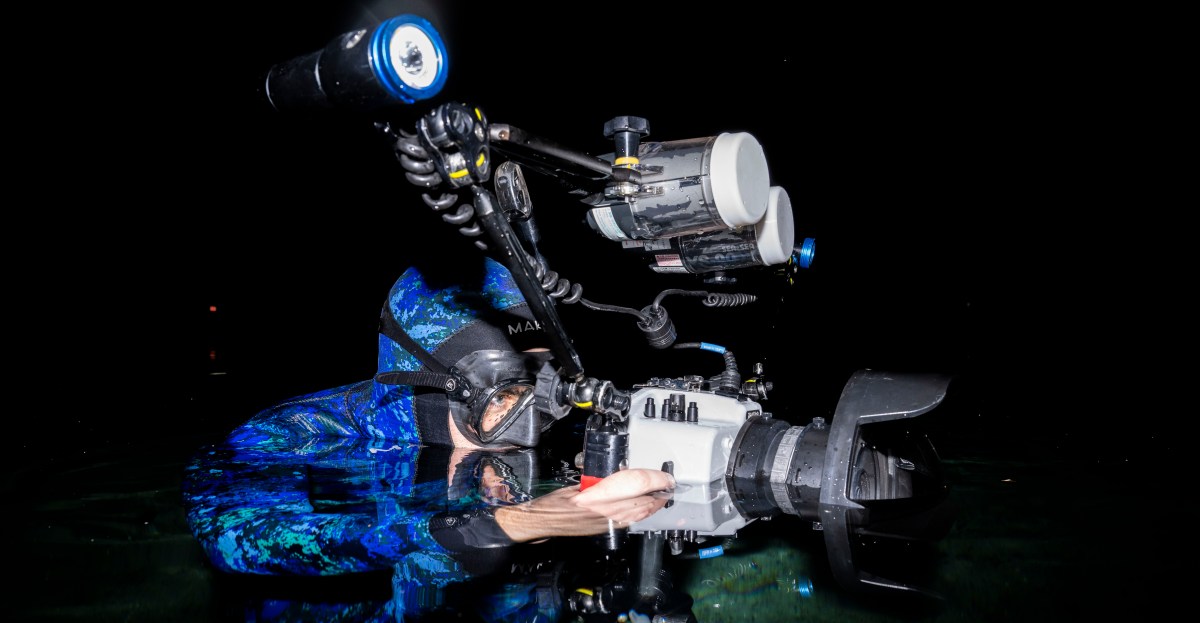
Hungry to capture images underwater, I discovered affordable solutions like adapting existing camera equipment. My improvisation, including using Lego pieces to modify controls, allowed me to engage deeply with wildlife photography.
This gradual progression from using makeshift tools to sophisticated equipment like the Canon R5 enables me to capture striking underwater images. The use of wide-angle lenses facilitates immersive storytelling, focusing closely on subjects and their habitats.
Editing tools like Lightroom, Photoshop, and Premiere Pro are crucial in translating these visual stories into compelling narratives. Each project starts with an engaging idea rooted in ecology, requiring a deep understanding of the location and its potential.
As an aquatic enthusiast, I strive to capture unique environments that challenge people's perceptions of underwater life. These visual tales aim to bridge the gap between humans and often-overlooked aquatic ecosystems.
Through photography, I aspire to bring awareness to the delicate balance of aquatic ecosystems threatened by climate change and human activity. Showcasing the vibrant life beneath the water's surface hopes to foster a touchstone for conservation efforts.
Despite challenges like fluctuating success rates and the pressure to counteract sensationalism on platforms like YouTube, my aim remains clear: to highlight small but significant details of aquatic environments to foster curiosity and learning.
Florida, amidst its stunning ecosystems, poses both opportunities and obstacles for conservationists like myself. The rapid development threatens these habitats, pressing the need for public education and sustainable living practices.
Educating Florida's growing population about coexisting with native wildlife is essential. Residents must recognize the ecological value of creatures like alligators and snakes, embracing them as integral to the local environment.
Looking ahead, I dream of expanding my underwater explorations across the U.S. and globally. Each state, regardless of reputation, holds potential stories beneath its waters, and sharing them could inspire a wider audience.
Ultimately, my goal is to spark kindness and curiosity about the world's small wonders, encouraging collective responsibility for natural habitats and ensuring their preservation for future generations.
Leave a Reply