


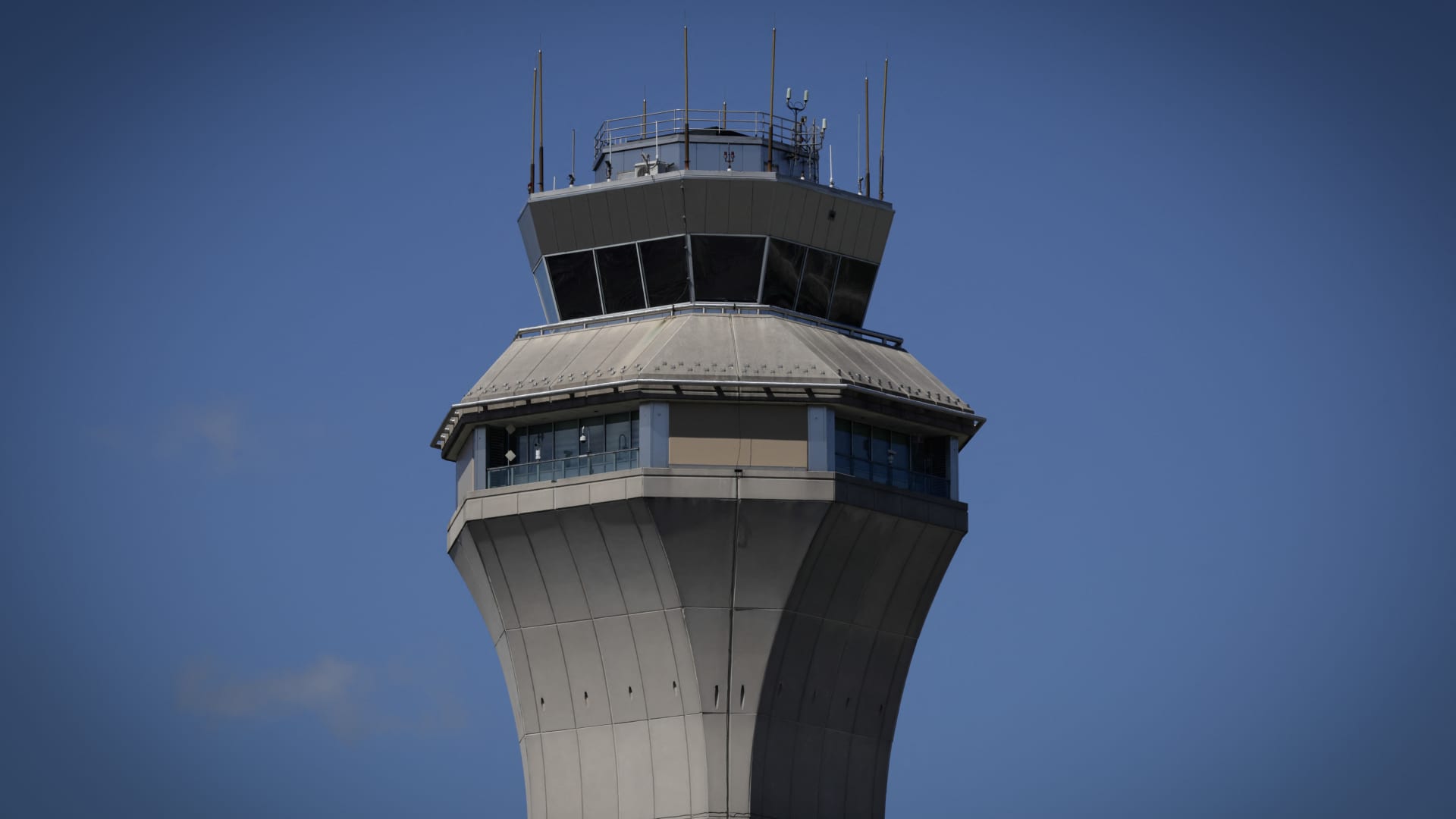
FAA Considers Cutting Flights at Newark Following Frequent Disruptions
This week, there is a crucial meeting between U.S. airlines and the Federal Aviation Administration (FAA) to address the need to decrease flights at Newark Liberty International Airport. This discussion arises amid equipment malfunctions and a shortage of air traffic controllers that have disrupted numerous flights, highlighting the need to upgrade the outdated U.S. aviation infrastructure.
Transportation Secretary Sean Duffy voiced concerns, stating on NBC's "Meet the Press" that similar issues in Newark could start occurring nationwide, emphasizing that solutions are imperative.
Late last month, air traffic controllers experienced a critical failure when they temporarily lost communication with aircraft for about 90 seconds at Newark. This disruption spiraled into a series of delays, affecting over 1,000 flights due to some controllers taking trauma leave following the incident.
Compounding these challenges, another issue emerged recently at the same New Jersey control facility, described by the FAA as a 'telecommunications issue,' which further compelled the agency to manage flight traffic cautiously to ensure operational redundancies were intact. Also, ongoing runway construction at Newark adds to these delays, providing additional stress for airline management as the high-demand summer travel season looms.
These recent events have brought to light broader issues, such as the need for improvements in the aging air traffic control infrastructure and the persistent lack of controllers to manage airspace effectively.
On Thursday, alongside major U.S. airline CEOs, Duffy introduced an extensive initiative to upgrade outdated systems and establish new facilities. Although he did not specify the costs, industry estimates suggest that a $31 billion investment from Congress is necessary for these enhancements and for hiring additional staff.
In previous years, airlines have gradually reduced flights from busy New York City-area airports, including Newark, due to staffing limitations.
United Airlines CEO Scott Kirby has been outspoken about the necessity for these flight reductions. Data from 2024 show United managed roughly 67% of Newark's capacity. Recently, the airline indicated a 10% reduction, equating to 35 fewer daily flights, to lessen operational burdens.
Kirby communicated to staff that even under ideal weather and staffing conditions, with everything functioning optimally, the FAA states Newark can accommodate only 77 flights per hour. However, during busy hours, the FAA often approves over 80 flights per hour. This imbalance leads to congestion, particularly during adverse weather or technology failures.
The FAA scheduled Wednesday's discussion with airlines concerning schedule adjustments at 9 a.m., aiming to address these critical operational challenges.
Leave a Reply