


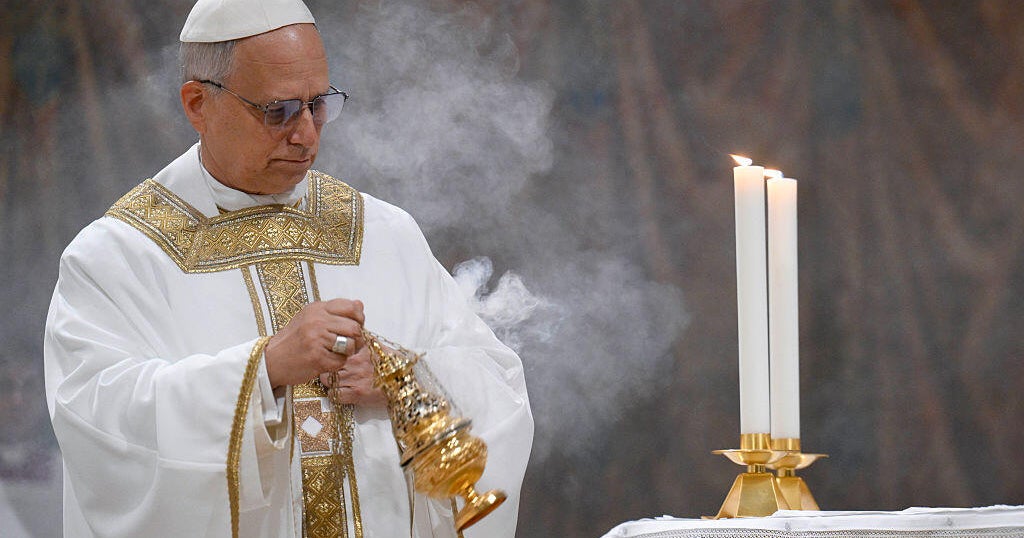
Revelations of Pope Leo XVI's Creole Ancestry Thrill New Orleans
Interest has surged in New Orleans as news emerges about the Catholic Church's leader having strong connections to the city, along with Haitian and Creole lineage.
Although Pope Leo XVI was born in Chicago, Illinois, his family history extends deeply into Louisiana. Sacred records from the New Orleans Archdiocese indicate that his maternal great-grandmother was christened at St. Louis Cathedral, nestled in the heart of Jackson Square, back in 1840.
Decades after, Pope Leo’s maternal great-grandparents, Ferdinand D. Baquie and Eugenie Grambois, tied the knot on September 19, 1864, at St. Mary's Church on Chartres Street, as preserved in the church’s sacramental files.
Records from the Louisiana State Archives validate that these great-grandparents remained in Louisiana throughout their lives, as reflected by their recorded death certificates.
Further documentation reveals that the pope's maternal grandparents, Joseph N. Martinez and Louise Baquie, were united in matrimony in New Orleans on September 17, 1887.
It is noted by historians that the pope's grandparents migrated to Chicago in the early 20th century, maintaining their marriage for more than five decades.
The Historic New Orleans Collection’s family historian, Jari Honora, was among the first to uncover these familial links to the pontiff.
"The discovery of the pope's New Orleans roots filled me with surprise and delight," expressed Honora.
The archives also document his maternal grandmother as a New Orleans native and his maternal grandfather as originally from Haiti.
Honora uncovered census data where Joseph Martinez, the pontiff’s grandfather, is listed from the Dominican Republic but earlier records indicate his roots in Louisiana.
"One ponders whether these mixed entries hold the echoes of a remembered Haitian lineage or a misunderstanding of the family's origins," Honora speculates, recalling one census listing Martinez as Maltese mistakenly.
Cultural Significance
Honora, who shares Creole Catholic heritage, noted the election of a multicultural pope as a significant moment for the cultural identity of New Orleans.
"Catholics of color have always played pivotal roles within the church, particularly here in Louisiana. The pontiff's appointment underscores this rich heritage," Honora explained.
Ongoing inquiries are being made by Honora to determine if any ancestors of the pope were enslaved individuals.
"Uncovering enslaved ancestors demands unique strategies distinct from contemporary genealogical research," noted Honora, referencing the anonymity in census records before 1870, the end of the Civil War.
A Culinary Legacy
The pope's culinary interests and his mother's renowned cooking are believed to stem from their Creole background.
"Comments from past interviews revealed priests' frequent visits to his household, attracted by his mother’s delectable cooking. Now, understanding her New Orleans roots, it all comes together," Honora remarked.
Residents feel a strong sense of pride in having a pontiff linked to Creole traditions.
"Having an American pope, particularly one with such a diverse background, creates a positive representation for many in the U.S.," explains Emmaline Kelly, a local New Orleans native.
Kelly, connected to the local community, hopes for a papal visit to reconnect with these New Orleans roots, mirroring efforts to approach inclusivity as seen in Pope Francis's papacy.
Leave a Reply