


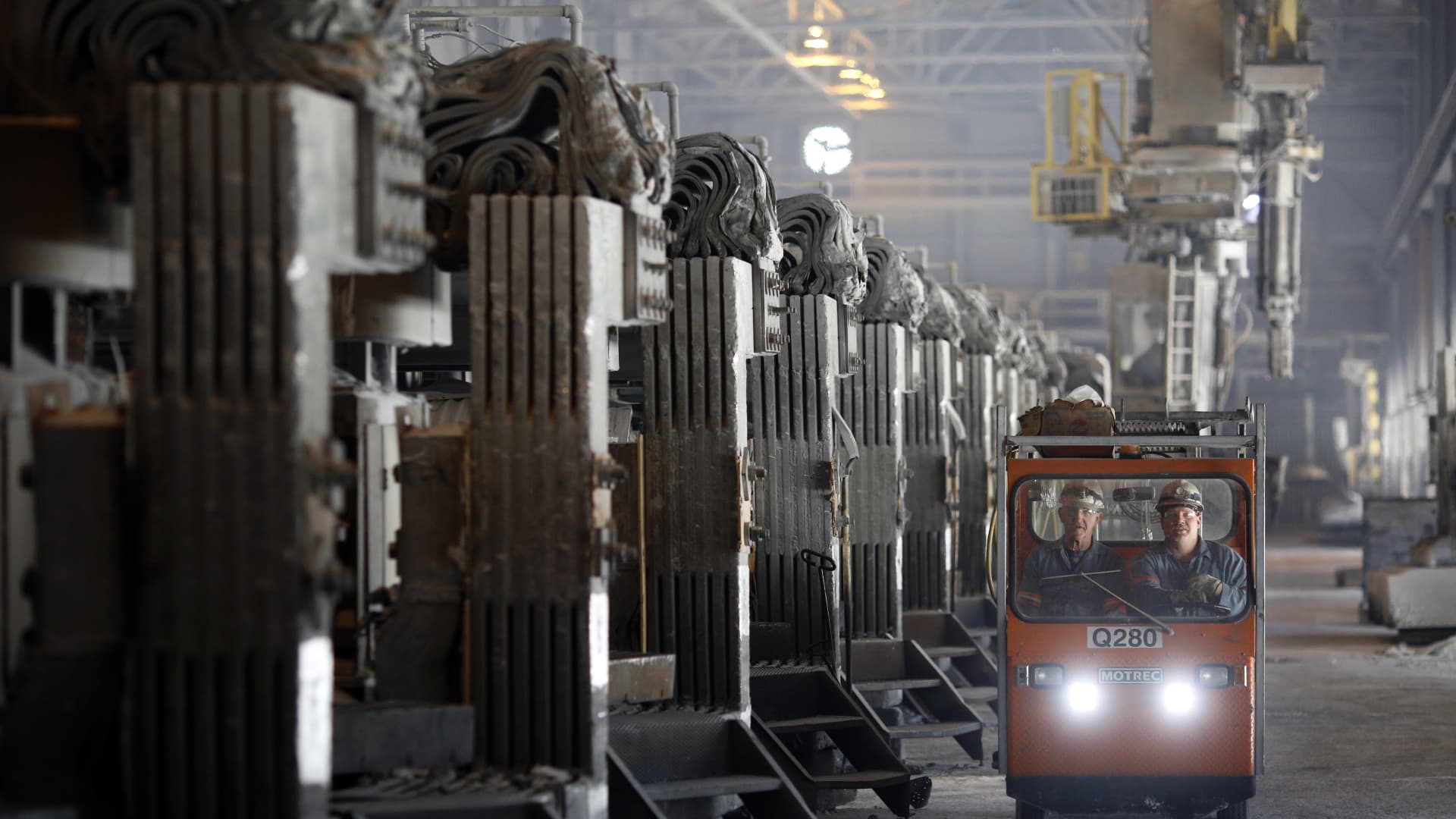
Why U.S. Aluminum Production Stalls Despite Tariffs
The imposition of widespread tariffs on aluminum imports by the former U.S. administration under President Trump was intended to reshape global trade frameworks and increase domestic productivity. However, while these tariffs have indeed led to shifts in international trade patterns and resulted in higher costs for American consumers, the intended revival of the American aluminum industry has not materialized.
Instead, escalating operational expenditures, especially the surging energy prices in the United States compared to its global peers, have caused many smelters to halt operations rather than resume them. The 25% aluminum tariff has left a significant mark on the commodity market, where the London Metal Exchange's pricing serves as a benchmark, but additional regional expenses are added for acquiring the metal.
These added costs reflect primarily the causative tariff. Analysts at JPMorgan highlight that European premiums have dipped more than 30% from the year's start, a contrast directly tied to U.S. trade strategies.
This additional financial burden is often transferred down the supply chain, eventually impacting consumers, according to Trond Olaf Christophersen, CFO of one of the largest aluminum producers based in Norway, previously known by a different name.
He emphasized to CNBC that American consumers are likely to face elevated prices because the tariff cost is effectively passed on. Hydro, a major player in the industry, has experienced a significant stock value drop of about 17% since the tariffs were executed.
A client of Hydro that produces car-top cargo containers reported an approximate 10% increase in prices despite largely manufacturing within the U.S., driven by hikes in raw material pricing, including aluminum.
The Challenge of Energy Costs
One of the key hindrances to reviving the domestic aluminum smelting process—an energy-heavy industry—remains access to affordably priced, sustainable energy sources.
Ami Shivkar, a chief analyst at Wood Mackenzie, points out that energy expenses play a crucial role in the cost of aluminum smelting. The U.S. sees more plant closures than reopenings due to unsustainable energy costs.
In contrast, aluminum producers in regions like Canada, Norway, and the Middle East often benefit from long-term energy contracts or have their power generation capacities, which starkly contrasts with U.S. operations that predominantly depend on short-term energy deals—a costly disadvantage as U.S. energy expenses soar up to $550 per metric ton compared to Canada's $290.
The fragility due to energy costs was highlighted when, in March 2023, Alcoa declared the permanent closing of a previously idle facility citing unsustainable energy costs as a deterrent to its competitiveness.
Tariffs Reshape Trade Without Boosting Domestic Growth
Although the intent of the tariffs was to stimulate domestic smelting revival, they have instead led to a reshuffling of trade channels. Given prohibitive U.S. market costs, metal is flowing to other global markets. Christophersen commented that high tariffs previously directed Canadian aluminum exports temporarily away from the U.S., prompting European metals to fill the void.
Local scrap metal pricing is influenced as well, aligning with the inflated Midwest premium following tariff impositions.
Hydro, as a leader in aluminum extrusion, which involves shaping metal into products like window frames, utilizes both domestic scrap and Canadian imported primary metal for its U.S. production.
The cost burdens from tariffs are ultimately transferred along the supply chain, impacting not only producers like Hydro but also end consumers via higher pricing.
According to RBC Capital Markets, this transference of tariff-related costs is a reality, suggesting that increased metal exchange prices are passed onto customers.
Amidst these market conditions, particularly in Hydro’s extrusion operations, the company continues to face pressure from downstream sectors like building and construction, reflecting broader macroeconomic challenges.
Leave a Reply