


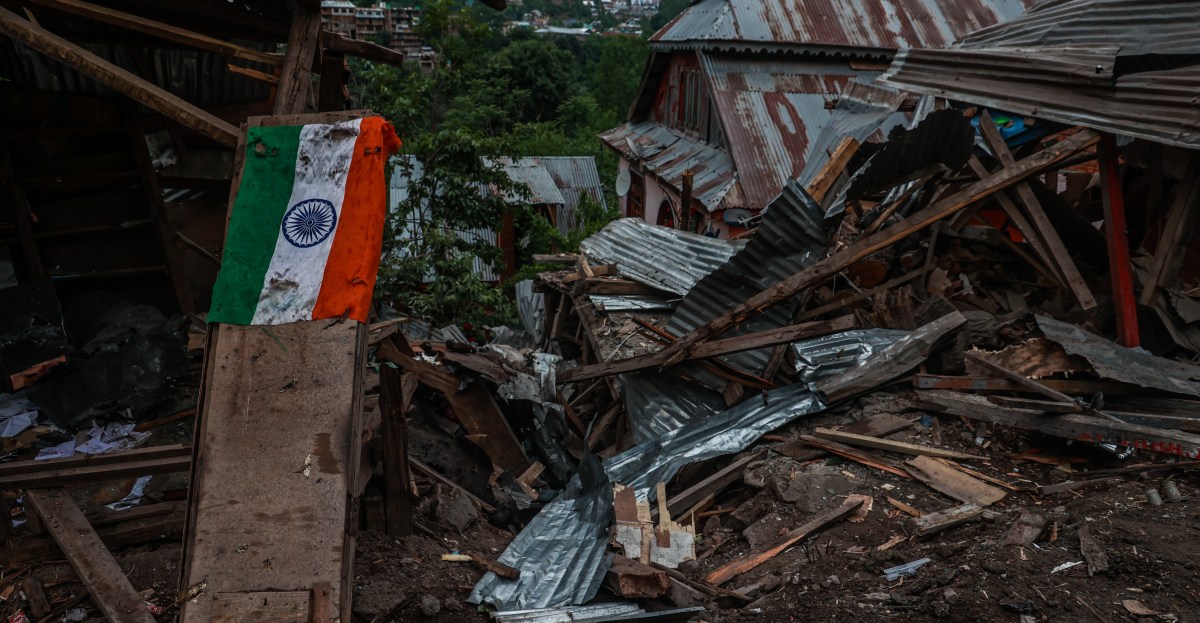
Potential Escalation of the India-Pakistan Conflict
Several hostile engagements and a stockpile of more than 300 nuclear warheads add to a tense standoff between India and Pakistan, yet there might be a light at the end of this dangerous tunnel; both countries have navigated this nuclear landscape for over 25 years, adeptly managing conflicts without triggering a global catastrophe.
Termed “Operation Sindoor,” the cross-border missile attacks commenced under the indication by India's Foreign Secretary that the approach was restrained and mindful, aiming to prevent escalation. Notable is the absence of ground forces crossing into enemy territory, which would signal a full-scale war.
India’s recent missile barrage on Pakistani territory came after a horrific attack on tourists, blamed on militants with alleged support from Pakistan. A subsequent exchange of artillery and drones has sadly led to about 48 reported dead. The current hostilities are assessed by some analysts as the gravest since the bloody 1999 conflict at Kargil.
Tracing the Roots: From Partition to Present
Since the division of British India in 1947 into Hindu-majority India and Muslim-majority Pakistan, these two nations have been embroiled in four major wars with skirmishes in between. The region of Kashmir remains a core issue, split by the Line of Control since 1972.
Both nations frequently accuse each other of overstepping this informal boundary. India has consistently criticized Pakistan for promoting an insurgency in its part of Kashmir, though Pakistan denies direct involvement, despite supporting the region's self-determination. The nuclear age began for these countries with India’s test in 1974, with Pakistan joining in 1998, raising the stakes considerably.
The Kargil incident in 1999 exemplifies that nuclear-armed opponents could engage in warfare using standard warfare methods, contradicting the belief that nuclear deterrence would prevent war. Their repeated confrontations appear to sharpen over the years, an observation noted by security expert Happymon Jacob.
Recent Violent Episodes and Their Broader Implications
Significant aggressive acts such as the 2001 Parliament attack and the 2008 Mumbai assault led to military posturing but stopped short of war. More recent incidents, including the 2016 Uri attack leading to surgical strikes and the 2019 airstrikes following a suicide bombing, showed growing assertiveness in India's military responses.
The cycle of quiet tensions broke on April 22 with militants killing 26 in Pahalgam, aiming at Hindu victims. Responsibility was claimed by the Resistance Front, said to be linked to Lashkar-e-Taiba, though Pakistan disputes any connections.
Weapons and Words: Diplomacy Hanging in the Balance
Recent escalations have not found an effective channel for dialogue as occurred with the release of an Indian pilot in 2019. Observers note that modifying the water-sharing treaty that India suspended could pave the way for diplomatic engagement.
Typically, the United States would mediate these crises, though its influence has waned due to a cooled relationship with Pakistan and a warming with India amidst the backdrop of wider strategic interests including China.
Could the Conflict Turn Nuclear?
Both nations possess substantial nuclear arsenals, with India's prudent initial actions targeting militant sites rather than Pakistan’s military framework signaling restraint—yet Pakistan's counterattacks heighten tensions.
Concerns linger that escalating exchanges might inadvertently lead to a large-scale conflict, potentially crossing into the nuclear sphere. Despite having a 'no first use' policy, ambiguity exists around India's stance, contrasting Pakistan's lack of a similar commitment.
The ongoing missile exchanges keep the nuclear specter afloat, with heightened military actions diminishing the deterrence effect. Although operations remain limited, the risks this poses continue to be a shared international burden.
Ordinary people, particularly in Kashmir, bear the brunt of these hostilities, battling systemic violence. With each conflict, the boundaries expand, threatening regional stability.
Leave a Reply