


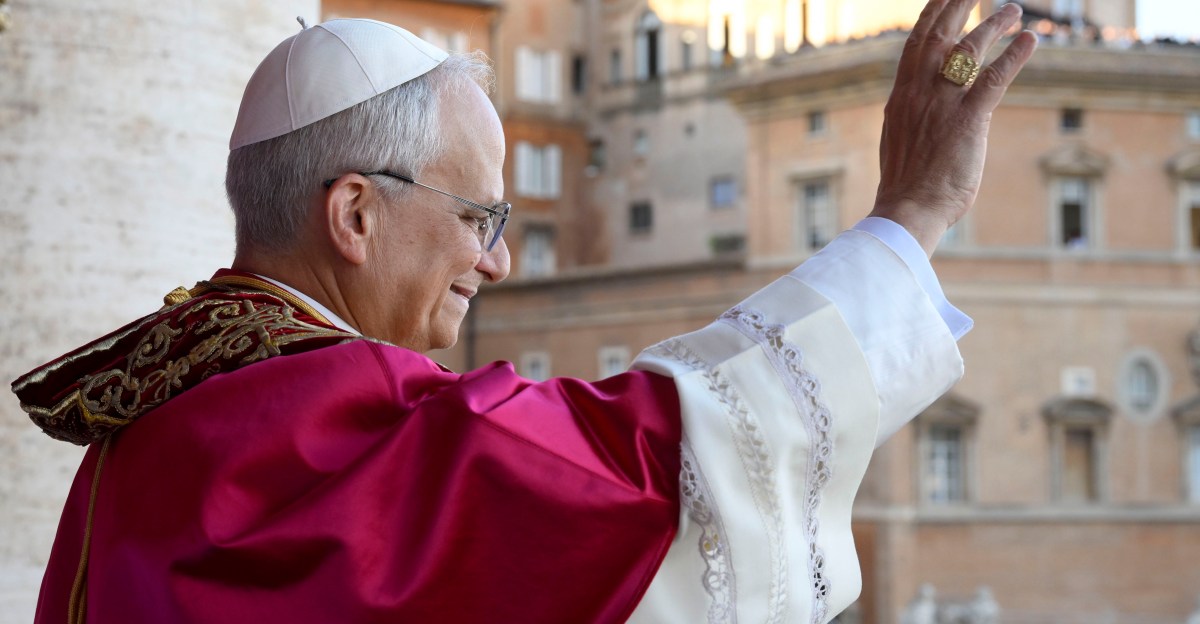
Pope Leo XIV: An American of Global Perspective
Robert Francis Prevost, hailing from Chicago, now stands as Pope Leo XIV, marking a significant milestone 249 years post the inception of the U.S.
Prevost, despite being a lesser-discussed contender, was surprisingly chosen over prominent figures like Cardinal Luis Antonio Tagle or Pietro Parolin. This unexpected decision has fueled humor and speculation about its implications for the Catholic Church's future.
Contrary to initial assumptions, the pivotal aspects of this choice may not hinge on politics or ideologies.
Assessing the Papal Selection
In anticipation of the conclave, discussions frequently revolved around the origin of potential candidates, a factor historically influenced by geopolitical considerations and evolving Catholic demographics. Speculation was also rife on their stances regarding contentious issues within the church, such as women’s ordination, clerical celibacy, and same-sex blessings. These topics, mirroring secular debates, raised expectations that the pope's election could signal shifts in church perspectives on gender, sexuality, and individual freedoms.
Some viewed the election as a reflection on America, questioning whether it symbolized a decline akin to the Polish John Paul II's earlier parallels to the Soviet Union's waning influence. Others contemplated if it was an effort by the Vatican to reconnect with America's often defiant Catholic community.
However, it seems the selection’s essence is not rooted in geopolitical strategies or ideologies. Pope Leo XIV embodies a blend of American and Peruvian identities and is considered an ideological centrist, balancing traditionalist and reformist expectations.
Pope with Dual Heritage
Leo XIV, while American by birth, has embraced a dual heritage, enriched by his substantial time in Peru. He has often expressed skepticism toward ordaining women even to deacon status and questioned aspects of the 2023 declaration that endorsed blessings for couples outside traditional Church marriages.
Despite his conservative declarative leanings, he doesn’t typify the hardline American Catholic clergy model. Unlike Bishop Robert Barron, an ally of Trump, Leo XIV has openly criticized figures akin to Trump and Vance on social media and advocates strongly for impoverished and displaced communities.
A Global Perspective for an Ancient Institution
It is a misconception to interpret Leo XIV's papacy through an American lens. The strength of the Catholic Church lies in its historical awareness and its ability to transcend contemporary challenges and fleeting trends. The cardinals' choice signals a focus on enduring values rather than immediate political circumstances.
Rooted deeply in institutional dedication, Leo XIV was appointed by Pope Francis to significant roles, such as the administrator of Chiclayo Diocese in 2014 and prefect of the Dicastery for Bishops in 2023. These positions placed him at the core of the Church’s leadership dynamics, tasked with supervision and nomination of bishops, signifying a role in shaping the Church’s future.
Enduring Reforms and Historical Inspiration
By choosing the name Leo, the new pope invokes the legacy of Leo XIII, who led from 1878 to 1903. Known as the "Pope of the Workers," Leo XIII is remembered for advocating workers' rights, affirming their unionizing rights, and emphasizing human dignity, transcending the political polarization of his time.
Pope Leo XIII laid the groundwork for modern Catholic social principles, advocating for the Church’s role as a moral lighthouse rather than a direct participant in worldly conflicts. Pope Leo XIV is expected to follow in these footsteps, steering the Church amidst rapidly evolving global contexts by emphasizing a broader moral narrative over temporary cultural disputes.
In today’s divisive landscape, Pope Leo XIV seems poised to navigate beyond entrenched ideological camps or nationalist perspectives. His epoch could transcend traditional and progressive divides in defining the Church's place in the contemporary world. His leadership is not likely a judgment on the fate of the United States or a triumph for any societal faction, but rather a testament to continuity and enduring vision.
Leave a Reply