


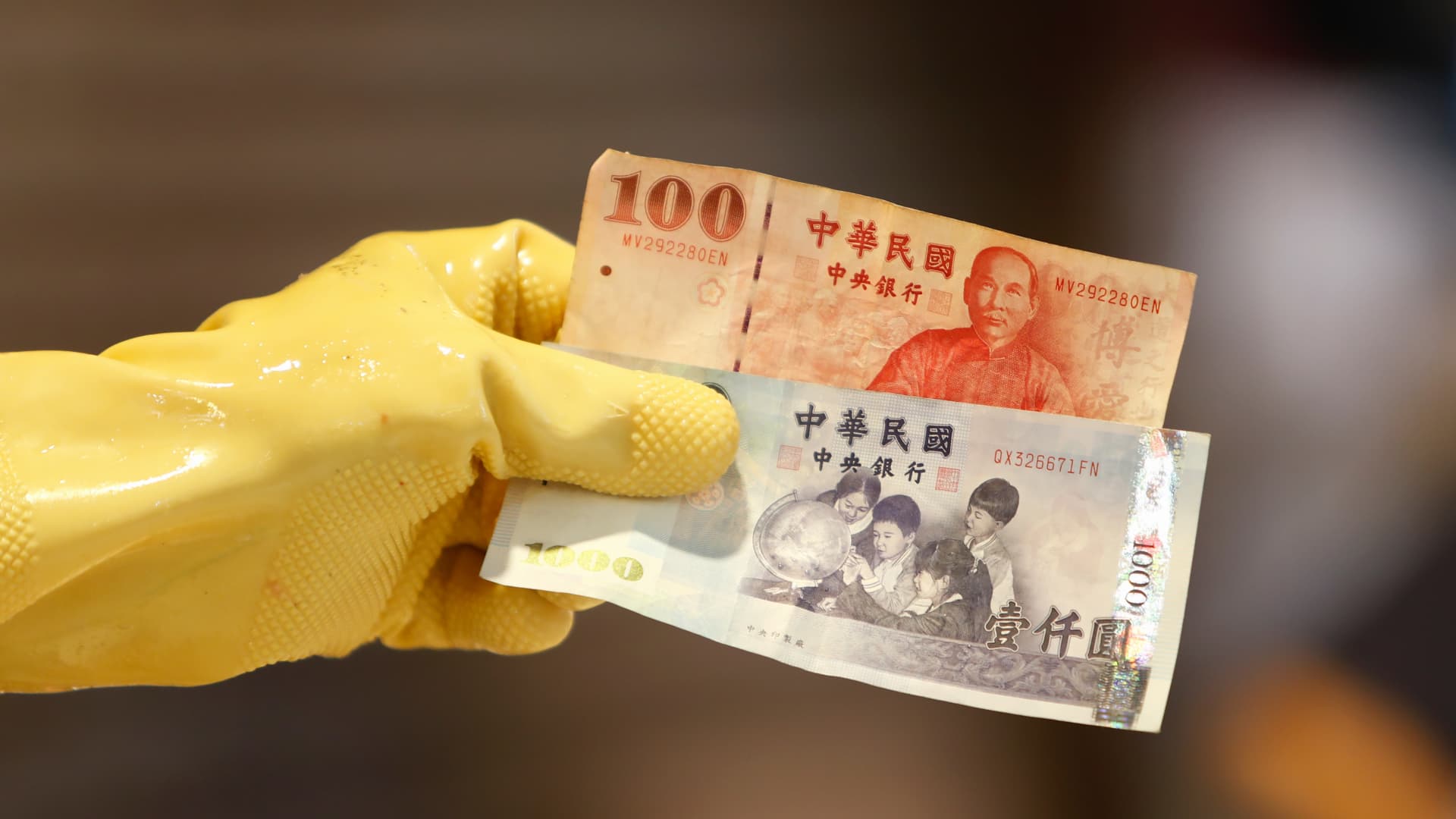
Taiwan Dollar Retreats Following Major Rise Amidst Denied U.S. Currency Discussions
On Tuesday, the Taiwan dollar experienced a decline after an unprecedented increase, spurred by speculation involving possible U.S. pressure to bolster the currency.
After soaring 9% over two sessions to hit a three-year apex, the currency fell more than 3% against the American dollar, marking the most substantial daily jump since 1981, as per data from LSEG.
Even with the recent drop, the Taiwanese dollar remains over 8% stronger against the U.S. dollar this year, whereas the U.S. dollar index has dipped comparably over the same period.
David Chao, an Invesco global market strategist, noted, "We are witnessing currency fluctuations now that are even more dynamic than during the Asian financial crisis times."
Experts attribute the currency's robust climb to exporters rapidly converting their U.S. dollar reserves due to the weakening dollar, coupled with life insurers escalating hedging efforts on their U.S. dollar debts.
As some of Asia's major holders of U.S. bonds, Taiwan's life insurers have been managing significant, inadequately hedged U.S. dollar liabilities, according to market experts.
Monitoring Central Bank Maneuvers
Close attention is on Taiwan's central bank, which has been conspicuously inactive, fueling talk that officials might be allowing currency appreciation to gain trade leverage with the U.S., opined Stefan Angrick from Moody's Analytics. "Rare activity highlights possible strategic non-intervention."
Central bank governor Yang Chin-long stated on Monday that the bank intervened to manage "excessive" inflows but didn't detail the intervention type. Despite denying leveraging exchange rates with the U.S., discussions might integrate currency values according to Angrick as Trump has touted a lower dollar value to boost exports.
Many analysts remain dubious about the central bank's substantial interventions. The Taiwan dollar has touched the central bank's upper monitoring limits, and further reticence could indicate subtle currency policy shifts, inferred Chao.
Tuesday's softening was largely driven by renewed importer demand for the dollar, noted MUFG Bank's FX strategist, Michael Wan, who reckons the central bank's actions have been relatively mild.
Financial Risks and Future Outlook
Taiwan's regulatory body has been conversing with major insurers about the impact of a softer greenback on their U.S. bond assets, with reports suggesting compliance with capital standards according to local news outlets.
There's potential for further appreciation in Asian currencies, including the Taiwan dollar, as analysts speculate the U.S. tariffs might damage its own economy, and positive developments in U.S.-China trade relations could rejuvenate regional trade and demand for Asian investments.
Christopher Wong from OCBC Bank expressed that as long as de-escalation narratives persist and growth impacts from tariffs remain manageable, strong momentum for the Taiwan dollar could persist, benefitting trade discussions.
Impact on Taiwan's Export Sector
The tech sector, vital for Taiwan’s export-heavy economy, faces pressures from the stronger Taiwan dollar, which complicates global competitiveness by making exports costlier.
Tech shares continued to drop, with critical firms seeing stock losses as the currency appreciates, directly affecting their operating margins, observed by industry analysts like Brady Wang.
Despite current challenges, sustained demand for advanced chips, driven by AI and technology proliferation, may help mitigate financial stress on Taiwan's leading tech companies, as reported by several market analysts.
Leave a Reply