


Supreme Court Allows Revival of Trump-Era Ban on Transgender Military Service
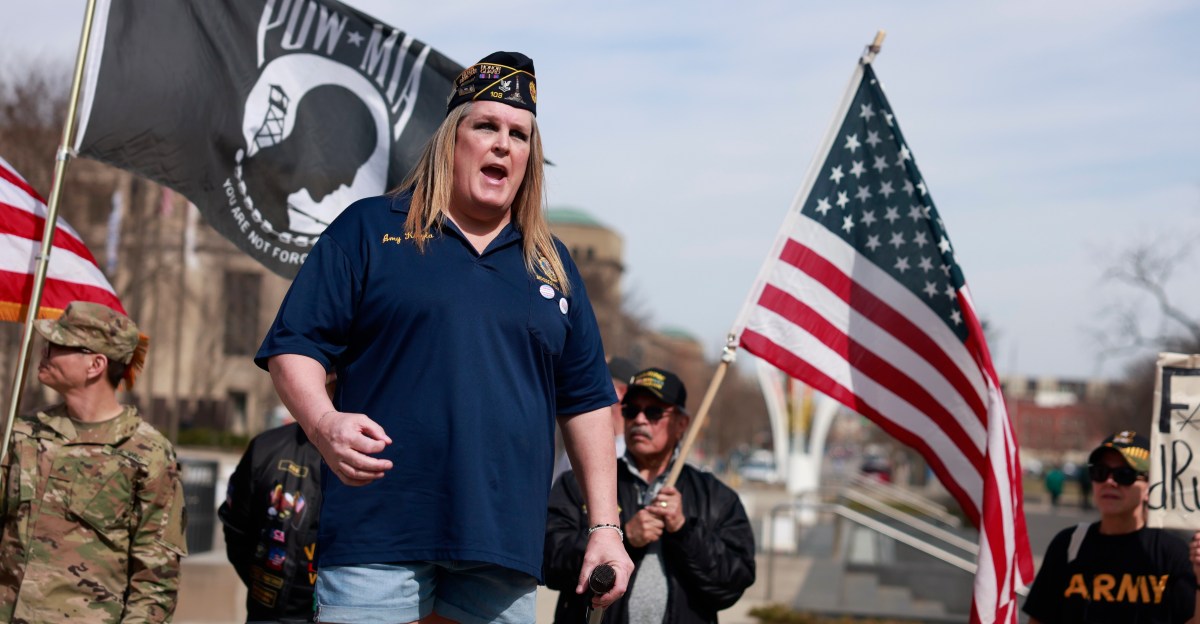
In a significant decision, the Supreme Court has given the green light to President Trump’s restriction on transgender individuals serving in the military, following an appeal from his administration after a lower court's block.
Shortly after commencing his second presidential term, Donald Trump commanded the armed forces to remove transgender service members. Though this expulsion, slated for March 26, was initially paused by judicial intervention.
The legal conflict, formally termed United States v. Shilling, now rests with the Supreme Court. Trump’s administration contends that the policy targets those diagnosed with gender dysphoria rather than all transgender individuals—a stance deemed illogical based on historical judgments.
Understanding the Court's Perspective
The American Psychiatric Association describes gender dysphoria as a psychological struggle stemming from a mismatch between recognized gender identity and sex assigned at birth. Re-characterizing the transgender ban as a health-related measure is as misguided as reframing Jim Crow as pigmentation-specific legislation.
The Court’s historical deference to military decisions strongly suggests that Trump's administration might triumph in enforcing this policy.
Legal standards affirm the inadmissibility of discrimination masquerading as trait-based bias. As noted in the Supreme Court’s Bray case, discriminative practices under any guise remain discriminatory.
Despite inadequate rationalizations from the administration, the Court is expected to reinstate this ban, mirroring a previously resolved debate from Trump's inaugural term.
Background Context
During his initial presidency, Trump implemented a comparable ban, albeit with a few allowances not present in the current iteration. Though initially blocked by lesser courts, the Supreme Court restored that ban along partisan lines in 2019, with an even stronger conservative majority today.
Historically-Rooted Judicial Deference to Military
The Court’s decision to uphold the prior ban aligns with its precedent of prioritizing military autonomy over constitutional parallels typically applied to civilian settings.
Judge Benjamin Settle articulated in his ruling against the second-term ban the potential detrimental impacts on the nation.
In the 1986 Goldman v. Weinberger case, censoring religious expression via military dress codes was upheld by the Court, highlighting a tradition of leniency not extended beyond military confines.
Notably, the Court allows overt gender-based biases within the military—a critical point in light of the Bostock ruling against transgender discrimination in workplace settings.
Rostker v. Goldberg (1981) underscored the Court's stance on male-only draft registration, showcasing extraordinary deference to legislative judgments on defense.
Those opposing Trump's transgender ban face significant legal headwinds, a reality compounded by the current judiciary's limited empathy towards transgender rights cases.
Judge Settle warned of the profound losses accompanying the ban, illustrated by Commander Emily Shilling's case. With decades of experience and millions invested in her training, such discharges represent a substantial forfeiture for the military.
Presently, constitutional law does not preclude governmental self-sabotage, and past rulings afford the military leeway to adopt discriminatory practices unfitting for other entities, directly affecting those under Trump’s transgender service ban.
Leave a Reply