


Trump's Tariffs: A Promise to Boost Jobs Turning into Job Losses
Workers in Pennsylvania's automobile sector initially backed the tariff initiative to secure their employment. Instead, it led to job cuts.
The Rise and Fall of Industrial Power in Pennsylvania
Once a testament to the industrial prowess of America, the Lehigh Valley in Pennsylvania was emblematic of thriving manufacturing, supported by giants like Mack Trucks and Bethlehem Steel, which had a workforce surpassing 30,000 during its heyday in the 1950s.
However, the manufacturing boom began to falter in the 1970s and completely crumbled by the 2000s. Bethlehem Steel declared bankruptcy in 2001, and today, a casino stands where this industrial stronghold once operated. This transformation turned the Lehigh Valley into a cautionary tale of de-industrialization, even inspiring a Billy Joel song.
Complex Reactions to Tariff Policies in the Lehigh Valley
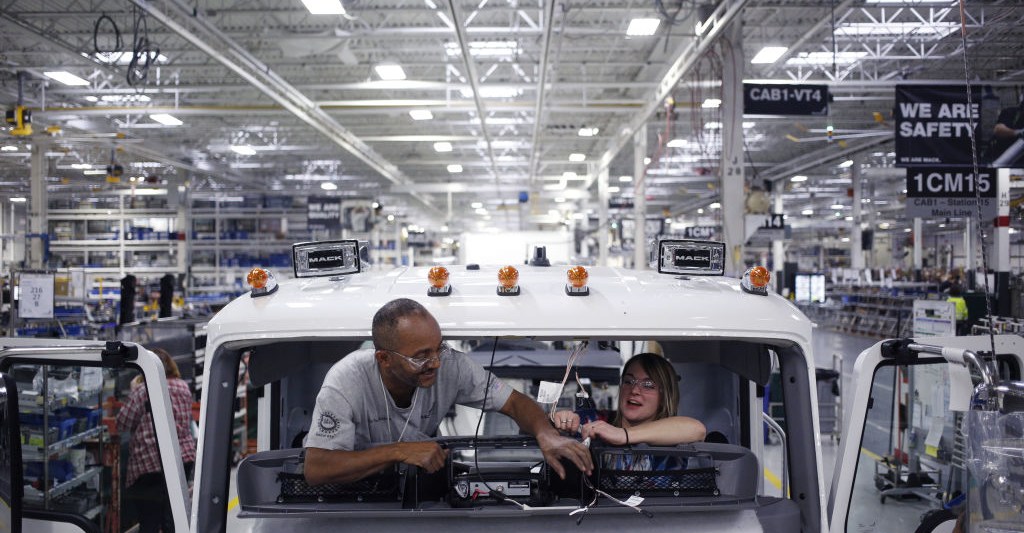
President Trump's trade policies have been championed as a strategy to rejuvenate manufacturing jobs in areas like the Lehigh Valley. Contrary to expectations, these policies have had adverse effects: Mack Trucks recently revealed plans to cut 10% of its united workforce at the Lehigh plant, attributing these layoffs to tariff-induced economic instability.
Dan Hand, a member of UAW Local 677, said, 'The news caught us off guard. We've only just started seeing new faces on the production line last week. Everyone’s quite anxious now.'
Compelled by a report on these layoffs, I journeyed from Philadelphia to listen firsthand to the voices of Hand and his colleagues. While expecting frustration, I uncovered a tapestry of nuanced perspectives on the tariff situation.
Concerns and Divided Opinions Among Workers
The prior summer, Mack Trucks' parent company Volvo declared intentions to establish a monumental truck manufacturing site in Mexico, promising to augment, rather than supplant, its U.S. workforce. Despite these assurances, apprehension stirred among Hand and his fellow union members about the potential migration of jobs across the border. In response, UAW 577 released a statement denouncing Mack's decision and supporting tariffs as a countermeasure.
Despite looming layoffs, Mack's workforce exhibits divided opinions on Trump's tariff approach. 'It appears there’s a lack of strategic foresight,' remarked Hand, a Trump voter in 2016 who grew disenchanted due to the administration's stance on organized labor.
Long-term Goals and Economic Realities
In contrast, John Taniser, a seasoned worker with 27 years at Mack, believes transient hardship is a necessary step toward enduring economic reform. 'We’re aiming to advance beyond just surviving, seeking a pathway to genuine prosperity,' Taniser stated, maintaining his support for Trump in 2024.
Economic experts largely agree that the 20th-century prominence of manufacturing in the U.S. is unlikely to make a comeback. My colleague recently explored how, as economies mature, manufacturing roles are generally supplanted by service sector jobs.
This transition can be seen nationwide, including in the Lehigh Valley, where large employers now include hospitals and Amazon distribution centers. Technological advancements in manufacturing mean even when companies like Mack invest domestically, the outcome isn't necessarily a surge in employment, as automation reduces the need for human labor.
Resolute Hopes Amidst Uncertain Futures
The reality is difficult to digest for communities once reliant on manufacturing. Despite expert opinions, many cling to the hope that tariffs might reverse past declines. 'Those jobs were the lifeblood of the Valley,' Taniser reflected. 'They underpinned our society and economy, and we yearn for their return.'
Leave a Reply