


Slowly Sinking: 13 US Coastal Cities
In many cities across the United States, land is gradually decreasing in height, with rates ranging from minuscule fractions of a millimeter to several millimeters annually. This gradual subsidence poses significant risks, exacerbating flood conditions and straining infrastructure.
This Earth's descent, known as subsidence, is not a localized problem but a vast menace creeping through many regions, according to Manoochehr Shirzaei, a geophysics expert from Virginia Tech. In a recently published Nature study, Shirzaei evaluated this phenomenon in 32 American coastal cities.
Causes of subsidence include the tremendous mass of towering buildings, depletion of groundwater reserves, and historical geological shifts from the last Ice Age.
Globally, many coastal regions are already vulnerable to severe floods as climate change accelerates sea level rise. Adding subsidence into the mix can amplify these flood risks significantly.
The joint impact of rising seas and subsidence threatens to jeopardize approximately $109 billion worth of American coastal real estate by mid-century.
Fortunately, solutions to manage sinking terrains are not exceedingly costly, notes Shirzaei in comments to Business Insider, adding, "It's critical to recognize we still have the opportunity to address this problem effectively."
The following cities are experiencing the most substantial declines in elevation, revisited in order of their northernmost locations on the East Coast.
Boston, Massachusetts
Boston presents a varied picture of ground subsidence. With different districts sinking at diverse rates, this can lead to increased stress on the city's physical structures. Certain areas experience an approximate descent of 1 millimeter per annum, whereas other sections face a rate closer to 4 millimeters.
New York City
New York faces a downturn of approximately 1.5 millimeters in height each year. The region's major airports share this downward trend, with JFK, LaGuardia, and Newark sinking at rates of 1.7, 1.5, and 1.4 millimeters per year, respectively.
Proactive measures like installing pumps and constructing flood barriers have been taken at LaGuardia, which, without such interventions, faces monthly inundations by 2050.
Jersey City, New Jersey
Sharing a trajectory similar to New York, Jersey City experiences a land descent of around 1.5 millimeters annually. Techniques such as satellite-based InSAR are used to accurately track these changes.
Atlantic City, New Jersey
Atlantic City is experiencing a more pronounced sinking rate of nearly 2.8 millimeters each year. This phenomenon partly results from lingering geological consequences after the Laurentide ice sheet's retreat.
Virginia Beach, Virginia
Virginia Beach contends with a yearly sinking rate of 2.2 millimeters, compounded by rising ocean levels which have sparked local initiatives for protective infrastructure developments.
Charleston, South Carolina
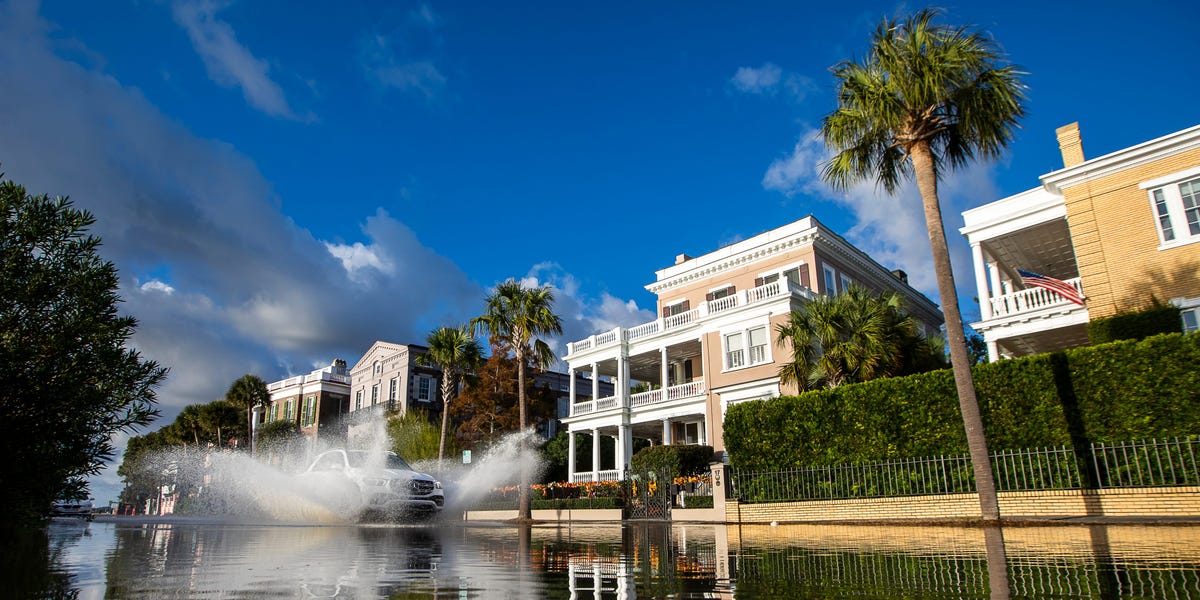
Charleston endures a median subsidence rate of about 2.2 millimeters annually, with some areas reaching as much as 6 millimeters, posing a critical risk to this populous city's infrastructure.
Savannah, Georgia
Savannah is sinking at nearly 2 millimeters each year, though specific locations within the city may experience declines up to 5 millimeters yearly, threatening numerous homes with potential flood scenarios.
Miami
The luxury condo towers of Miami's barrier islands are subject to subsidence, likely spurred by nearby building activities. Studies have shown that even the main city areas are declining by approximately half a millimeter each year.
Mobile, Alabama
Mobile watches as its land sinks at a rate of 1.87 millimeters a year. In response to one of the nation's highest rainfall volumes, city officials urge residents to prepare for emergencies with disaster kits.
Biloxi, Mississippi
Biloxi grapples with the most severe subsidence in the study, averaging a yearly sinking of 5.6 millimeters, though localized areas may experience reductions up to 10 millimeters.
New Orleans
New Orleans sinks at about 1.3 millimeters per year. The city, known for its vulnerability to flooding, sees nearly all properties at potential risk in coming decades.
Houston and Galveston, Texas
Galveston experiences subsidence rates surpassing 4 millimeters annually, while historical groundwater extraction contributes to similar issues within Houston.
Corpus Christi, Texas
In Corpus Christi, land subsidence occurs at nearly 3 millimeters each year. Researchers cite the impact of oil and gas drilling activities as potential catalysts for triggering these movements.
What about the West Coast?
California’s costal urban areas show little sign of subsidence, though the Central Valley is noticeably affected by groundwater extraction. Data remains insufficient for conclusions about land behavior in Oregon and Washington.
Leave a Reply