


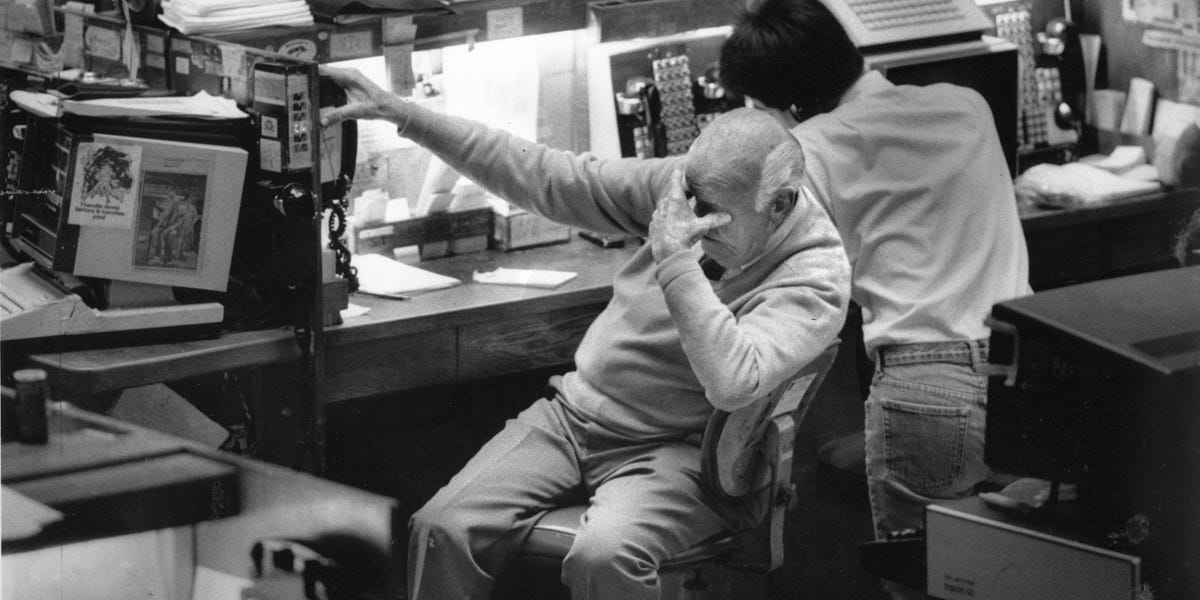
10 Historical Images: The Story of Black Monday's Market Collapse
Recent economic turmoil, reminiscent of previous downturns, brings Black Monday of 1987 to mind—a day when the S&P 500 experienced an unprecedented 20.5% decrease, and the Dow plummeted by 22.6%.
This event marked the steepest one-day market drop since the onset of the Great Depression in 1929.
The Bear Market Comes to an End
After a period of economic growth, stock values soared 44% in early 1987, forming a bubble that burst as rumors of a trade deficit emerged by October 16.
As the week concluded on October 16, the Dow saw a 4.6% fall, signaling impending trouble. Treasury Secretary James Baker's suggestion to devalue the dollar added to the trepidation.
Technological Factors Intensify the Crash
The integration of computerized trading in 1987 meant transactions automatically executed based on specific market conditions.
This technology, while innovative, exacerbated the market crash of Black Monday.
Automated Insurance and the Market Plunge
Newly developed portfolio insurance systems, designed to sell stocks automatically at certain price points, flooded the market, accelerating declines.
Panic Spreads Chaos in Trading
The widespread panic that ensued led investors to rapidly sell off assets in a bid to rescue their finances, intensifying the downturn.
Global Repercussions of the Crash
Asian markets were the first to feel the impact, with notable declines seen across the globe.
In Hong Kong, extreme reactions led to market closures, while London's FTSE 100 suffered over a 10% drop.
Federal Reserve Interventions
Attempting to mitigate the financial turbulence, the Federal Reserve, led by Alan Greenspan, cut interest rates and promised liquidity to stabilize the markets.
Impact on Everyday Investors
Many individuals found their retirement and savings accounts jeopardized by the swift devaluation of market assets.
Media Race to Deliver Market News
Media outlets hurriedly covered the crash, though the prevailing technology struggled to keep investors promptly informed, compounding the confusion.
Stock Market Reforms Post-Crash
Reforming efforts post-crash led to the implementation of circuit breakers to pause trading during future high-volatility periods.
These systems have since been periodically activated during acute market stress.
Legacy of Black Monday
Despite losing over $500 billion, markets began recuperating within weeks, and by 1988 exceeded pre-crash highs.
This financial calamity reshaped trading environments and prompted mechanisms to guard against similar future occurrences.
Leave a Reply