


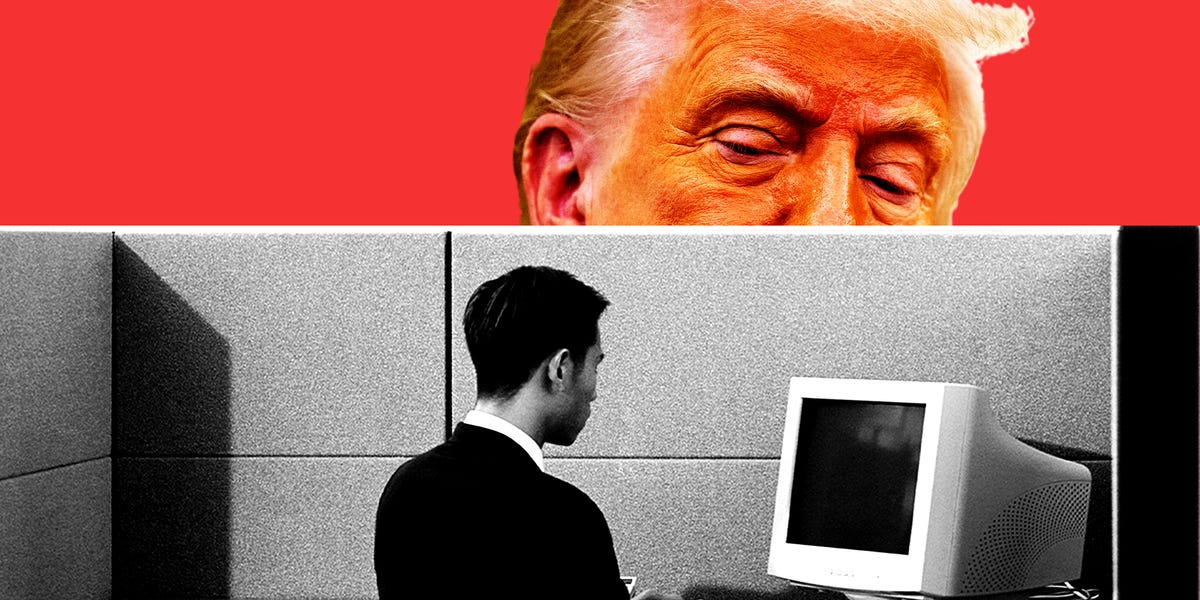
Trump's Battle Against White-Collar America
Presently, prestigious roles like those of lawyers, academics, and consultants are under significant scrutiny in the United States. President Donald Trump has set his sights on what he terms 'America's intellectual elite,' creating a stark division between the White House and the so-called 'eggheads.'
Reviving Manual Labor
Trump's administration aims to bolster industries such as manufacturing and mining with the vision of reinstating factory jobs. However, the success of this ambition remains uncertain as the revival of these sectors presents substantial challenges and the American workforce is not eagerly reverting to these fields.
Targeting Cognitive Professions
Meanwhile, there is a clear offensive against 'knowledge work.' This includes professions where intellectual and creative problem-solving are key, such as academia and journalism. Trump has actively targeted major universities and those with opposing political views, reduced funding for scientific research, and cut down on federal workforce aiding public health and development.
Political Tool of Class Division
Joan C. Williams, a law professor, suggests that Trump's strategy is harnessing class resentment against professionals perceived as elitist. Often interacting with working-class individuals, these professionals, whether they be lawyers or government officials, face a lot of public anger.
Legal and Academic Institutions in the Crosshairs
The legal sector, specifically prominent law firms, has faced executive actions that limit their opportunities unless they comply with Trump’s directives. Columbia University, for instance, has partially yielded to the administration's demands to avoid loss of funding, while Harvard remains resistant yet conciliatory.
Impact on Media and Federal Workforce
Elon Musk has similarly influenced federal employment cuts. Moreover, White House access for significant media outlets has been restricted, suggesting a climate where intellectual work is undervalued. Trump's base views these moves as justified responses to institutions perceived as stacked against ordinary Americans.
Historical Context of Anti-Elite Sentiment
The rhetoric against educated elites isn't new. Historically, figures like Richard Nixon deployed similar tactics. Today, Trump follows this path by promoting an image based on populism and anti-intellectualism — a maneuver familiar to decades of American political strategy.
As anti-elite attitudes are increasingly visible, the broader question remains whether this strategy translates into political gains or merely deepens societal rifts. Analysts like Jason Husser suggest the outcomes rest on voters perceiving Trump as a hero battling the 'elite intelligentsia.'
Ultimately, if public dependency on these white-collar professions becomes more apparent, Trump's attacks might backfire. Dismantling essential research or cutting public services can lead to direct adverse effects, highlighting the precarious balance of waging a war on intellectual elites.
Emily Stewart engages in ongoing analysis of Trump's conflict with America's office elites, providing insights into the evolving political landscape.
Leave a Reply