


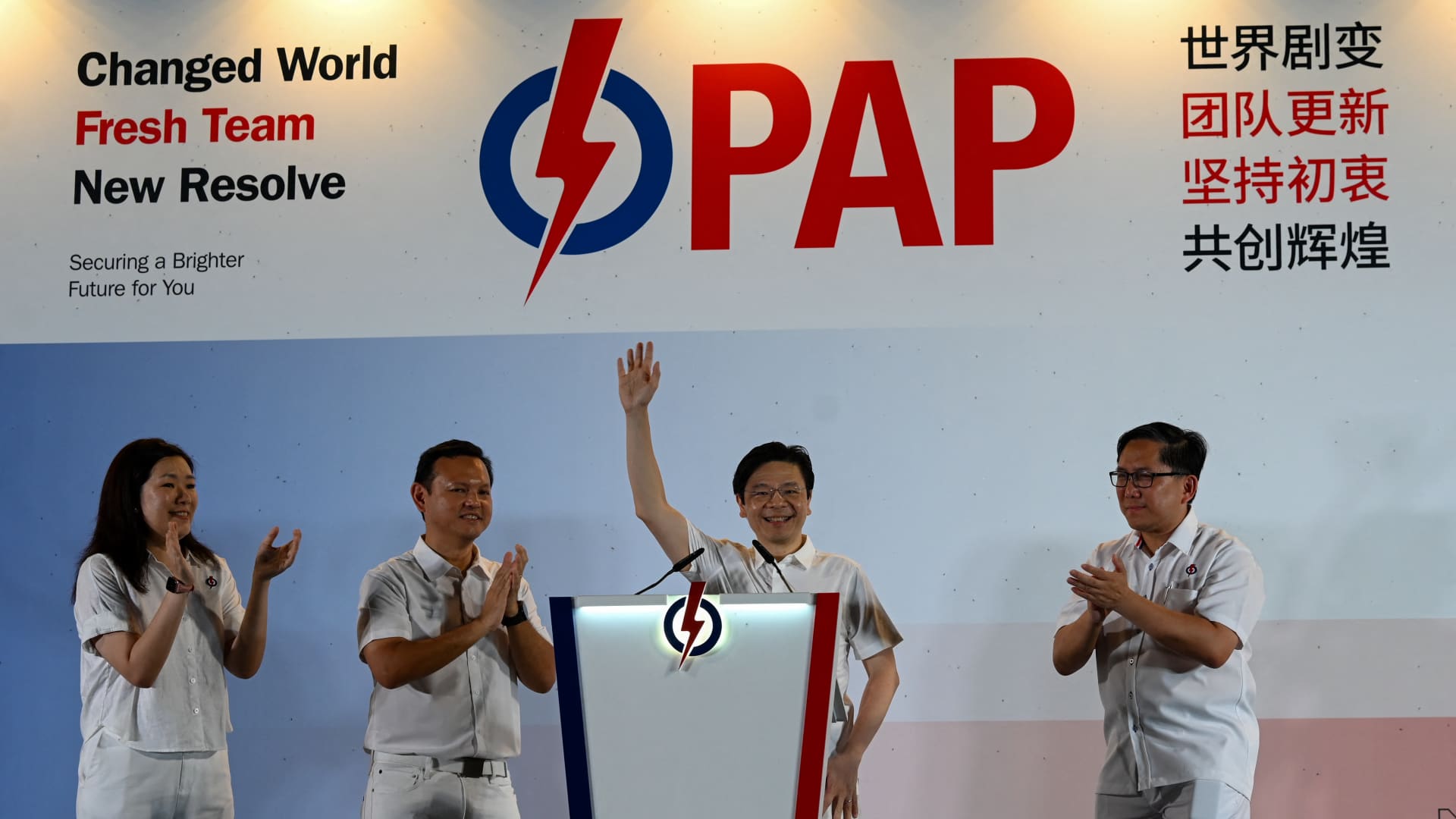
People's Action Party Secures Commanding Victory Amid Global Challenges
In a widely anticipated outcome, Singapore’s governing People's Action Party (PAP) secured a resounding victory in the nation’s 14th general election. This election confirmed the PAP's dominant position, with the opposition Workers Party retaining 10 seats.
The election involved competition for 92 parliamentary seats, following the uncontested allocation of five seats to the PAP based on the nominations submitted on April 23.
The PAP elevated its share of the vote significantly, achieving 65.57% compared to 61.2% in the prior election held in 2020.
Leadership and Historic Turn
This election marked Prime Minister Lawrence Wong’s first as leader. Under his leadership, the PAP was able to increase its vote share, a notable achievement as previous changes in prime ministers in 1990 and 2004 had led to vote share declines.
Wong, who also holds the position of finance minister, took over leadership from Lee Hsien Loong in May 2024, with Lee continuing to play a significant role as Senior Minister.
Since Singapore gained self-governance in 1959, the PAP has consistently been the ruling party, guiding the nation through its transformation to an independent state in 1965. Expressing gratitude, Wong affirmed that the election result provides the PAP with a decisive mandate to lead the country.
International Reactions and Partnerships
The United States promptly congratulated Wong on his party's triumph, with an emphasis on enhancing ties in economic and defense spheres.
In a similar vein, the European Union underlined its commitment to a robust relationship with Singapore, appreciating mutual cooperation in various domains such as trade, investment, and security.
Navigating Economic Uncertainties
Amidst global economic headwinds, Singapore is confronting challenges of slowing growth and uncertain trading conditions. The country's monetary policy was adjusted earlier in the year due to lower-than-expected GDP figures of 3.8% for the first quarter.
Warnings from the leadership about a potential recession in 2025 have prompted proactive measures, including efforts led by Deputy Prime Minister Gan Kim Yong to support the economy and labor market against external uncertainties, notably from U.S. tariff policies.
In recent diplomatic engagements, Singapore has been negotiating trade terms with the U.S., particularly concerning pharmaceutical products and sophisticated technology exports. However, discussions indicated a steadfast U.S. stance on maintaining the existing 10% tariff imposed earlier, despite Singapore’s trade deficit with the U.S.
Leave a Reply