


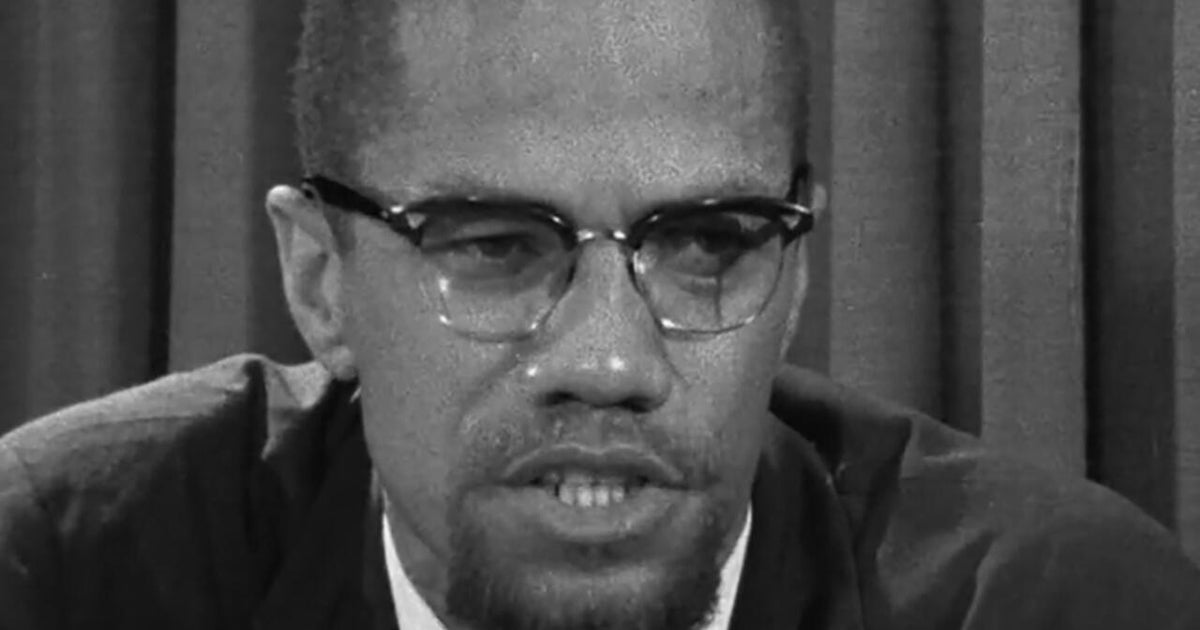
Malcolm X: A Legacy Beyond the Century
Marking the centennial anniversary of Malcolm X, the compelling and dynamic leader whose provocative speech and sharp wit captivated a nation, analysts reflect on how his influence has multiplied since his untimely death. Across a span of just 39 years, Malcolm underwent dramatic evolutions: from a street savvy hustler who discovered faith during incarceration, to a vocal advocate of the Nation of Islam’s racial division beliefs, and ultimately, a visionary who humbly acknowledged past misjudgments, starting a new movement advocating human rights that sought unity with empathetic Whites.
The slogan often attributed to Malcolm X, 'By any means necessary,' while often interpreted as endorsing aggression, held different meaning for his followers. It signified assertion of Black identity and cultural pride, and a commitment to honesty in capturing the essence of the civil rights discourse.
In his own words, Malcolm declared progress unachievable under deceptive pretenses: 'Real advances can’t be claimed if the harm is superficially reduced without addressing the core issue.'
Following his significant break from the Nation of Islam and his public criticisms of its leader Elijah Muhammad, Malcolm unreservedly addressed the looming risk to CBS News' Mike Wallace.
Exactly seven months from that admission, on February 21, 1965, Malcolm X was assassinated during a public gathering. Yet, as Mark Whitaker's book details, his legacy has undergone a profound transformation in the subsequent 60 years.
The transformation began with 'The Autobiography of Malcolm X,' which resonated deeply across the globe. During the 1960s, his teachings inspired the Black Power and Black Arts movements and influenced pioneering sports figures like Muhammad Ali and John Carlos.
In successive decades from the 1980s onward, Malcolm X's legacy was repeatedly invoked by the burgeoning voices of hip hop artists and immortalized cinematically through iconic portrayals.
Concurrently, Malcolm’s ideas were reexamined from various political perspectives, with Supreme Court Justice Clarence Thomas controversially suggesting that Malcolm was fundamentally conservative in emphasizing self-reliance over dependency.
Today, scholars often place Malcolm X in the same revered branch as Dr. Martin Luther King Jr., despite Malcolm's prior mockery of King's nonviolent approach. Historian Peniel Joseph articulates the distinct yet complementary roles they held—likening King to a protective shield and Malcolm to a piercing sword, each representing divergent pathways to freedom for African Americans.
King's famous adage about legislation not engendering affection but precluding violence highlights systemic fixes, while Malcolm emphasized the need for intrinsic validation among Black individuals.
This internal affirmation was crucial, according to Malcolm’s philosophy, in addressing the self depreciatory sentiments fueled by societal biases, an issue he addressed provocatively in a 1962 Los Angeles address.
Malcolm X’s piercing inquiries confront many with a legacy that continues to be felt in current dialogues surrounding identity and justice, echoing his foresight to Mike Wallace about the repercussions of systemic inequality.
The cultural significance of Malcolm X has been explored thoroughly by journalist Mark Whitaker in his study, which examines filmic depictions by Spike Lee and Denzel Washington, illustrating the enduring allure Malcolm holds even decades after his assassination.
Leave a Reply