


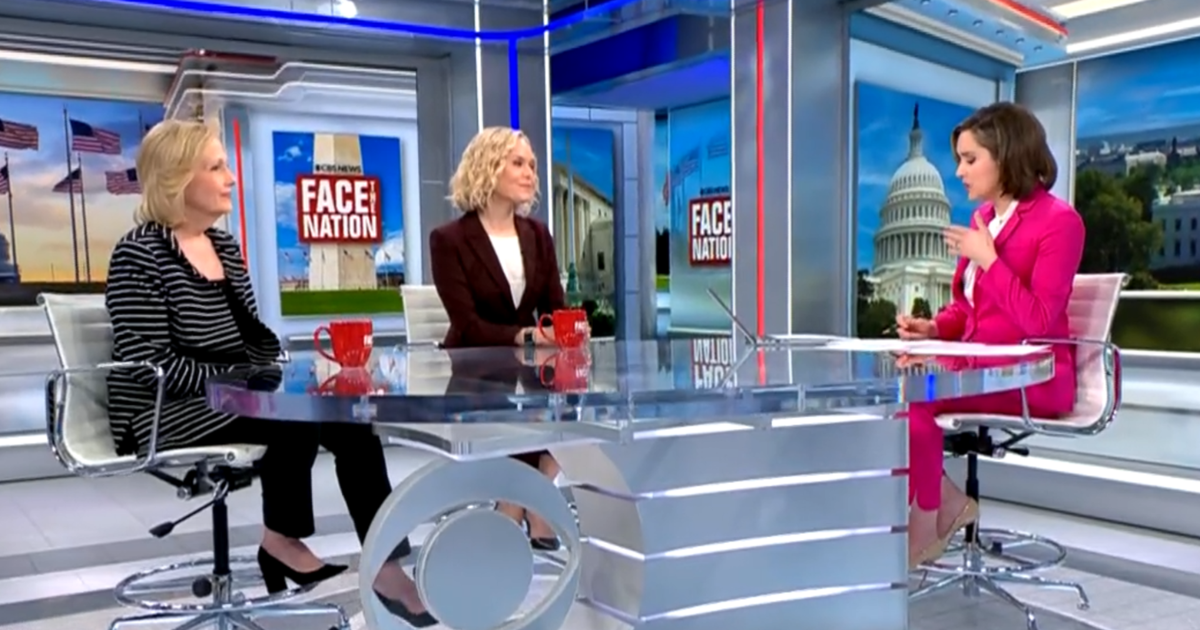
Discussion with Katherine Maher and Paula Kerger on 'Face the Nation,' May 4, 2025
CBS News
MARGARET BRENNAN: During a recent graduation speech at the University of Alabama, President Trump expressed reservations about the press but emphasized the necessity of a free press.
DONALD TRUMP: We require a savvy press—they function as a guardian, crucially so. You have the opportunity to lead it in a fresh direction. Aid in preserving our nation. The citizens recognize truth, which is why the approval figures for media remain low.
MARGARET BRENNAN: Recently, the President mandated the cessation of federal funds to NPR and PBS. To discuss the implications, we have NPR's Katherine Maher and PBS's Paula Kerger joining us. Welcome!
PAULA KERGER: Pleasure to be here.
MARGARET BRENNAN: The President's directive affects the Corporation for Public Broadcasting, crucial to both your organizations. Are you considering legal action, and on what grounds?
KATHERINE MAHER: We are exploring various avenues. It's too soon to detail our exact course of action.
MARGARET BRENNAN: What about PBS?
PAULA KERGER: We share similar considerations. Although the Corporation funds us, they don't manage either PBS or NPR. We exist as autonomous entities.
MARGARET BRENNAN: This threat isn't new. Funding debates have persisted, though current funding provisions extend to 2027. Are alternative funding strategies in place?
PAULA KERGER: Indeed, this situation feels uniquely challenging. Over the years, from Newt Gingrich onwards, I've witnessed numerous funding disputes, but this feels more severe. They're targeting us on multiple fronts. FCC restrictions and executive orders could severely impact public media funding. Some of our smaller stations, reliant on federal support for up to 50% of their budgets, face existential risks.
MARGARET BRENNAN: How immediate is the effect on NPR?
KATHERINE MAHER: Likewise, if rescission occurs or member stations can't contribute through dues, it would devastate us, especially smaller local stations in news deserts, which form around 20% of communities without alternative local news.
MARGARET BRENNAN: The President's message suggested distancing from NPR and PBS, labeling them radical. It reminded me of characters from beloved children's shows.
PAULA KERGER: I thought of children's favorites too.
MARGARET BRENNAN: Is beloved children’s programming also impacted?
PAULA KERGER: Yes, our Department of Education funding, crucial for educational programming development, faces jeopardy. These shows help half the nation's preschool-aged children develop essential skills before kindergarten.
MARGARET BRENNAN: Will current programming continue?
PAULA KERGER: Yes, though if support terminates, future developments halt. Stations collaborating with preschools across the country depend on these resources.
MARGARET BRENNAN: Katherine, regarding claims of editorial bias, how do you ensure coverage remains unbiased?
KATHERINE MAHER: While I don't direct editorial content—our dedicated editor-in-chief does—I can affirm our commitment to unbiased reporting across our extensive network, serving public interests. We're inviting participation from across the political spectrum, but engagement remains sparse.
MARGARET BRENNAN: Some government criticism targets your editorial decisions. What's your take on this?
KATHERINE MAHER: It appears to be an attempt to challenge our editorial independence. Yet our core mission stands: uphold the First Amendment by remaining detached from government influence, as founded by the Public Broadcasting Act of 1967.
MARGARET BRENNAN: The Act created a protective separation from political control. Does that remain critical today?
KATHERINE MAHER: Absolutely, maintaining independence ensures all programming serves public interest, free from political sway.
PAULA KERGER: The Act established public broadcasting as a public-private partnership, emphasizing autonomy, most funding originating from community contributions, fostering content relevant to those it aims to serve.
KATHERINE MAHER: To illustrate, for every dollar from the government, stations secure approximately seven from private sources. Interfering with this model challenges public contributors' rights and choices.
MARGARET BRENNAN: Given ongoing press trust issues, we'll continue monitoring these developments. Thank you for your insights.
KATHERINE MAHER: Thanks for the discussion.
MARGARET BRENNAN: More to follow shortly.
Leave a Reply