


Woman Dies from Explosion While Attempting Bomb Attack Near Thessaloniki Bank
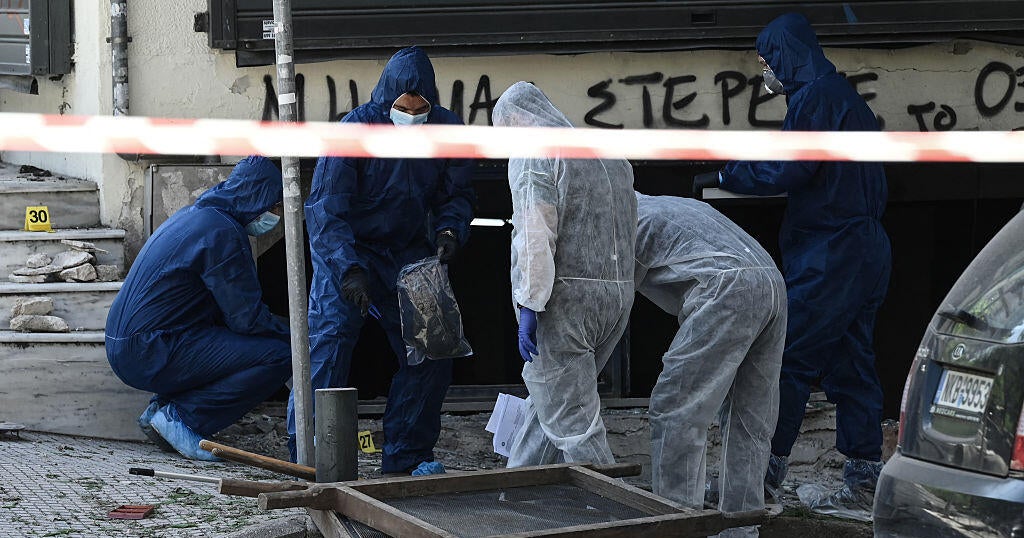
On an early Saturday morning, tragedy struck when an explosive device detonated in the hands of a woman, leading to her untimely death.
The 38-year-old was reportedly on her way to deposit the bomb at a bank's ATM in Thessaloniki when it prematurely detonated around 5 a.m. The powerful blast shattered several shopfronts and damaged nearby vehicles.
A senior officer from the police force revealed to Reuters, "It seems she intended to install an explosive at the bank, but the device unexpectedly exploded at her location."
After the explosion, she was rushed to the hospital; unfortunately, she succumbed to the sustained injuries.
Authorities revealed that the woman was previously involved in criminal activities, including drug offenses and prostitution, and was suspected of participating in robbery and theft operations. The Greek police's organized crime unit is delving into the case to determine whether she was connected to radical left-wing factions.
Greece experiences sporadic bomb attacks and targeted killings, usually attributed to organized crime syndicates. Historically, political violence and extremist terrorism have roots tracing back to the 1970s, although these incidents seldom result in casualties.
In recent years, although major extremist groups from the 1980s and 1990s have been dismantled, minor factions have surfaced. These new groups target politicians, foreign entities, and dignitaries.
A similar explosion occurred last year in Athens when a man trying to construct a bomb inadvertently caused a blast in an apartment, leading to his death and severely injuring a woman present at the scene.
Such incidents have prompted alarms about an emerging wave of domestic extremism, highlighted by remarks from Minister of Citizen Protection, Michalis Chrisochoidis.
In April, a faction named 'Revolutionary Class Struggle' took credit for a detonation near the offices of the Hellenic Train in Athens, Greece’s primary rail service operator, while also admitting to planting another device near the Labor Ministry not long before.
The railway bomb caused minor structural damage but no reported injuries. Prior warnings conveyed through anonymous media tips allowed police to evacuate the vicinity in advance.
Explaining their motives, the group stated the attack was part of a broader armed resistance against governmental structures.
The train office bombing happened close to the second anniversary of Greece's worst rail catastrophe, where a head-on collision between a freight and passenger train claimed 57 lives and left many others scarred.
Leave a Reply