


Innovative Tools in Solar Observation: A New Era for Predicting Solar Storms
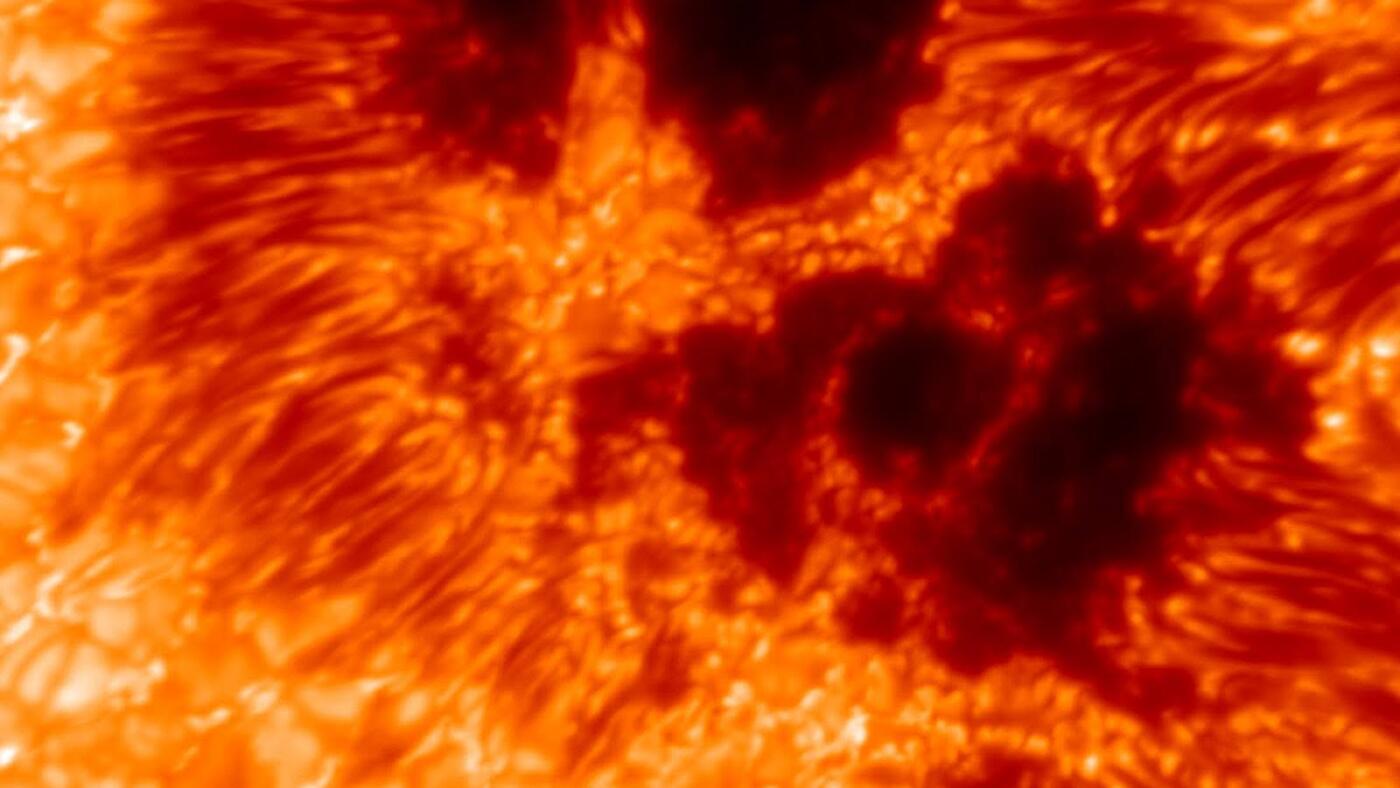
Recently, the Daniel K. Inouye Solar Telescope, situated on a Hawaiian volcano, achieved a groundbreaking feat by capturing a highly detailed image of sunspots using its novel Visible Tunable Filter (VTF).
This cutting-edge solar telescope, recognized as the most powerful in the world, has opened a new chapter in solar physics by photographing a cluster of sunspots during its preliminary technical trials. Even before reaching its full operational capacity, the VTF's current capabilities demonstrate significant promise.
The photographic achievement was made on Maui’s Haleakalā volcano, showcasing not only remarkable visual clarity but also the technical prowess of the VTF, which leverages a pair of reflective plates to discern subtle variations in light flux across different wavelengths, a technique known as interference.
Sunspots are known as regions with heightened magnetic activity, capable of inciting solar flares and coronal mass ejections. These cosmic events could potentially disrupt Earth's electromagnetic communications and power supplies.
Thomas Kentischer, an important figure at the Leibniz Institute for Solar Physics who co-leads this project, expressed his satisfaction stating, "For me, the success of the VTF marks a high point after years of dedication, giving scientists a robust instrument to unravel solar mysteries."
The National Solar Observatory (NSO) described the sun as an immediate plasma laboratory, extending hope that the enhanced capabilities of the Inouye Solar Telescope will soon allow more accurate forecasts of solar storms to minimize the risks posed by these extraterrestrial phenomena.
The telescope’s creation has not been without controversy, facing opposition from local communities concerned about its impact on what they consider sacred land. Despite this, the telescope stands as the largest solar observation tool on the planet.
Leave a Reply