


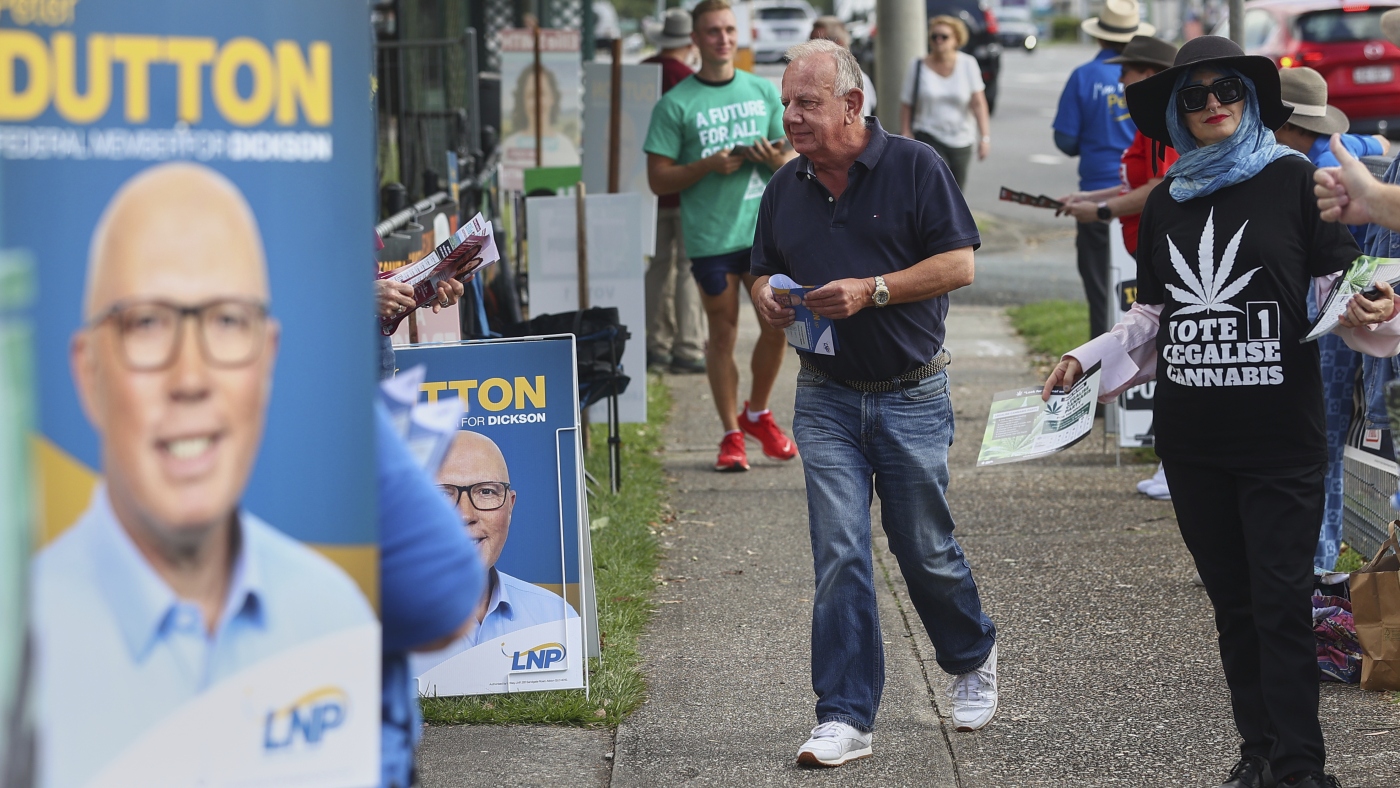
Initial Vote Tally Points to Australian Government's Possible Reelection
In Melbourne, early indicators from the vote count in the Australian general election hinted at the possibility of the ruling party securing another term in office.
Projections from the Australian Electoral Commission indicated that the center-left Labor Party was leading with 70 seats, while the opposition coalition had only secured 24 out of the 150 seats up for grabs in the lower house. Meanwhile, independent candidates and smaller parties were on track to win 13 seats.
Jim Chalmers, a prominent government minister, commented on the early vote's reflection of volatility and differing electoral battles nationwide. In contrast, opposition Senator James McGrath anticipated that the ultimate outcome might remain uncertain on Saturday.
Electoral Stakes and Leadership Addresses
With the Electoral Commission tallying votes, Prime Minister Anthony Albanese and opposition leader Peter Dutton were scheduled to address party supporters in Sydney and Brisbane, respectively. Traditionally, leaders make speeches conceding defeat or claiming victory on election day.
The central themes preoccupying the campaign included energy policies and the soaring inflation, both pressing issues given the current cost of living crisis.
Energy Policy and Economic Concerns
Dutton's Liberal Party attributed rising inflation and interest rates to government overspending and proposed cutting over a fifth of public sector jobs to curb expenses. While both parties are committed to achieving net-zero emissions by 2050, Dutton proposed an increased reliance on nuclear energy over renewables to reduce electricity costs.
Labor criticized Dutton by branding him "DOGE-y Dutton" and accused his faction of mimicking American political styles, especially under Donald Trump's administration, which they claim promote divisiveness.
Albanese emphasized improved diplomatic ties with China under his government, which had lifted trade barriers costing Australian businesses billions annually since Labor's rise to power in 2022.
Economic Strains and Generational Shifts
The nation's cost of living crisis overshadowed the elections. As Australia undergoes demographic changes, both political factions pledged to introduce measures aimed at assisting first-home purchasers in an increasingly unaffordable real estate market.
Food insecurity continued as a significant issue, with millions experiencing disruptions in meal availability. The central bank’s recent adjustment of the cash interest rate indicated optimism, suggesting the toughest economic conditions might be receding.
Minority Government Scenarios
Heading into the election, Labor had a narrow hold with 78 seats, and potential losses could result in the need to form alliances with independent lawmakers if it aims to maintain governance.
Australia's history with minority governments includes the 2010 scenario and a preceding instance during World War II. The dynamic political landscape might delay a clear picture of governance until after the votes are thoroughly counted.
Leave a Reply