


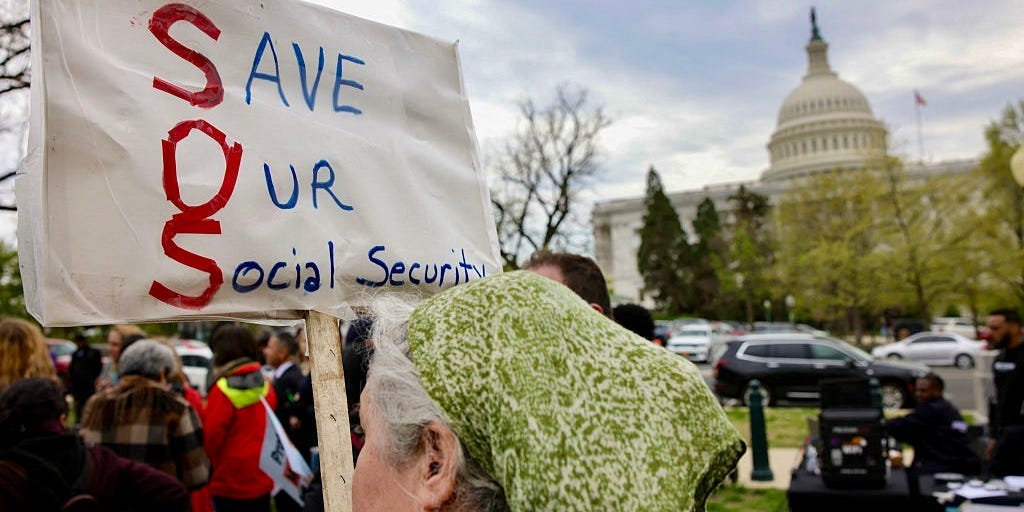
America's Fondness for Social Security at Odds with Staff Struggles
For Edwin Osario, working in a Social Security office near New York exudes a noble essence. Over thirty years, he's been a vital connection—answering calls, holding meetings, and ensuring that retirees and those with disabilities receive their essential payments.
Osario remarked, 'Those who are struggling, elderly, newly disabled, or widowed turn to us as their last resort. We represent hope.'
However, Osario feels an increasing distance from the agency he once deeply respected. It's not Osario being targeted; rather, the Trump administration's austerity measures include cutting 7,000 jobs in Social Security through closure of offices and urging retirements earlier than planned.
Conversations with numerous Social Security insiders paint a picture of 'turmoil,' 'pressure,' 'disarray,' and 'dread' as daily challenges in field offices and call centers. Though Social Security is highly favorable to the public, with many advocating for more funding, tensions from beneficiaries have bombarded offices and phone lines, overstressing workers. The remaining employees worry about how these cuts will impair the delivery of monthly payments to 73 million Americans.
Juggling Boomer Retirements Amid Workforce Reductions
Employees at Social Security field offices balance two major aspects of their roles. Public-facing duties involve responding to beneficiary queries over the phone or meeting them in person. Behind closed doors, they tackle intricate tasks such as processing paperwork and auditing means-testing records. Reduced staff means less time and fewer resources for these critical operations.
Osario confesses that work pressures follow him home to family dinners. Jill Hornick, with 33 years of experience, echoes the sentiment, regularly comforting colleagues worried about job security. A customer service representative notes, 'When you absorb so much sorrow, it seeps into your own well-being.'
While call center staff escape the bulk of paperwork, Shaunellia Ferguson, president of AFGE Local 2014, feels the expanding demands on her service role. The surge in call volume to the SSA's 1-800 number has raised concerns, especially when callers receive automated disconnection notices.
A drop of 7,000-8,000 staff members is significant, inflating wait times from two to three hours to potentially much longer, remarked a customer service veteran.
According to a BI analysis, beneficiary numbers have far outgrown SSA's workforce. As baby boomers edge towards retirement, many are set to rely on Social Security as their main source of income.
Leadership Shifts Under New Policies
Although changes with a new presidency aren't novel at SSA, this phase stands apart, employees state. Initially excluded from federal layoffs, SSA workers were startled by the latest shifts, particularly given past presidential assurances to preserve funding.
Employees recount an era pre-dating Trump's tenure where workloads were still hefty but now describe it as 'chaotic beyond anything in my over 40-year career.' Laura Haltzel, a past associate commissioner, concurs, saying, 'We haven't witnessed such a deliberate approach to budget-cutting previously.'
Uncertainty looms about a new compulsory in-person ID initiative, meant to curb the minimal fraction of incorrect Social Security payouts. Despite several rollbacks, it was definitively enforced recently, yet staff report insufficient briefing on the policy.
Changes such as planned reductions and leadership replacements under acting commissioner Dudek or Trump's nominee, Frank Bisignano, are causing mixed reactions among employees.
A customer service worker wishes for Bisignano to recognize that overburdening federal employees is counterproductive.
Rising Pressure on Employees and Beneficiaries
The lifeline Social Security provides is crucial in supporting older adults, those with disabilities, and low-income families.
Growing SSA demands paired with shrinking staff numbers are eroding morale agency-wide, employees report.
Security worries are mounting, with possible spikes in desperation among beneficiaries, igniting frustrations over prolonged waiting. 'It's a tinderbox,' warns SSA AFGE representative Rich Couture.
Beyond emotional stress, the structural adjustments under Trump's administration may translate into longer processing times for benefit claims, some employees warn.
While no delays or missed payments have materialized yet, continued staff deficiencies could pose serious risks.
Any postponement in payments would severely affect individuals like Linda Hudak, aged 71, who depends entirely on Social Security and SNAP for sustenance.
SSA employees convey a significant sense of responsibility. Many joined seeking another avenue to serve their nation; others, beneficiaries themselves, value these payments for their sustenance. They fear that the overarching mission of service they've upheld is deteriorating, with slim chances of recovery under ongoing budget constraints and cuts.
Leave a Reply