


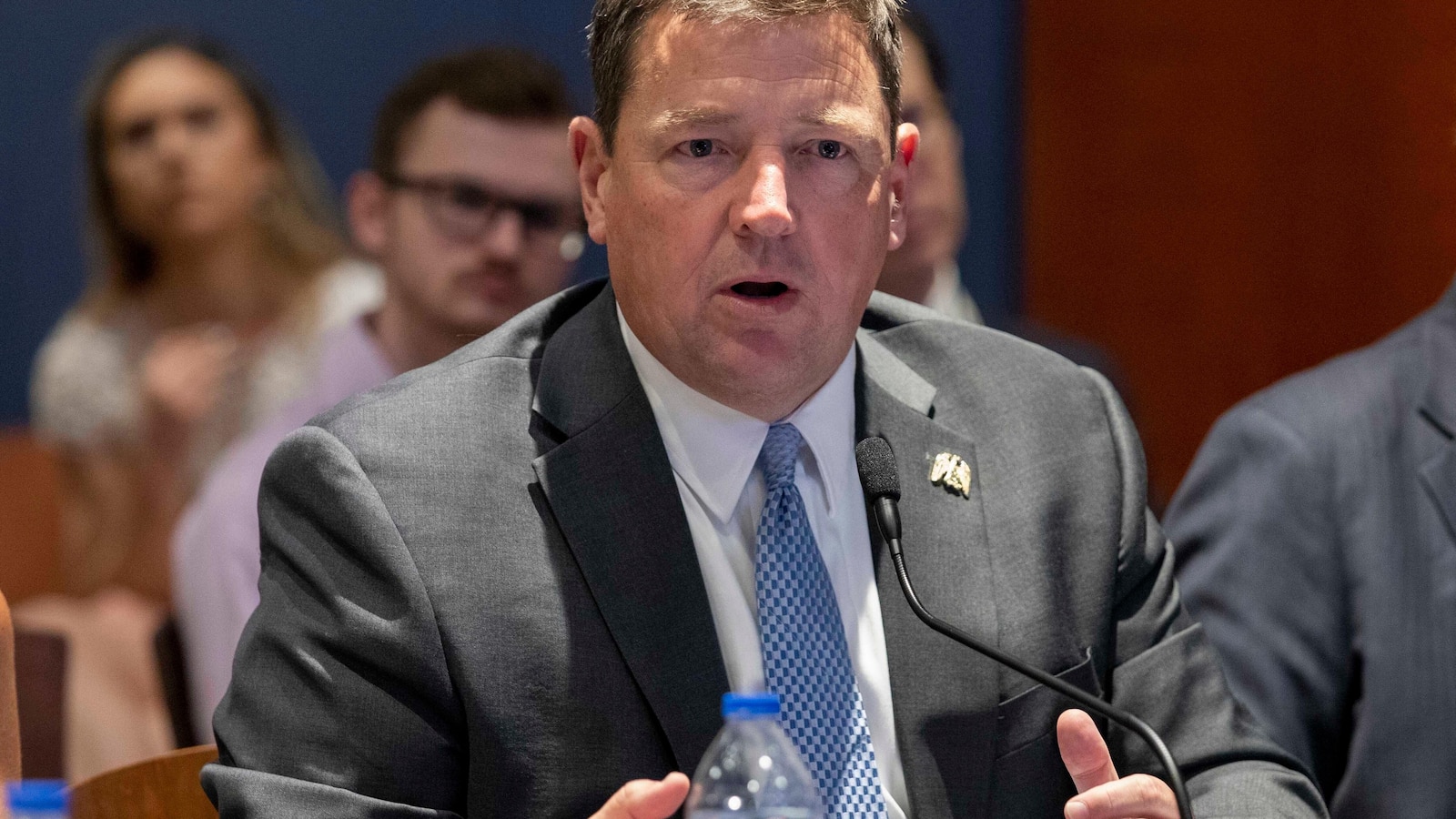
Trump's Controversial Nominee for D.C. Prosecutor
While many of President Donald Trump's significant nominees have effortlessly secured Senate approval, his choice for the leading federal prosecutor role in the capital, Ed Martin Jr., is raising concerns about Republican loyalty and the potential for resistance.
Ed Martin Jr., a political activist with limited courtroom experience who has defended participants of the January 6 Capitol assault, challenges party unity as the Senate weighs the decision to either renew or terminate his short yet controversial leadership as head of the United States' largest U.S. Attorney's Office.
Martin's nomination is met with opposition from numerous veteran attorneys within the office, while Democrats seek to delay a vote on his confirmation. Several Republican senators have expressed the need for additional time to scrutinize his background.
Evidence of dissent emerged during a Judiciary Committee meeting when Senator Dick Durbin of Illinois, a leading Democrat, noted that Republican Chairman Chuck Grassley had hinted at postponing further discussion of Martin's nomination.
Grassley refrained from a firm decision, stating he was still assessing numerous questions directed at Martin by the committee and that further queries required in-person responses.
Martin's Enthusiastic Support for Trump
Early in his appointment, Martin took actions that aligned closely with President Trump, including a shift in prosecutorial focus from Capitol riots to other crimes. Before his appointment, he was involved in raising defense funds for riot participants and frequently echoed Trump's positions in media appearances.
Despite declining interviews with the Associated Press, Martin assures confidence in his nomination, promoting his team's efforts in reducing violent crime and pledging impartiality in office decisions.
Partisan Lines and Senate Challenges
A vote to confirm Martin is anticipated to be sharply divided along party lines. Democrats are demanding the unusual step of a hearing to thoroughly question Martin, deviating from the Judiciary panel's standard reliance on questionnaires.
Even if Martin advances through the committee, his nomination would still face delays in the Senate, where Senator Adam Schiff has blocked swift approval, requiring Republicans to allocate considerable floor time for debate.
Martin has amassed endorsements from prominent conservative voices, such as Elon Musk, Charlie Kirk, and Donald Trump Jr. Some Republican legislators, including Senators Rand Paul and Marsha Blackburn, have also voiced their support.
Senator Rand Paul expressed assurance that Martin will effectively challenge what he perceives as leftist judicial overreach.
Internal Discontent and External Support
While Martin aims to clamp down on street violence, proposing initiatives like “Make D.C. Safe Again,” his intentions face scrutiny. Some Republicans, like Senator Thom Tillis, remain unconvinced by Martin's responses to past controversial statements.
Selected amidst a batch of pardons for Capitol attackers, Martin's appointment disheartened federal prosecutors who had dedicated extensive efforts to these cases. Questions on his impartiality remain due to his associations with the “Stop the Steal” movement and representation of riot defendants.
Acknowledgments and Criticism
While endorsing controversial figures, such as Capitol riot participant Hale-Cusanelli, Martin later distanced himself from their ideologies. Yet, his initial acknowledgments juxtapose growing concerns over his objectivity.
Critics accuse Martin of leveraging his position and social media presence to unnerve investigative targets, indicating a pattern of politically charged behavior through his career.
In earlier roles, such as chief of staff to Missouri Governor Matt Blunt, Martin was embroiled in accusations of retaliatory dismissals related to email policy complaints.
Educational and Professional Background
Before his ascent in conservative activism, Martin chaired the Missouri Republican Party and led the Eagle Forum after co-authoring a book with Phyllis Schlafly. His self-described alignment as a presidential lawyer is contested due to his limited prosecutorial experience.
Critics argue Martin's credentials fall short, likening his experience unfavorably compared to novice misdemeanor prosecutors, voicing concerns about his capacity for effective office leadership.
Leave a Reply