


Trump Proposes $6 Billion Reduction in NASA Budget with a Focus on Mars Exploration
The Trump administration has announced a proposal to decrease NASA's funding by $6 billion, while designating $1 billion from the remaining budget specifically for initiatives directed towards Mars exploration. This shift aligns with long-standing ambitions of private ventures like SpaceX, spearheaded by Elon Musk.
According to a document uploaded to NASA's website on Friday, the revamped financial strategy redirects efforts towards surpassing China's return to the Moon and pioneering human presence on Mars.
NASA indicated that achieving these goals would require simplifying their operations across workforce management, IT services, and facility maintenance, discontinuing numerous financially unsustainable missions, and scaling down scientific endeavors to uphold "fiscal responsibility."
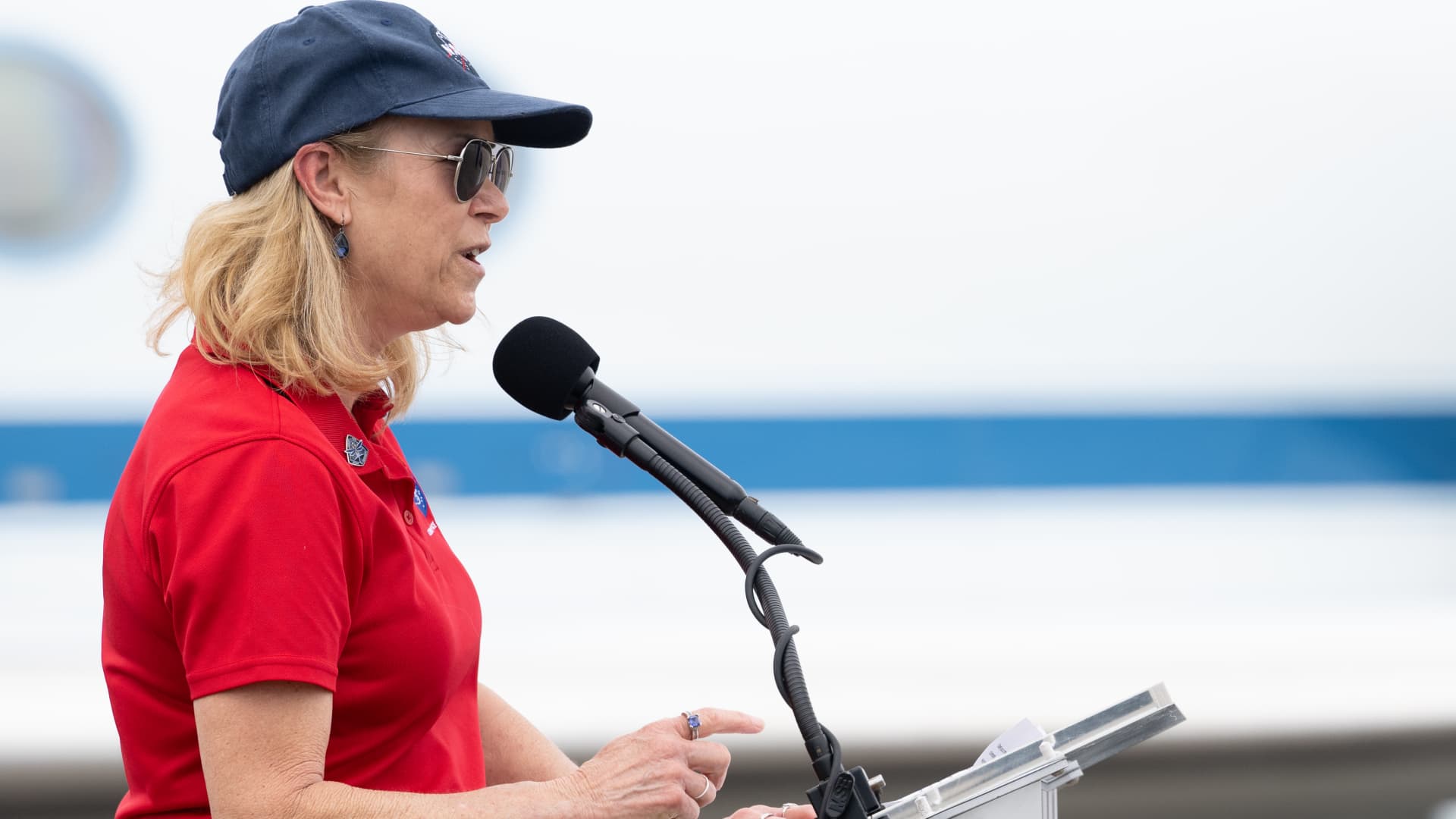
In a communication sent to all staff on Friday, NASA's acting administrator Janet Petro conveyed that the trimmed budget—reducing NASA's funding by approximately 25%—mirrors the government's backing of their mission, setting the stage for monumental breakthroughs ahead.
Petro encouraged the NASA team to remain determined and adapt to the demanding tasks presented by budget constraints, emphasizing fortitude in accomplishing unprecedented goals in her memo acquired by CNBC. She admitted that this would necessitate difficult choices, leading to the reduction of certain NASA initiatives.
The detailed proposal outlines over $7 billion earmarked for lunar exploration, along with an infusion of $1 billion dedicated to new investments in Mars-centered programs.
SpaceX, already a major player in contracting with NASA and the Department of Defense, is striving to launch a crewed mission to Mars. The company asserts its colossal Starship rocket is engineered for journeys transporting crew and cargo to Earth's orbit, the Moon, and ultimately Mars, and beyond.
Elon Musk, the founder and CEO of SpaceX, plays a pivotal role in the federal government's effort to streamline operations and spending, influencing policy through the Department of Government Efficiency (DOGE).
Despite Musk's frequent audacious and incorrect forecasts for his ventures, he asserted "high confidence" in SpaceX's ability to land humans on Mars by 2026.
In her memo, Petro noted that under the proposed budget limits, NASA would retire programs such as the SLS (Space Launch System) rocket, the Orion spacecraft, and the Gateway ventures.
The proposal would also conclude funding for green aviation projects and the Mars Sample Return (MSR) Program, which aimed at gathering and returning Martian soil, rocks, and atmospheric samples to Earth for comprehensive analysis.
If approved, these budget changes would impact NASA's space science, Earth science, and mission support sectors, reducing their scope.
Petro refrained from specifying any particular aerospace and defense contractors in her message. However, companies like SpaceX, ULA, and Blue Origin are well-positioned to continue operations, assuming roles that would be vacated by the end of the SLS project.
She emphasized NASA's history of innovation under pressure, asserting that their ability to deliver results despite challenging circumstances distinguishes them in the field.
Leadership Transition at NASA
The nominee for NASA's leadership, a tech entrepreneur, is awaiting approval from the U.S. Senate after a committee review. This transition marks a potential shift in the agency's strategic direction in alignment with new budgetary constraints.
Leave a Reply