


Trump Family's Crypto Venture Sparks Controversy Over Ethics
With a cryptocurrency enterprise partially owned by former President Donald Trump and his offspring rapidly expanding, many critics are voicing concerns about possible conflicts of interest and ethical issues related to their international dealings.
Key Figures and Business Moves
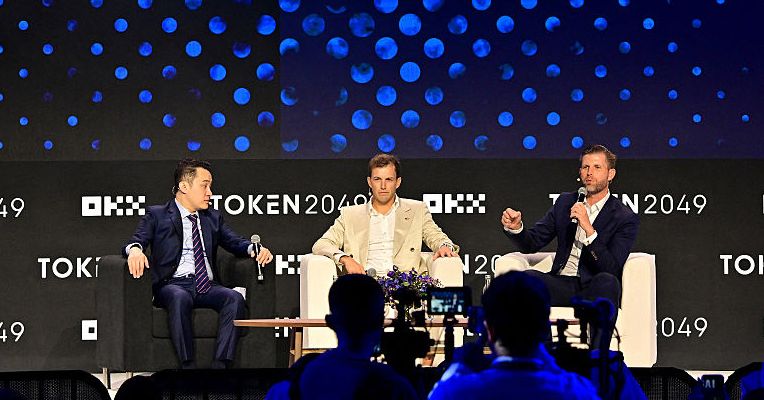
Eric Trump recently took the stage in Dubai at the Token2049 cryptocurrency event, together with Zachary Witkoff, cofounder of World Liberty Financial, whose father, Steve Witkoff, serves as a Middle East envoy for the White House.
At the event, they announced that the stablecoin USD1, was set to be utilized by the UAE-backed investment firm MGX to inject $2 billion into Binance, a major player in the cryptocurrency exchange sector.
Financial Implications and Potential Returns
World Liberty Financial, acting as a sort of mediator in the deal, could potentially amass tens of millions of dollars. Witkoff expressed gratitude toward MGX and Binance, stating, “This is just the beginning,” reported by the New York Times.
In the world of cryptocurrency, stablecoins like USD1 are pegged to the US dollar via a reserve of cash and other financial instruments, ensuring their value stays steady. This allows issuers to hold assets like U.S. Treasuries, earning interest.
The potential profit from these ventures is significant, especially with an increase in stablecoin supply leading to larger reserves and more income-generating capacity. If $2 billion were invested into short-term Treasury bills, World Liberty Financial could see annual earnings of around $85 million at the current rates.
Concerns Over Influence and Ethics
This lucrative opportunity raises serious ethical questions, as the Trump family has stakes in World Liberty Financial through a separate entity. Critics argue that using USD1 might allow foreign entities to subtly channel wealth to the Trump family, potentially buying influence in U.S. policy.
USD1 is part of a growing list of Trump-affiliated crypto assets that opponents worry could be misused. These include tokens giving shareholders a vote in business operations, highlighting the potential for conflicts of interest.
Robert Weissman of the consumer rights group Public Citizen calls it a case of “foreign policy for sale.” White House statements insist there are no conflicts, with the Trust managing Trump's assets for avoidance.
Legislative Developments and Political Reactions
As World Liberty Financial ventures further into stablecoins, U.S. lawmakers are expediting legislation aimed at regulating stablecoin issuers. A bill is being processed in the Senate, while a related bill is under review in the House.
Senator Elizabeth Warren criticized it, claiming the legislation might facilitate self-enrichment for Trump and his family.
Business Outreach and Industry Observations
Despite these allegations, representatives of World Liberty Financial continue to network globally, forging connections with lobbyists, policymakers, and some famous figures within crypto circles.
Christian Catalini from MIT Cryptoeconomics Lab notes that a competitive frenzy has gripped the stablecoin market, prompting players to stretch rules to their favor as they enter with increasing vigor.
Pictures from April showcase the team with Binance’s founder Changpeng Zhao. Despite Zhao's previous legal issues in the U.S. over money laundering violations, the collaboration continues, underscoring the ongoing development.
Notable Investment and Related Controversies
Token2049 also spotlighted Justin Sun of TRON, who pledged $75 million towards World Liberty Financial’s endeavors. But the SEC previously accused Sun of market manipulation, reflecting wider regulatory concerns.
Weissman criticizes unprecedented scenarios where foreign stakeholders are channeling significant funds to the sitting president’s family, labeling it far beyond typical conflict of interest scenarios.
Leave a Reply