


Is Trump's Agenda Losing Its Charm?
Public sentiment towards Trump has grown colder, though some facets of his policies still spark nuanced debates.
Upon entering the presidency, Trump enjoyed widespread popularity, alongside favorable public perception of his proposals.
Having clinched both the popular vote and crucial battlegrounds, his economic and domestic strategies received significant public approval.
Voters trusted Trump to combat inflation and reduce living costs, and they supported stricter immigration policies due to dissatisfaction from the previous administration's leniency. Furthermore, many were receptive to his efforts against diversity initiatives.
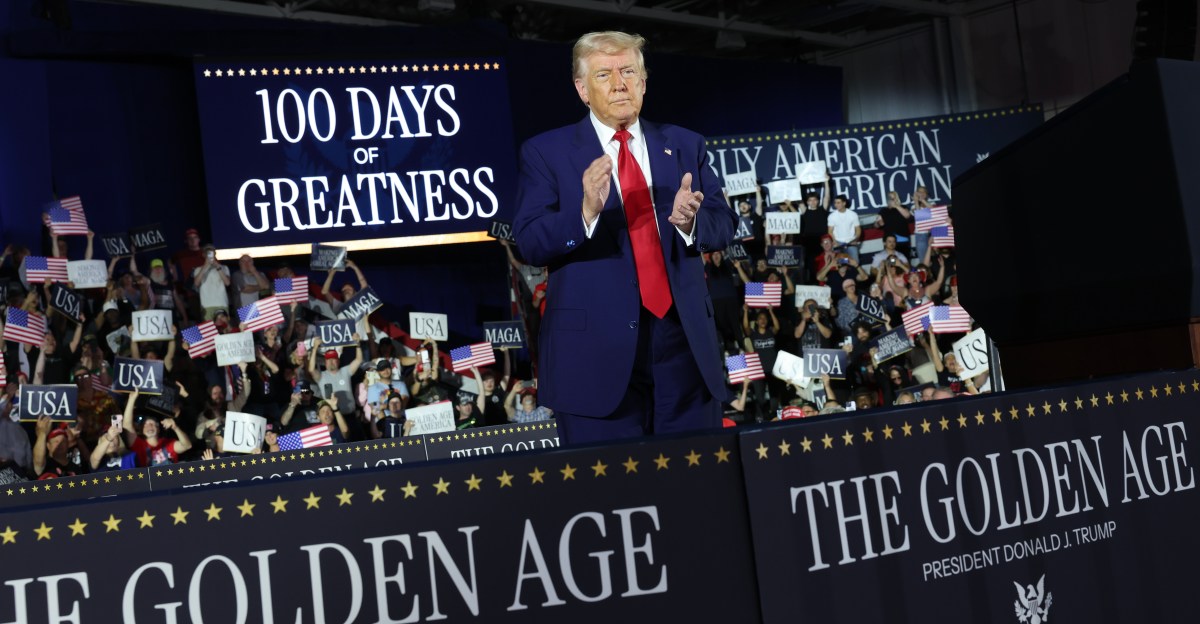
Yet, a mere 100-plus days later, this support has dwindled as the public has largely turned away from most of his policies, including some that were initially well-received.
The decline in Trump's favorability ratings is notable, driven by falling confidence in his economic strategies, trade measures, and tariff rollouts, all of which gained unwanted attention post his tariff policy announcements.
While not entirely disapproved by the populace, Trump's failure to execute some policies is more criticized than the policies themselves.
Areas of Significant Unpopularity
Attention has quickly turned to Trump's economic leadership, once a strong point, now marred by public disdain over unclear tariff strategies.
The introduction and subsequent impact of his tariffs have severely hindered public trust, as evidenced by declining approval ratings concerning economic performance.
While tariffs against China are somewhat accepted due to public perception of China as an economic adversary, this respect is not extended to his overall economic tactics.
Many disapprove of the administration's approach to adhering to court rulings, especially in controversial cases such as Kilmar Abrego Garcia's.
Moreover, efforts by Trump and Elon Musk to minimize federal operations and spending have ignited public opposition, notably due to perceived excessive workforce cuts.
Educational reforms, too, have sparked disapproval, particularly the longstanding conservative push to dismantle the Department of Education, viewed unfavorably by a significant majority.
Mixed Receptions in Policy
Public sentiment is divided on whether Trump’s overarching government efficiency goals align with concerns over individual execution methods.
Though the idea of limiting government size is generally supported, operational aspects, particularly under the influence of figures like Elon Musk, have shifted public opinion negatively.
Diversity policies remain a contentious topic. While many agree with the principle of trimming excess, the manner of implementation and actions against diversity efforts drive mixed reactions.
Where Support Endures
Trump’s immigration policies still retain relative support, sustaining some of his approval ratings, even if slightly diminished recently.
Public opinion often shows approval depending on specific deportation circumstances, like criminal records versus family separations.
Despite growing negativity towards Trump, there is acknowledgment of certain positive outcomes, such as perceived reductions in unlawful crossings.
Reasons Behind the Shift
Voter disillusionment stems partly from unmet expectations post-election; the same dynamics that fueled Trump’s victory may now be contributing to his waning support.
A hasty and maximalist policy approach, combined with rising scrutiny, fosters an image of recklessness, impacting public confidence.
Overall, as time progresses, the natural ebb and flow of public opinion tends to challenge incumbents.
Given historical trends, the upcoming congressional elections could mirror past dynamics, potentially favoring opposition parties.
Leave a Reply