


Automotive Giants Alter Financial Strategy Amid Trump's Tariff Turmoil
Major European car manufacturers have disclosed a notable decline in their first-quarter earnings, additionally retracting or lowering their financial projections for the entire year. The economic difficulty they face has been partially blamed on recent actions by the U.S. President.
This shift in corporate strategy was initiated soon after President Trump instituted a 25% tariff on vehicles imported into the United States earlier this April.
In an effort to navigate the brewing tensions, Trump signed an executive order preventing a cumulative effect of tariffs by addressing other duties like those on steel and aluminum, each with its own 25% levy.
While some automakers welcomed this development, analysts warned that the ever-evolving nature of the tariffs could deter long-term corporate planning and investment.
Updates from Stellantis
Stellantis, the conglomerate that encompasses popular brands like Jeep and Fiat, announced that it was revoking its annual financial guidance due to uncertainties created by the tariffs.
In its announcement, Stellantis revealed its proactive engagement with policymakers and ongoing adjustments in production strategies to counter these economic pressures. The company’s revenues for the first quarter stood at 35.8 billion euros, a 14% reduction compared to last year.
Mercedes Responds to Market Volatility
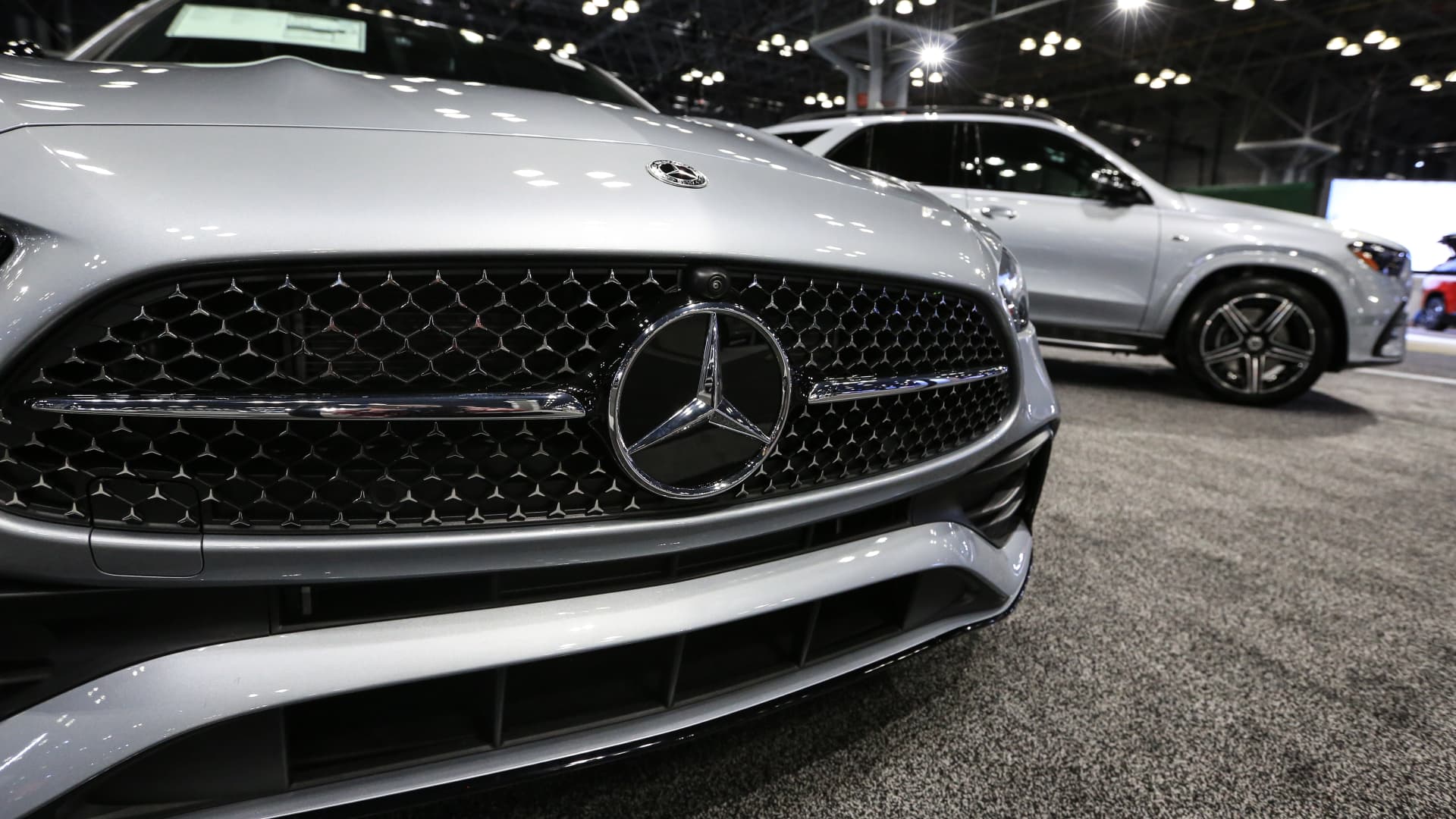
Mercedes, the German automotive giant, has also stepped back from its financial projections for 2025, citing an inability to accurately estimate fiscal outcomes amid the unstable trade environment.
The company indicated that if current trade policies continue, there will be adverse effects on earnings, cash flow, and return on sales across its vehicle divisions. Despite marginal tariff relief, uncertainty still cripples strategic financial planning.
Equity analyst Rella Suskin noted that while easing of tariffs offers slight relief, the absence of clear guidelines hinders investment moves.
Volkswagen's Strategic Position
Contrary to some of its peers, Volkswagen has not retracted its financial forecasts. However, it anticipates operating profits and liquidity to hover around the lower spectrum of its forecasts, attributing this to the restrictive trade policies and regulatory challenges.
In the first quarter, Volkswagen reported an operating profit of 2.9 billion euros, showing a 37% decline from the previous year.
Volvo Cars' Adjustments
Volvo Cars, part of the Chinese-owned Geely Holding, has adjusted its forecasts amidst growing tariff challenges, especially with its European imports of hybrid and electric models.
Despite a significant drop in initial quarterly profits, Volvo has launched a cost-cutting strategy to save 18 billion Swedish kronor, including investment cuts and workforce reductions globally.
CEO Håkan Samuelsson noted the need for a trade agreement with the U.S. to stabilize the business landscape amidst tariffs.
Porsche's Financial Outlook
Under Volkswagen’s majority ownership, Porsche has revised its market expectations, partly due to the ramifications of U.S. tariffs.
Forecasts for Porsche’s sales now predict revenues ranging from 37 to 38 billion euros by 2025, slightly down from previous estimates, while still uncertain about further tariff impacts.
Leave a Reply