


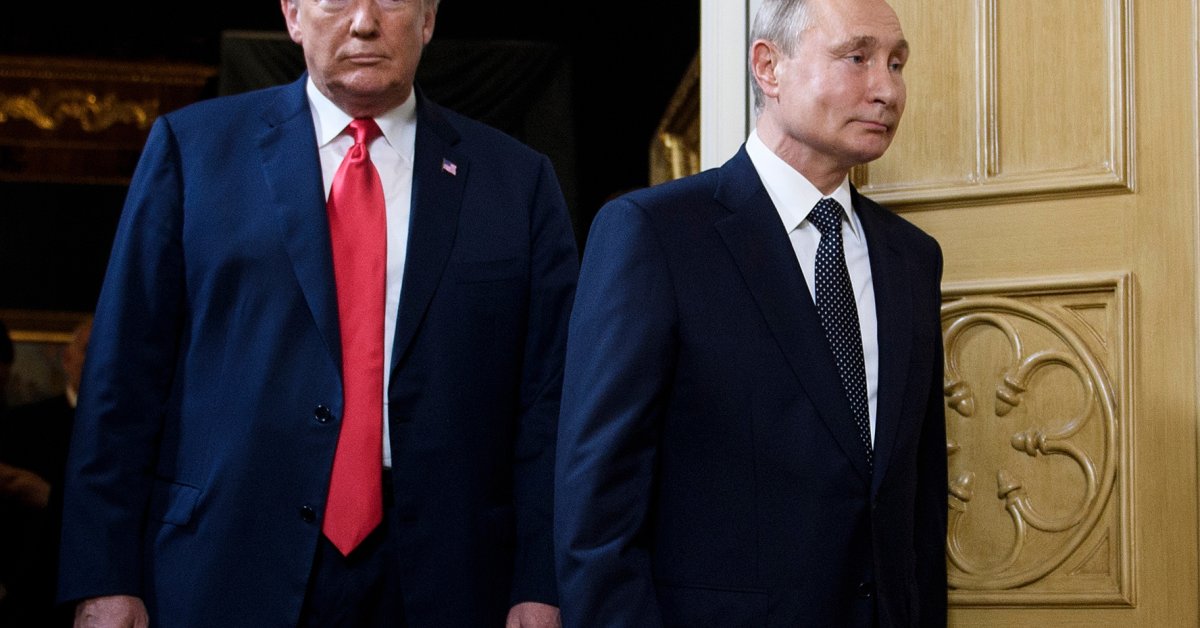
The Challenges of Achieving Peace in Ukraine under Trump's Influence
When then-President Trump assumed office 100 days ago, he recognized a unique opportunity to alter Russia's ongoing conflict in Ukraine. At the time, Russia was taking heavy losses, with around 1,500 casualties daily, and Ukraine was systematically losing ground while struggling to rally troops. Although Trump's bold claim of resolving the crisis in a day was exaggerated, there was real potential for astute diplomatic strategies. Many who observed the conflict were optimistic that Trump might employ America's significant economic, military, and diplomatic influence to broker a ceasefire or even a long-term peace. Even skeptics within Ukraine hoped that Trump's unpredictable nature and business acumen might alleviate their country's plight.
However, the actions taken by Trump over the following months effectively dismantled the possibility of de-escalating the violence in a way that aligned with U.S. interests. Instead of reinforcing pressure on Russia and assuring Ukraine that they would receive the necessary support and security assurances after any deal, Trump's administration did not capitalize on available advantages. In fact, several key areas of influence were neglected or given away.
Diminished Alliance Support
A major asset for Ukraine in the conflict was its support from democratic allies in Europe, Asia, and North America. With these partners united, Ukraine was in a stronger position to secure an outcome favorable to its and global democratic interests. Nevertheless, rather than rallying a unified front against Russia to secure a fair solution, the U.S. found itself increasingly at odds with European allies. By sidelining Europe from meaningful negotiations and threatening them with severe tariffs, the U.S. contributed to growing tensions. The term 'de-risking'—originally intended to describe distancing from Chinese dependency—is now being repurposed as Western countries contemplate insulating themselves from unpredictable U.S. policies.
The Impact of Sanctions
Trump's administration prioritized direct relations with Moscow, assuming that closer ties could yield economic benefits and persuade Russia to assist with other diplomatic challenges, such as relations with Iran or counterbalancing China. Yet, this approach has mostly benefited Putin. Where U.S. leverage once lay in denying Russia access to technology, trade, and diplomatic stature, the administration opted to exchange leniency on the Ukraine conflict for uncertain rewards.
Time Constraints
The urgency of reaching a resolution, emphasized by the State Department and Trump's administration, was driven by a political desire to achieve results within the first 100 days. Although deadlines can stimulate diplomatic action, for parties viewing the conflict as existential, American-imposed timelines hold little sway unless accompanied by substantive repercussions. Ukraine, fearing diminished U.S. support, has shown flexibility in response to Trump's proposals. In contrast, Russia sees the imposed deadlines as opportunities to expand their demands, seeing Trump’s withdrawal of military support funding as advantageous.
Moral Stance
Historically, the U.S. has staunchly defended peace in Europe based on territorial sovereignty post-WWII. Yet, Trump's administration avoided acknowledging Russian aggression in Ukraine outright. Trump's remarks suggesting both parties shared blame, alongside his questioning of the legitimacy of the Ukrainian president and recognition of Russia's territorial claims, further muddled the moral position. This stance has emboldened Russia, paralleling their territorial ambitions with Trump's occasional territorial remarks, such as the possible acquisition of Greenland.
By relinquishing key leverage points, the anticipated negotiations failed to alleviate hostilities or bridge profound divides between involved parties. Consequently, Russia emerged as the primary winner, gaining ground where previously thwarted by U.S. policies. Moreover, tensions straining trans-Atlantic relations threaten to result in a permanent fracture between the United States and European allies.
Historically, American allies have shown patience, expecting eventual alignment on strategic objectives even after exhausting all other routes. In the context of this conflict, the U.S. is expected to eventually recognize the necessity to curb, rather than indulge, Russia's disruptive aspirations under Putin. Until then, Ukraine and Europe must largely rely on their capabilities to withstand this ongoing challenge.
Leave a Reply