


RFK Jr.'s Department Halts Infectious Disease Research
A U.S. government laboratory focused on studying infectious diseases, including deadly ones, has been instructed to halt its research by the administration under RFK Jr.
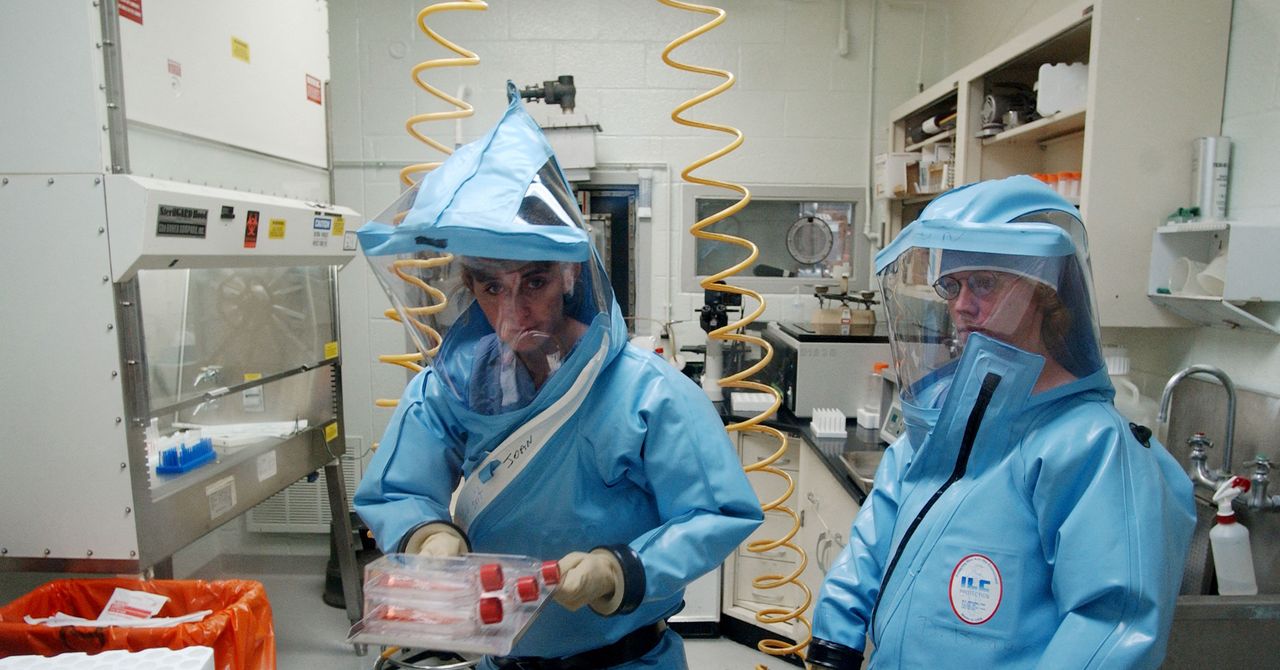
According to information obtained by WIRED, the Integrated Research Facility based in Frederick, Maryland received directives to cease all experimental activities by 5 p.m. on April 29. Situated at the U.S. Army’s Fort Detrick, this facility operates under NIAID, studying high-risk infectious diseases with significant public health implications. The workforce numbers 168, consisting of government employees and contractors.
An internal email from Michael Holbrook, associate director specializing in high-security containment at the facility, announced the suspension of ongoing studies on Lassa fever, SARS-CoV-2, and the rare but serious mosquito-borne illness, Eastern equine encephalitis (EEE). The email noted efforts to collect valuable samples despite the halt, and clarified that animal subjects would not be euthanized and would continue to be cared for. Holbrook did not respond to requests for comment.
The communication also mentioned that officials from the Department of Homeland Security were securing, with locks, the freezers in the BSL-4 laboratories, which work with the most dangerous pathogens. Only a few of these labs, equipped to handle paths like Ebola, Lassa fever, and Marburg, are found throughout North America. The Integrated Research Facility is among a limited number worldwide capable of performing medical imaging on animals carrying BSL-4 pathogens.
According to Gigi Kwik Gronvall from the Johns Hopkins Center for Health Security, the interruption in research presents a significant setback. She expressed concerns about increased costs to recommission the facility once the research pause concludes.
The email also indicated that the director of the facility, Connie Schmaljohn, has been placed on administrative leave. Schmaljohn has an extensive research background, previously contributing to the US Army Medical Research Institute of Infectious Diseases. Additionally, her work has led to multiple prominent vaccine trials. She also did not respond to requests for comment.
Official Confirmation and Uncertain Future
Bradley Moss, who handles communications for NIH research services, confirmed via email that a research pause—termed a 'safety stand-down'—has been enacted at the Frederick facility. This decision was made following the identification of staffing issues that put the safety protocols of the facility at risk, necessitating this halt. Access to the lab will be restricted to only essential personnel during this time to ensure both the resources and premises are secure.
Moss provided no additional details regarding the personnel issues and indicated that there is currently no timeline for resuming normal operations. Staff remain in the dark about when they might return to their work.
Context of Broader Agency Changes
This research standstill is part of a series of disruptions affecting federal scientific bodies, following RFK Jr.’s announcement that sweeping staff reductions would see 10,000 personnel layoffs across major health agencies, such as NIH, FDA, and CDC. This restructuring initiative aligns with broader administrative changes under President Trump's directive.
Leave a Reply