


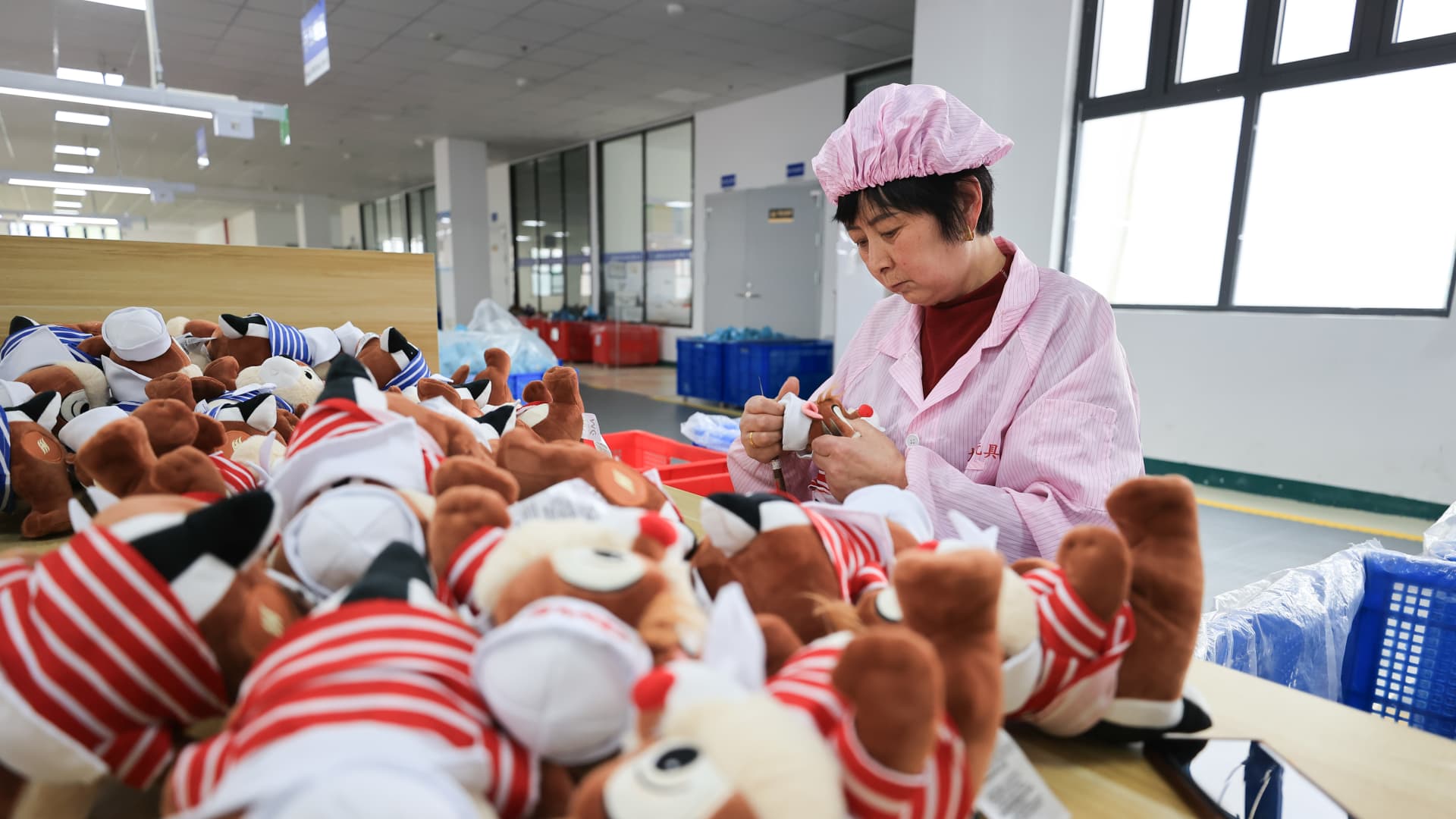
China's Manufacturing Sector Faces Significant Decline Amid Trade Tensions
The manufacturing industry in China experienced a sharper-than-anticipated downturn in April, sinking to levels not seen in nearly two years. This decline has been largely attributed to the intensifying trade conflict with the United States.
Statistics released by the National Bureau of Statistics indicated a downturn in the official purchasing managers' index, measuring at 49.0 during April. This figure is significant as it underscores a shift into contraction territory—a critical milestone since anything below 50 suggests a contraction in industry activity. Notably, this is the first time this has occurred since January.
The latest data fell short of the 49.8 contraction anticipated by analysts in a Reuters survey, marking a deceleration from the modest growth seen earlier this year as Chinese exporters rushed shipments to counteract impending higher tariffs.
Earlier this year, President Donald Trump introduced a new wave of tariffs on Chinese products, cumulatively reaching 145%. These measures form part of a broader strategy declared during what he termed 'liberation day,' further intensifying the trade schism and cumulatively increasing tariffs on a wide range of Chinese imports.
In response, China has implemented its own countermeasures against U.S. tariffs, leading to what has been described as 'severe disruptions' by Chetan Ahya, chief Asia economist at Morgan Stanley. This has manifested in a dramatic reduction in the movement of container ships from China to the U.S., now reflecting a year-on-year decline.
Despite ongoing stalemates in negotiations, some reports have hinted at small alleviations as both governments strive to mitigate the damaging economic impacts of these penalties.
For instance, certain goods from the U.S. have reportedly been exempted from tariffs by China, seeking to soften the blow on bilateral trade.
In a move to ease the trade tensions, President Trump recently sanctioned the waiving of additional tariffs on automobile imports and a selection of consumer electronics, following reductions applied earlier in the month.
Despite these efforts, Nomura has projected that U.S. tariffs could detrimentally impact approximately 2.2% of China’s GDP, with roughly 9 million manufacturing jobs at risk.
Chinese authorities have recently committed to backing the businesses and workforce most beleaguered by punitive U.S. tariffs, emphasizing the adoption of proactive fiscal measures alongside 'moderately accommodative' monetary policies to stabilize the economy.
Although major financial institutions on Wall Street have revised China's GDP growth predictions downward due to the trade impasse, Chinese leaders steadfastly pursue their target of close to 5% GDP growth for the year.
To counteract the economic fallout from tariffs, China's strategy may necessitate an amplified fiscal stimulus exceeding 2 trillion yuan, according to Dan Wang of the Eurasia Group.
While U.S. officials claimed that negotiations between the two economic superpowers continue, China has yet to confirm actively engaging in such discussions to resolve the ongoing disputes.
Leave a Reply