


Observations from a Costco Trip: A Glimpse at America's Global Trade Dependence
The ongoing trade policies under President Donald Trump have prompted consumers like me to scrutinize their purchases more closely, examining the origins of products.
With impending tariffs on over 180 nations, forecasted to elevate prices on automobiles, technology, and food, some shoppers are beginning to heed advice from figures like Mark Cuban by stockpiling necessities before tariffs take full effect after a temporary delay.
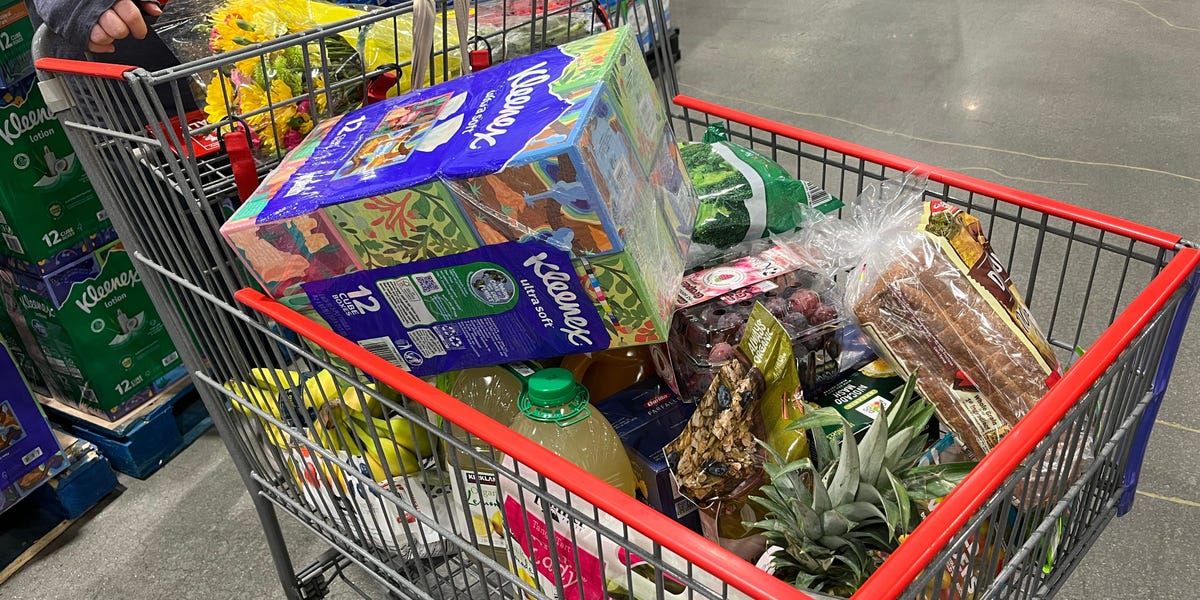
In my recent excursion to Costco, I documented the provenance of each item bought, aiming to comprehend how much my potential grocery expenses might be influenced by such tariffs.
Monthly Shopping at New York City's Exclusive Costco Facility
Located within a large retail complex in East Harlem, Manhattan's sole Costco serves as my monthly destination to replenish groceries and household supplies.
Exploration of Imported and Domestic Products in My Shopping Cart
Fruitful Discoveries
The first product I selected was That's It mini fruit bars, crafted in the United States but incorporating ingredients from both domestic and international sources facing tariffs, such as ingredients from Peru, Mexico, the Philippines, India, Belgium, Madagascar, and Canada.
This 24-bar assortment demands $13.99.
Decoding Origins and Tariffs
Similarly, the KIND bars I chose highlighted a blend of local and foreign elements. Despite being labeled as U.S.-made, KIND’s website points out its production occurs in Austria and Great Britain, where separate tariffs apply.
Each box of 22 bars costs $20.
Selections with Diverse Sources
South Korean-sourced Kirkland's organic roasted seaweed, a favorite for salads and snacking, also fell into my cart, bearing a Trump administrations' tariff rate of 25%. Ten boxes are priced at $10.99.
United States Production and Other Domestic Staples
Kirkland’s lemonade, distributed in the U.S., had no clear origin listed. Demand for information from Costco regarding its sourcing remains unanswered, but two 3-quart bottles are priced at $6.29.
Barilla pasta, an American-manufactured product with both local and imported materials, is sold in a variety pack for $9.49, though its ingredient sources remain unspecified.
Nature's Path Granola and Favorite Tomatoes
Nature's Path organic granola labeled as U.S. produced, does not utilize international components requiring 'origin' labeling and retails for $8.99 per 35.3-ounce bag.
A medley of tomatoes, grown in Mexico and distributed by a Canadian firm, falls under the pre-existing 25% tariffs that target Mexico and Canada.
Mexican and Canadian Imports
The Mexican-imported mashed avocado packs, ideal for avocado toast, cost $12.99 for 16 portions, while raspberries from the same country, priced at $5.99 per 12 ounces, contribute to the tariff-list impact.
Snack-sized mini cucumbers from Canada add to the import list, priced at $5.99 for 1.5 pounds.
Chilean, Ecuadorian, and Costa Rican Goods
Purple grapes from Chile are affected by a 10% tariff, retailing at $7.49 for three pounds. Bananas and frozen broccoli, both Ecuador-sourced and similarly taxed, enhance the basket’s variety.
A Costa Rican pineapple, influenced by the same 10% tariff, is available for $3.99.
Domestic Brews and Bakes
Among the rare native produce in my basket were American-grown baby carrots and Pink Lady apples, priced at $6.99 for two 32-ounce bags and $6.49 for 4 pounds, respectively.
Also, the Stroehmann Dutch Country bread baked in the U.S. stands domestically produced in my cart at $5.49 for two loaves.
Domestic Tofu and Egg Selections
Nasoya tofu signifies U.S. production with 100% North American soybeans fostering its integration in meatless meals at $6.79 for four packages.
During February, egg shortages due to the avian flu led to a quick sellout. However, this visit revealed a replenished supply of American cage-free large eggs priced at $7.69 for two dozen.
American Milk and Non-Food Purchases
Lactose-free Lactaid milk makes a practical choice for longer shelf life, costing $5.59 per gallon.
Beyond edible products, I acquired U.S. Kleenex tissues and a flower bouquet grown in tariff-impacted Colombia.
The tissue boxes cost a hefty $21.49, while the bouquet added an additional $17.99 to the total.
Final Thoughts on My Shopping Findings
In total, half of my $218.28 expenditure comprised items either fully imported or with international components affected by trade policies, illustrating the extensive influence of tariffs on consumer spending.
Requests for a response from the White House on these issues have yet to be addressed.
Leave a Reply