


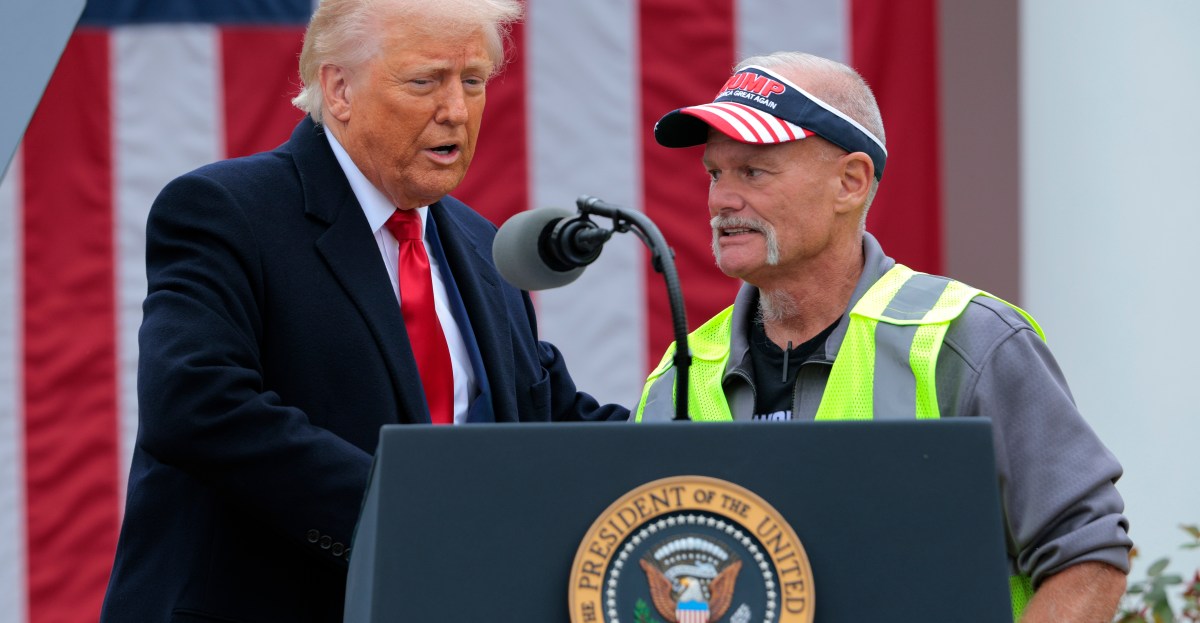
Unions' Complicated Stance on Tariffs
President Donald Trump’s decision to impose tariffs has been met with widespread criticism from various sectors, but surprisingly, some union leaders like Shawn Fain from the United Auto Workers have voiced support. This comes despite Fain’s previous harsh criticism of Trump.
Union Leaders' Unexpected Support
Fain praised the Trump administration for addressing what he termed a long-standing issue of unfair trade deals that have harmed American workers. He highlighted these tariffs' potential to set a precedent in protecting the auto industry's workers.
The International Brotherhood of Teamsters also backed the tariffs, seeing them as beneficial for labor in the long run, despite notable dissent from other union factions.
Internal Division and Varied Opinions
The endorsement from certain unions is unusual as traditionally, these groups have advocated against free-trade agreements, believing they led to job losses. However, not all union leaders agree with Trump’s comprehensive tariff strategy, fearing broader economic repercussions.
Despite Fain's initial support, he later expressed concerns, specifically opposing tariffs used for unrelated political purposes, such as immigration issues.
Historical Context: The Free Trade Debate
The decline of American manufacturing jobs has often been attributed to free trade policies, particularly NAFTA, which unions have criticized since its inception. These policies often resulted in American companies relocating factories to countries with cheaper labor, impacting domestic employment.
NAFTA, by removing trade barriers among the US, Canada, and Mexico, was intended to boost trade but instead led to factories moving to Mexico where production costs are lower. Unions have been skeptical since, viewing such agreements as barriers to job security and competitive wages.
Trade Agreements and Job Loss
Estimates suggest NAFTA directly resulted in the loss of hundreds of thousands of jobs. Union membership has seen a corresponding drop, highlighting their concerns that free trade agreements undercut wage growth and job security.
Economic Perspectives on Free Trade
Economists generally argue that while free trade imposes challenges on certain sectors, it also contributes to global economic progress. However, unions point out that the benefits often do not reach the working class, leading to growing inequality.
The trade dynamics shifted further after China’s entry into the World Trade Organization in 2001, which intensified competition for American manufacturers. Fain and his union reshaped their stance, seeing tariffs as a necessary pivot.
A Shift Towards Protectionism
Unions, in contrast to the political trend, typically favor protective policies over open markets. The replacement of NAFTA with the United States-Mexico-Canada Agreement included provisions favored by unions, showing that not all new trade deals are met with opposition.
Prominent union leaders like Richard Trumka criticized past trade deals for prioritizing corporate gains over workers' welfare, linking them to economic challenges such as wage stagnation.
The Future of Unions and Tariffs
While Trump's tariffs align with some old union goals of protecting American manufacturing, critics argue his approach is too erratic and lacks strategic depth. Experts suggest that for tariffs to be effective, they should be part of a broader strategy that includes industry investments.
Without this, Trump’s ad-hoc tariff plan risks economic disruption rather than revival, especially if it triggers a recession, potentially eroding jobs across various sectors.
Ultimately, while some unions back tariffs as a quick fix to bolster industry, the reality of modern economic shifts — such as the pivot to a service-based economy — presents a significant challenge to their ideals.
Resurrecting American manufacturing purely through tariffs may be more of a nostalgic dream rather than a practical reality given the irreversible global economic integration. Greenhouse's remarks underscore the difficulty of reviving an industry landscape long altered.
Leave a Reply