


Russia's Strategy: Motorcycle Use in Ukraine Agendas
To counteract Ukrainian aerial surveillance and strike capabilities, Russia is reportedly preparing to utilize motorcycles more extensively in its military operations against Ukraine, according to insights from a US-based analytical think tank.
Adapting to Aerial Threats
As per the Institute for the Study of War, based in Washington, DC, Russia seems to be deliberating a strategic incorporation of motorcycles within its offensive frameworks during the 2025 summer and autumn military campaigns in Ukraine. This shift likely seeks to navigate around the sophisticated drone technologies possessed by Ukrainian forces.
This observation is supported by evidential training activities within Russian forces and comments from Lt. Col. Pavlo Shamshyn of the Ukrainian military, who indicated that such methodologies might manifest in combat engagements this year.
Motorcycles on the Battlefield
Lt. Col. Shamshyn suggests that the rapid maneuverability of motorcycles might complicate drone targeting, as halting a squad of these vehicles could demand significant drone deployment. Motorcycles' capacity for swift and distant travel during drone launch preparations provides a tactical edge.
However, the apparent advantage for the Ukrainian side comes from the inherent noise of motorcycles, potentially allowing Ukrainian drones to approach unnoticed.
Current Implementation and Tactical Footprint
Motorcycles have already been observed in Russian military use within Ukraine, as confirmed by an American ex-soldier now fighting with Ukrainian forces. Accounts describe both motorcycles and unconventional vehicles like golf carts active on the field.
The ISW notes a discernible increase in Russian units conducting mechanized and motorized assaults. Recent footage suggests entire combat sequences near Bahatyr involved motorcycles and civilian vehicles.
Training and Tactical Doctrines
The current developments are indicative of Russian military leadership's efforts to mitigate the impacts of Ukrainian drone attacks, compensating for the significant loss of armor last year. These lighter vehicles present an opportunity for enhanced mobility at the cost of greater vulnerability.
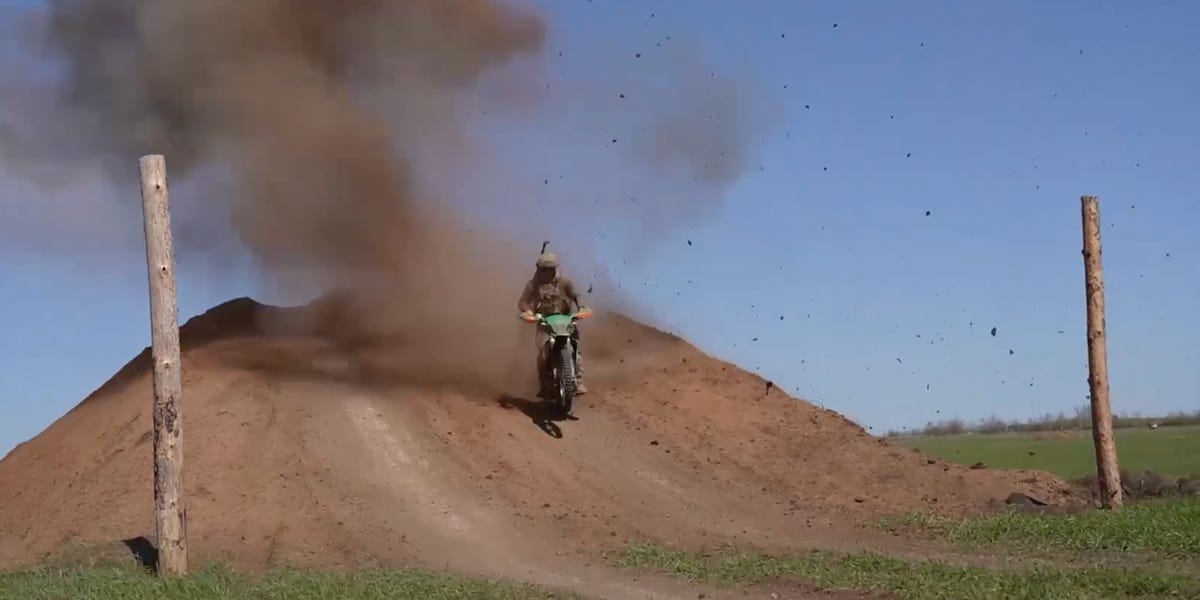
Footage released on April 26 by the Russian defense sector highlighted training in which personnel navigated challenging courses amidst simulated explosions, hinting at both offensive and defensive cycle training for the 299th VDV Regiment within the airborne divisions.
This visual evidence suggests the possible establishment of a new combat protocol centered on motorcycles, complemented by an anticipated increase in motorcycle provision for ground troops.
Implications and Concerns
While reliance on agile transportation could leave Russian forces more exposed, giving Ukrainian drones a better target spectrum, the adoption of such tactics could simultaneously pose unique logistical challenges for Ukraine due to the increased speed and fluidity of operations.
The overall strategic balance is subject to complex interplays between technology usage, tactical innovation, and traditional combat strategies.
Leave a Reply