


Jail Cells: The Unintended Refuge in Failing Mental Health Systems
In many small towns across Montana, jails are becoming the unexpected shelters for those experiencing a mental health crisis due to the lack of available hospital beds.
In a small town in northwestern Montana, individuals accused of crimes often find themselves confined in a tiny basement jail cell, sometimes for as long as several months. These prisoners are frequently neither convicted nor mentally stable enough for release.
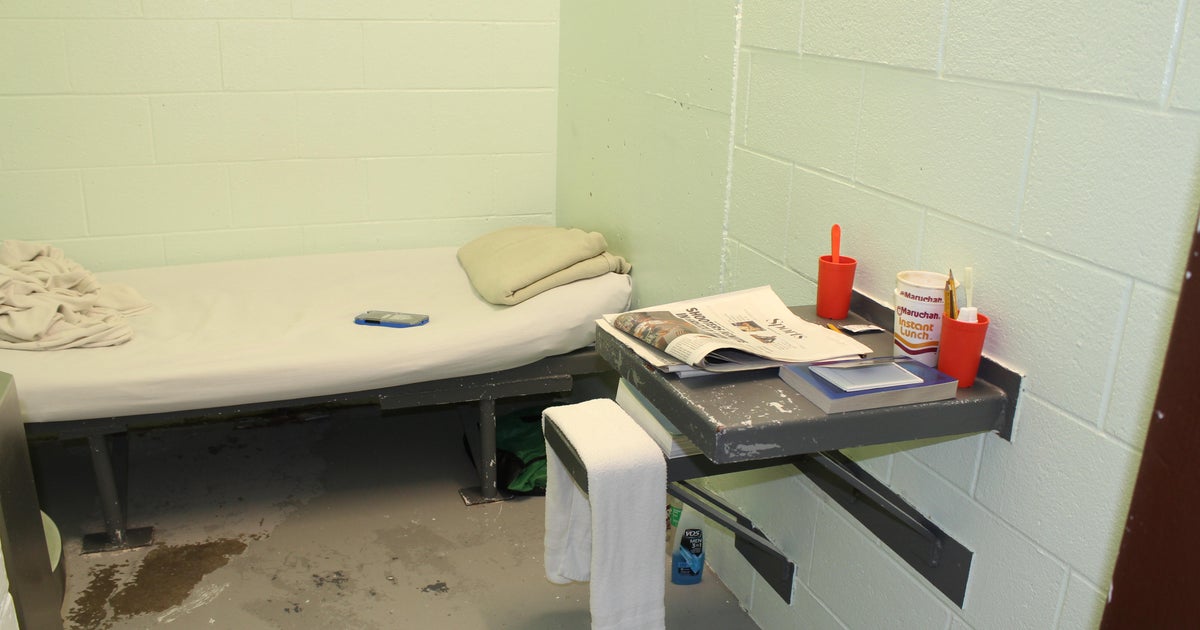
Scratches on the metal door read 'love hurts,' and the cement floors are worn from constant pacing. Inmates sleep on a narrow cot next to a toilet, with their only view being a brightly lit hallway through a small window in the door.
Lake County Attorney James Lapotka discusses the difficulty of placing individuals here as he stretches his arms in the confined space, barely missing the walls on either side. 'Even standing here gives me anxiety,' he admits.
A prisoner who had been imprisoned for stealing a firearm waited 129 days in the cell for a bed at the state's only psychiatric hospital, according to evaluators.
During the same period, another detainee waited five months for psychiatric treatment, constantly restrained due to psychotic episodes, which he could foresee and request to be restrained for.
Lake County's isolation cells exemplify how community resources fall short, especially in crisis care, with a significant number of U.S. inmates having mental health issues.
Reports from Wyoming indicate that over half of the counties had inmates in crisis waiting months for mental health care. In Nevada, despite fines for delayed treatments, similar issues persist.
Montana faces a similar dilemma. With a limited psychiatric hospital capacity and minimal local inpatient facilities, individuals often endure prolonged jail stays with deteriorating mental health.
The problem is recognized by Montana officials, but solutions are hindered by inadequate space and staffing shortages. The state psychiatric hospital has only 270 beds, with a small portion allocated for justice system cases.
Legislation attempts to limit state liability for hospital delays while tackling staffing and funding shortages. One-time grants are meant to support local jail-based mental health services.
While officials argue for the necessity of local care options, these do not yet exist according to county representatives, further straining mental health care.
Health advocates support legislative measures for community-based solutions, although implementation may lag by years.
The decline in inpatient beds for serious mental illnesses has left a gap once filed by state institutions, which community centers have not adequately replaced.
Funding absence has led to the closure of crisis sites in major Montana providers like the Western Montana Mental Health Center, including facilities close to local jails.
The state governor intends to allocate funds to improve behavioral health systems, but mental health workers remain skeptical following years of inconsistent local support.
State health department spokesperson Holly Matkin asserts commitment to addressing the long-standing issues within the mental health service system, aiming for enhanced community-based care.
Lake County, besides its scenic allure and tribal lands, struggles with mental health service provision. It serves as both a picturesque landscape and a battleground for adequate mental health services.
Vincent River, the lone mental health clinician for four counties, struggles to address severe psychiatric needs due to the absence of hospital placements statewide.
The psycho-social distress from long waitlists heavily impacts individuals and their families, creating a pervasive crisis as River faces an inadequate system with limited psychiatric beds at his disposal.
With restrictions on forced medications and an overcrowded, faltering jail infrastructure, River tries to stabilize detainees amidst constrained resources.
Without designated space, even restraint chairs are awkwardly placed in hallways, symbolizing the inadequate facilities.
Although some individuals slowly recover, many linger in psychosis, isolated and governed by their disorder.
Communities work to fill service gaps via mobile teams offering peer support, but still, the only options during crises are jail or overcrowded emergency rooms.
At Providence St. Joseph Medical Center, crisis rooms offer isolation without privacy, creating a tense environment akin to imprisonment.
When individuals become a danger, incarceration becomes the last resort. Some refuse treatment in hospital settings, unable to find immediate psychiatric care.
"We fall short of truly addressing their needs," says Dr. Rebecca Bontadelli, reflecting on the patients' prison-like experience while awaiting care.
Leave a Reply