


Is America Really An Oligarchy As Some Democrats Claim?
A perspective from a political scientist on whether the term 'oligarchy' is fitting for America's current state.
In a parting speech, Joe Biden highlighted the emergence of an oligarchic structure in the U.S. Similarly, Alexandria Ocasio-Cortez recently rallied a crowd, drawing attention to what she views as a growing oligarchy within the nation.
Other figures like Bernie Sanders have shared this sentiment over the years; however, dissent exists, as seen in Sen. Elissa Slotkin's critiques of the term’s usage by fellow Democrats.
So, what is an oligarchy? Have these politicians correctly identified the U.S. as one, and if so, when did this transformation occur?
Understanding Oligarchy
Originating with Greek philosophers, the idea of oligarchy was documented by Aristotle, who defined governance systems. Among them stood oligarchy, characterized by a few ruling for personal gain. Its decay from aristocracy—a governance by virtuous elites—is a recurrent theme.
This resembles how Biden described intense concentrations of wealth threatening democratic foundations, as well as Ocasio-Cortez’s assertions about economic influence eroding public welfare.
Although some prefer 'plutocracy'—rule by the wealthy—the terms effectively blur in today's U.S., where significant wealth almost guarantees political sway.
Do Oligarchy and Democracy Coexist?
Jeffrey Winters, a scholar of oligarchy, contends that democracy can endure alongside oligarchy due to their distinct operational domains. Even with dominant wealth, democratic processes endure if elections remain fair and individuals retain their rights.
The core issue emerges when the populace disapproval of wealth imbalances clashes with the elite’s use of fortune to sway political landscapes, resisting redistributive change.
While some resistance and adjustments are natural, heightened wealth concentration can strain the democratic equation—a phenomenon arguably observed today.
Indicators of an Oligarchy
Pinpointing when a country fully becomes an oligarchy is complex, but examining shifts in economic disparity and political finance illustrates a clearer picture.
As economic reports like those from RAND suggest, substantial income growth has been centralized at the upper echelons, exacerbating wealth divisions since the late 20th century.
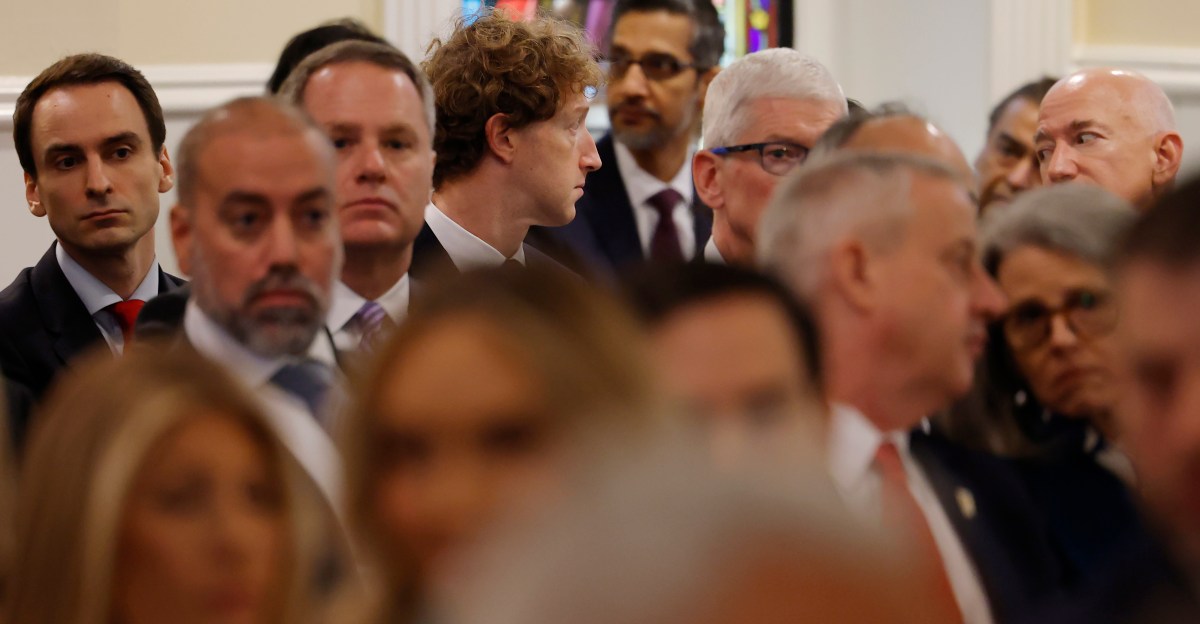
Involvement from affluent individuals in political realms further solidifies this notion, depicted by notable support from tech magnates during Trump's inauguration.
Moreover, substantial wealth in political offices hints at oligarchic traits—a trend prominent in Trump's and congressional assemblies’ financial profiles.
Wealth Influence on Governance
Monetary contributions heavily impact campaign dynamics, where significant funds often hail from ultra-rich circles, intensifying debates over wealth’s political power.
Current fundraising patterns reflect contributions that disproportionately come from high-earning sectors, shaping campaign dialogues and priorities.
Historically less open, wealth wielders now openly back causes, deviating from previously secretive tactics—a symptom of normalized mega-donations.
Shifting Political Landscape
Divergence in opinion persists among wealthy political financiers, but consensus often thrives on financial policies, favoring conservative fiscal approaches.
Despite wealth’s grip, prominent lobbying by other players like unions and interest groups is overshadowed by business influence, subtly directing governance.
While financial investments don't assure political victories, they restrict feasible policy alternatives for both political factions, influencing issues like taxation.
America at the Crossroads
The fabric of American democracy entangles with suggestions of oligarchical traits, reshaped by wealth imbalances and corresponding political skepticism.
Dubbed 'plutocratic populism,' the interaction between elite economic interests and populist grievances underscores a complex electoral environment.
Efforts to address these disparities within the democratic structure continue meeting resistance, challenging the sustainability of present wealth distributions.
Explorations by political analysts echo the imperative for balance, as the coexistence of democratic principles with concentrated affluence grows tenuous.
Leave a Reply