


Chinese Manufacturers Alter Strategies Amid U.S. Tariff Pressures
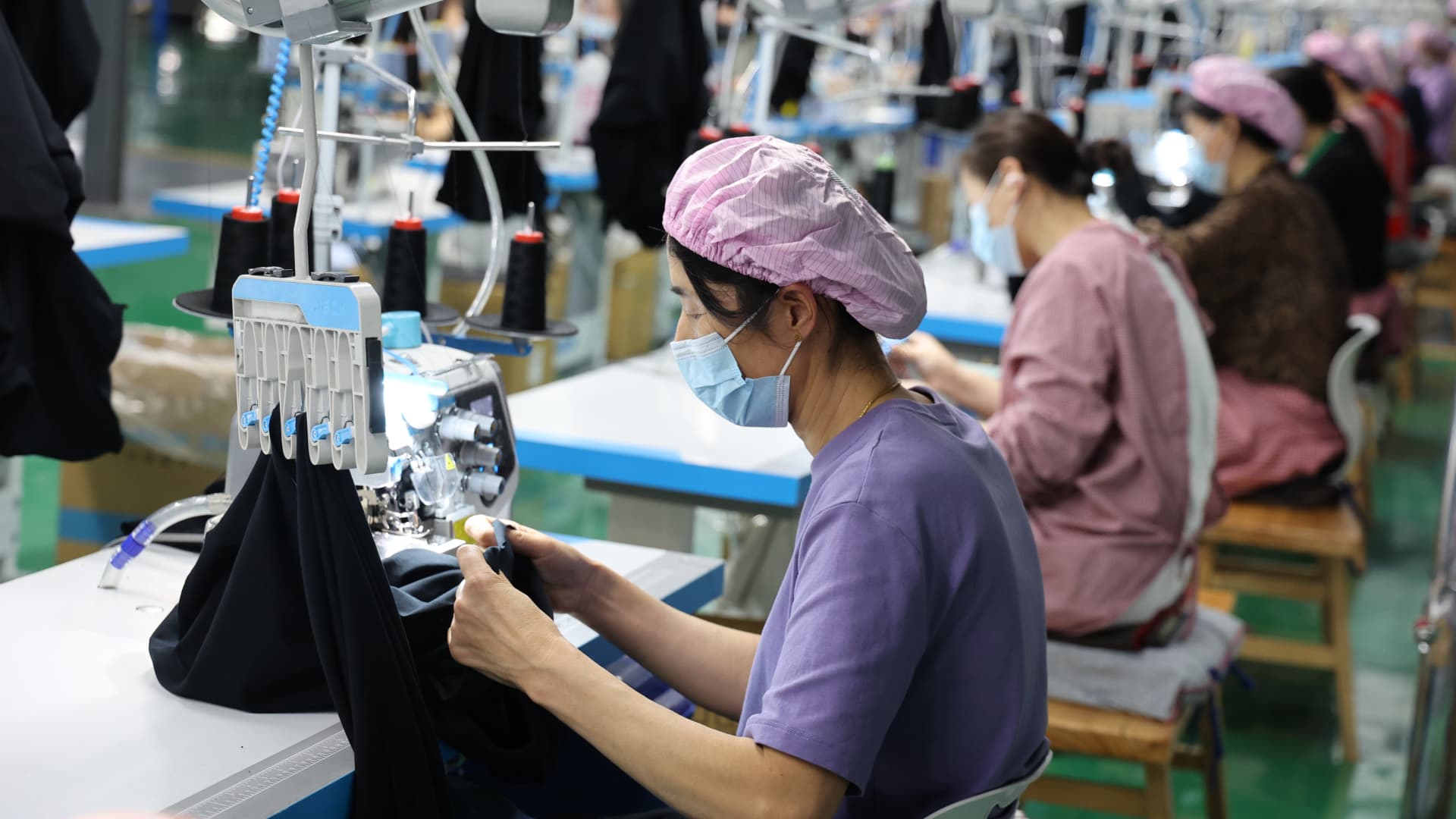
In response to the hit from U.S. tariffs, Chinese manufacturing firms are reevaluating their production schedules and scouting alternative market opportunities.
The decline in orders has also started to impact employment rates.
Cameron Johnson, a senior partner at Tidalwave Solutions based in Shanghai, mentioned several factories have reduced their workforce by half. These establishments, particularly those manufacturing toys, sports gear, and low-cost products, have significantly scaled down their operations.
Though the impact isn't on a massive scale yet, the export-heavy areas like Yiwu and Dongguan are witnessing this trend, raising concerns about potential growth. There's a prevailing hope that tariffs might decrease to rejuvenate the order influx, yet many businesses are currently opting for temporary employee layoffs and pausing production lines.
Estimates from Goldman Sachs suggest that 10 to 20 million workers in China are linked to export-oriented businesses aimed at the U.S. The official workforce statistic last year stood at 473.45 million.
Shifts in Global Trade Dynamics
This month, the U.S. implemented an increase of over 100% on tariffs for Chinese products, provoking China to reciprocate similarly. Despite ongoing dialogues between U.S. officials and Beijing, the Chinese side has downplayed any active negotiations.
The abrupt tariff hikes have had a more profound impact than even the Covid-19 crisis, noted Ash Monga, CEO of Guangzhou-based Imex Sourcing Services. For small enterprises with limited financial resources, the tariff burden could prove disastrous.
In response to the increased demand, Monga is set to unveil a new online platform meant to assist small businesses in sourcing suppliers from beyond China's borders.
Innovation through Livestreaming
Facing these disruptions, Chinese exporters are turning to innovative sales tactics.
An athleticwear company, Woodswool, located in Ningbo near Shanghai, swiftly adapted by venturing into livestreaming sales. Within just a week, they secured over 30 orders, amounting to a merchandise value exceeding 5,000 yuan ($690).
The venture into livestreaming aims to counterbalance lost orders.
Li Yan, managing Woodswool as both factory manager and brand director, stated that their entire U.S. order roster had been axed. With past exports exceeding fifty percent to the U.S., the company's operations will remain underutilized for some time until new markets are developed.
Major Chinese tech corporations are encouraging exporters to redirect goods to domestic channels, partially channeling their efforts through livestreaming.
Having opted for a virtual human livestream option via Baidu, Woodswool capitalized on quick deployment without extensive studio investment.
Challenges within the Domestic Market
E-commerce giant JD.com has pledged 200 billion yuan ($27.22 billion) for purchasing Chinese goods initially meant for export, finding ways to push these products in the Chinese market.
However, the $27.22 billion commitment is a fraction of the $524.66 billion in goods China exported to the U.S. last year.
Michael Hart from the American Chamber of Commerce in China highlighted that for many, the tariff hike renders their business model unsustainable. Additionally, recent competition has been more intense.
Exploring New Global Avenues
A diminishing number of Chinese companies are attempting to reroute exports to the U.S. via intermediate countries due to heightened scrutiny.
Companies are instead diversifying by establishing production bases in India and Southeast Asia, while others shift focus from U.S. markets to Europe and Latin America.
E-commerce ventures in Latin America and Africa serve as alternative trade routes from China.
Beijing Mingyuchu, an e-commerce enterprise, sells bathroom fixtures to Brazil. Despite confronting currency volatility and shipping costs, the CEO anticipates insignificant trade disruptions with Brazil due to U.S.-China tensions.
Exchanges between China and both Brazil and Ghana have risen sharply since 2018.
Bright Tordzroh, CEO of Cotrie Logistics, shared that business interest in China bypassing the U.S. has grown significantly, offering new opportunities for logistical firms like his.
Leave a Reply