


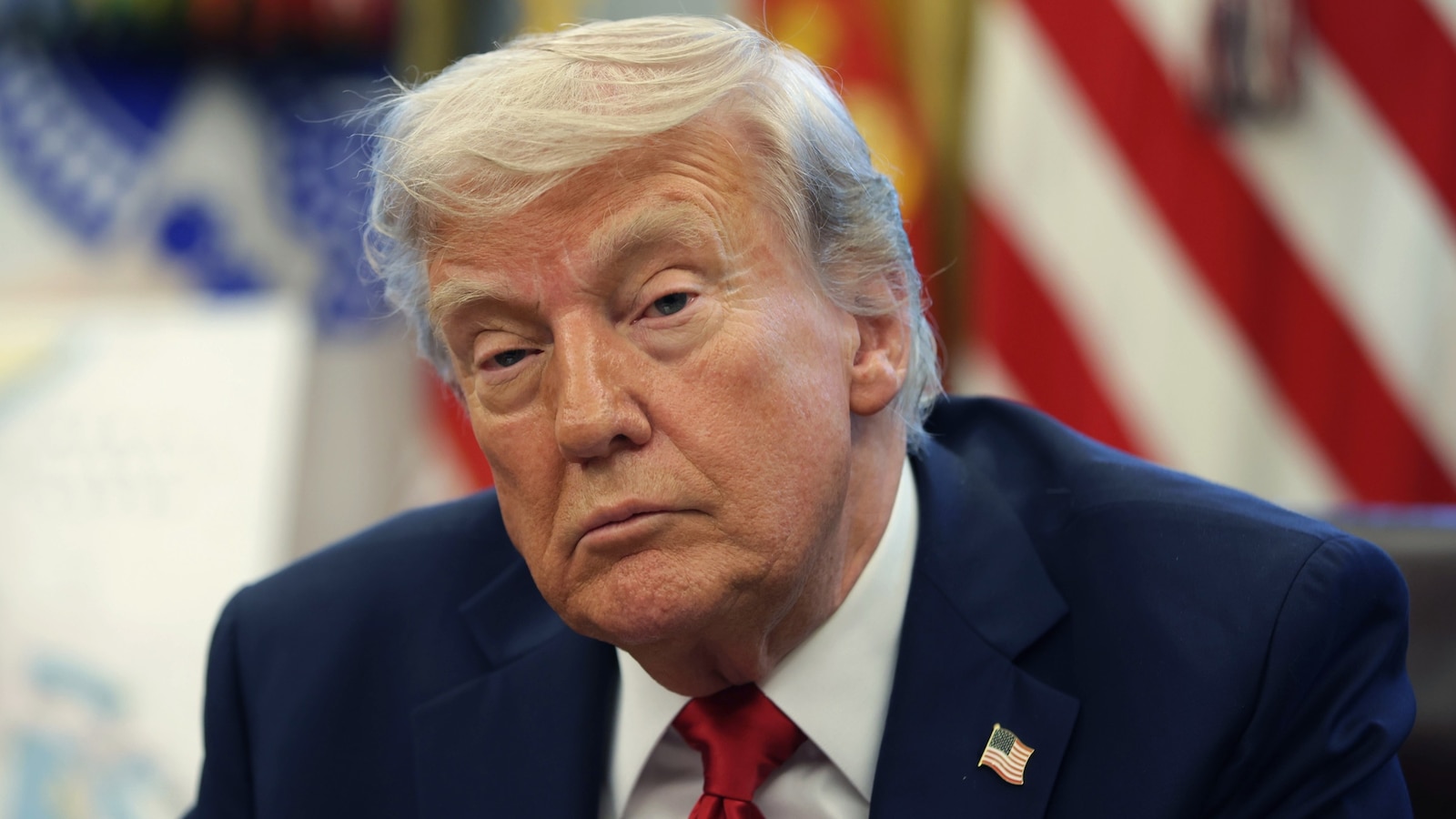
Trump's 100-Day Approval at Record Low in Eight Decades: Poll Results
Donald Trump’s initial 100-day period as President has marked the lowest approval rating over the last eight decades, based on survey outcomes from an ABC News/Washington Post/Ipsos poll. A majority have expressed dissatisfaction with his policy decisions and harbor significant economic concerns, particularly regarding the potential onset of a recession.
Despite this low popularity, Trump still ranks higher in trust than Congressional Democrats when it comes to managing the nation’s primary issues.
According to the poll, 39% of participants approve of Trump's performance as president, a 6% decrease from figures recorded in February. Contrarily, 55% disapprove.
Prior to this, the all-time low for a 100-day presidential approval rating was also owned by Trump in 2017, with a rating of 42%.
Economic Concerns and Public Sentiment
The economy’s outlook under Trump is troubling to many, particularly as he promised economic revitalization. The survey highlights that 72% believe his economic strategies are likely to precipitate a short-term recession.
Seventy-three percent view the economy as deteriorating, and 53% think it has declined since Trump’s presidency began. Furthermore, 41% feel their personal financial situations have deteriorated, a statistic akin to sentiments during President Joe Biden's tenure last summer.
Price inflation is a significant concern, as 62% notice rising costs despite Trump's pledge to control them. Additionally, 71% blame his tariff strategies for exacerbating inflation, while only 31% endorse the notion that Trump’s policies will establish a robust economic foundation.
Public opinion on Trump's administration extends beyond financial matters, with 65% suspecting attempts to flout federal court mandates and 64% believing in excessive efforts to broaden presidential authority.
Sixty-two percent of respondents do not trust Trump’s administration to uphold the rule of law.
Discontent on Multiple Fronts
Substantial majorities are worried about overstepping presidential limits—58% fear an over-reduction of government roles, 56% criticize overreach without justification, and 55% doubt the administration’s dedication to safeguarding civil liberties.
Public approval is notably negative across several issues, with 57% to 67% expressing disapproval regarding Trump’s approach to stock market unpredictability, tariffs, international dealings, and the overarching economy.
Public Policy Opposition
A majority oppose numerous policy initiatives, with intense opposition standing at 77% against reducing federal funding for medical research. Additionally, 70% oppose federal meddling in private university management, 67% reject ending birthright citizenship, and 66% contest the closure of the Department of Education.
On deportation issues, public opinion is more varied, with 51% opposing current deportation practices. In disputes like those involving university management, the public tends to favor institutions like Harvard over the Trump administration by a notable margin.
Concerns Over Federal Governance
Perceptions of Trump’s governance also reveal widespread skepticism, with 57% seeing administrative closures of federal agencies as excessive, echoing sentiments against laying off federal workers and political vendettas.
While 43% believe Trump has reduced waste in the federal government, perceptions of fraud have not improved correspondingly; meanwhile, 34% believe such fraud has worsened.
Trump's Government Reshaping
In a broader context regarding the nation’s trajectory, 49% feel Trump is steering away from foundational American principles, while 34% think he’s drawing closer to them.
Conclusion
Trump’s approval has staggered to 39%, which is an evident decline from a previously recorded 45% in February in a similar poll by the Washington Post/Ipsos. This matches his historically low first-term average and ties with Joe Biden’s for the lowest presidential career average since Harry Truman.
Despite retaining a significant supporter base, notably among his voters, and in key demographical factions such as non-college-educated white males, disapproval ratings prevail notably in regard to economic and policy handling.
The Democratic opposition also faces criticisms for disconnect to public sentiments, placing them equally in scrutiny with the existing administration over the country's leadership and decision-making direction.
Leave a Reply