


Europe's Need for Cluster Munitions Amidst Russian Threat
Cluster bombs are known for their controversial reputation due to the disbursement of numerous smaller explosives over vast areas, causing significant civilian casualties. Over 100 countries, including the majority of European nations, have enacted international bans against them.
Despite this, a British think tank has issued a cautionary note: if Europe aims to robustly defend itself against a potential threat from Russia, it may have to reconsider the use of cluster munitions.
The primary issue is the inadequacy of European ground forces to repel a largescale Russian incursion. NATO, reminiscent of its Cold War strategy, would need to offset this with aerial might to significantly disrupt Russian forces and supply routes, compensating for its smaller military contingents. Historically, the Warsaw Pact showcased 295 divisions and 69,000 tanks in contrast to NATO's 170 divisions and 28,000 tanks.
However, Russian anti-aircraft defenses could hamper European aerial campaigns. According to Justin Bronk and Jack Watling of the Royal United Services Institute, 'NATO's ground forces heavily rely on air power for delivering strikes.' They caution that without substantial support from the United States, European air forces would face formidable challenges in dismantling Russia's comprehensive and advanced air defense systems.
Russia has put in place a complex defense web of mobile and long-range surface-to-air missiles, alongside radar capabilities. Assaulting shorter-range missile installations could expose aircraft to attacks from longer-range Russian missiles.
'Modern Russian air defense frameworks possess extensive reach, increased mobility, greater durability, and heightened lethality compared to any prior confrontations faced by NATO,' as per RUSI.
Typically, superior air forces prioritize neutralizing adversary air defenses before extending support to ground troops. The 1973 October War showed the repercussions of Israel's oversight in this regard, whereas their resounding success in the 1982 Lebanon conflict and the US-led Desert Storm operation in 1991 emphasized the importance of this strategy. Aircraft armed with anti-radar technology played crucial roles in these operations.
The current scenario presents Europe with limited options. Historically dependent on the US for air defense suppression capabilities, Europe's military now faces the challenge of independently dismantling the sophisticated Russian air defenses as US alignment with NATO wavers under recent political dynamics.
RUSI notes that since the Cold War, European nations have had constrained training and capacity-building initiatives focused on the suppression and annihilation of enemy air defense networks, jeopardizing effective close air support in any potential high-stake warfare scenarios.
Consequently, European armies, lacking sufficient manpower and resources, may have to engage without their air support contingents. Alternatively, they must be equipped to dismantle enemy air defenses autonomously, maintaining operational capabilities even amidst aggressive airspace dynamics.
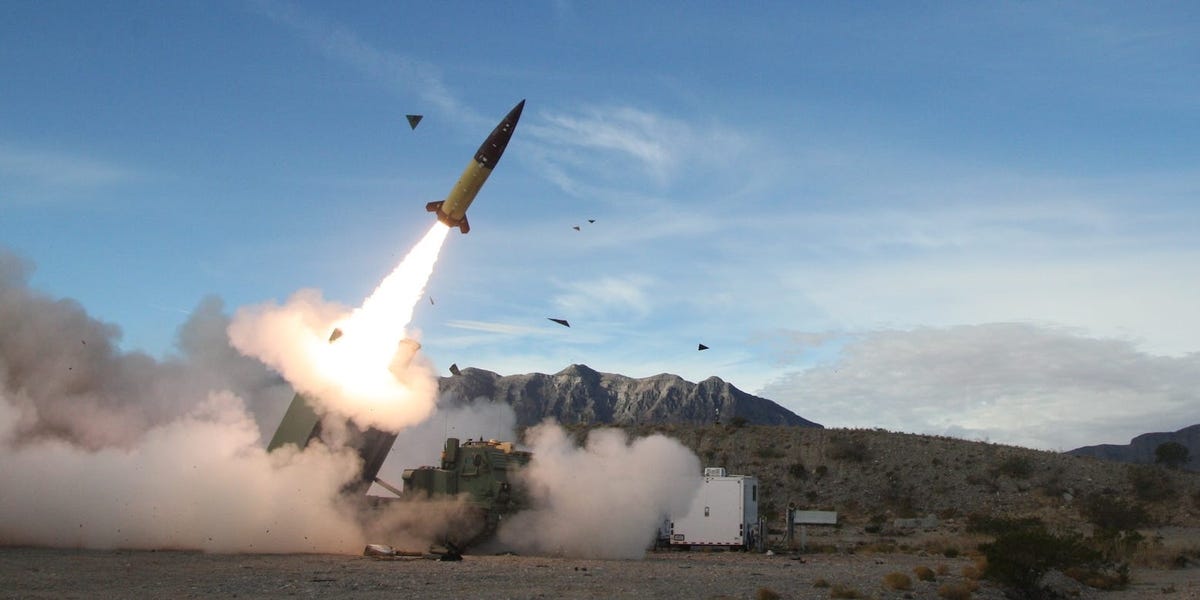
In an ideal scenario, ground-launched long-range weapons like Lockheed Martin's ATACMS ballistic missiles would target these defenses. However, stock shortages and Russian countermeasures that disrupt GPS signals present formidable obstacles. Furthermore, Russian surface-to-air missile systems, namely the SA-17, SA-20, and SA-28, have shot down a variety of incoming munitions.
Bringing cluster munitions back into the arsenal could be a viable solution. RUSI suggests that these warheads have consistently demonstrated superior efficacy in disabling enemy air defenses compared to singular explosive variants.
The wider expansive reach of multiple warheads makes cluster munitions less susceptible to accuracy degradation from hostile electronic warfare. This becomes crucial as Europe grapples with a scarcity of artillery platforms and munitions.
Past trials in Ukraine illustrate the pragmatic benefits of these munitions. In 2023, the US, abstaining from the cluster bomb treaty, provided Ukraine with shell munitions containing numerous submunitions, posing residual risks to civilians but proving strategically advantageous.
Nevertheless, returning to cluster munitions presents significant political challenges, with Lithuania retracting from the treaty in 2024. European nations may need to follow suit to ensure their security, especially with a minimised US military role in the region.
The RUSI experts advocate for mitigating ethical concerns through controlled application scenarios and investing in improved options with reduced dud rates. More reliance on standoff and loitering weaponry could also provide safer avenues for targeting without risking personnel.
Should European ethics dictate a move away from cluster munitions, it is unrealistic to expect reciprocal restraint from Russia. The aggressive deployment of cluster munitions by Russian forces mandates not only defensive readiness but also a substantial post-conflict ordinance clearance to protect civilian spaces.
Leave a Reply