


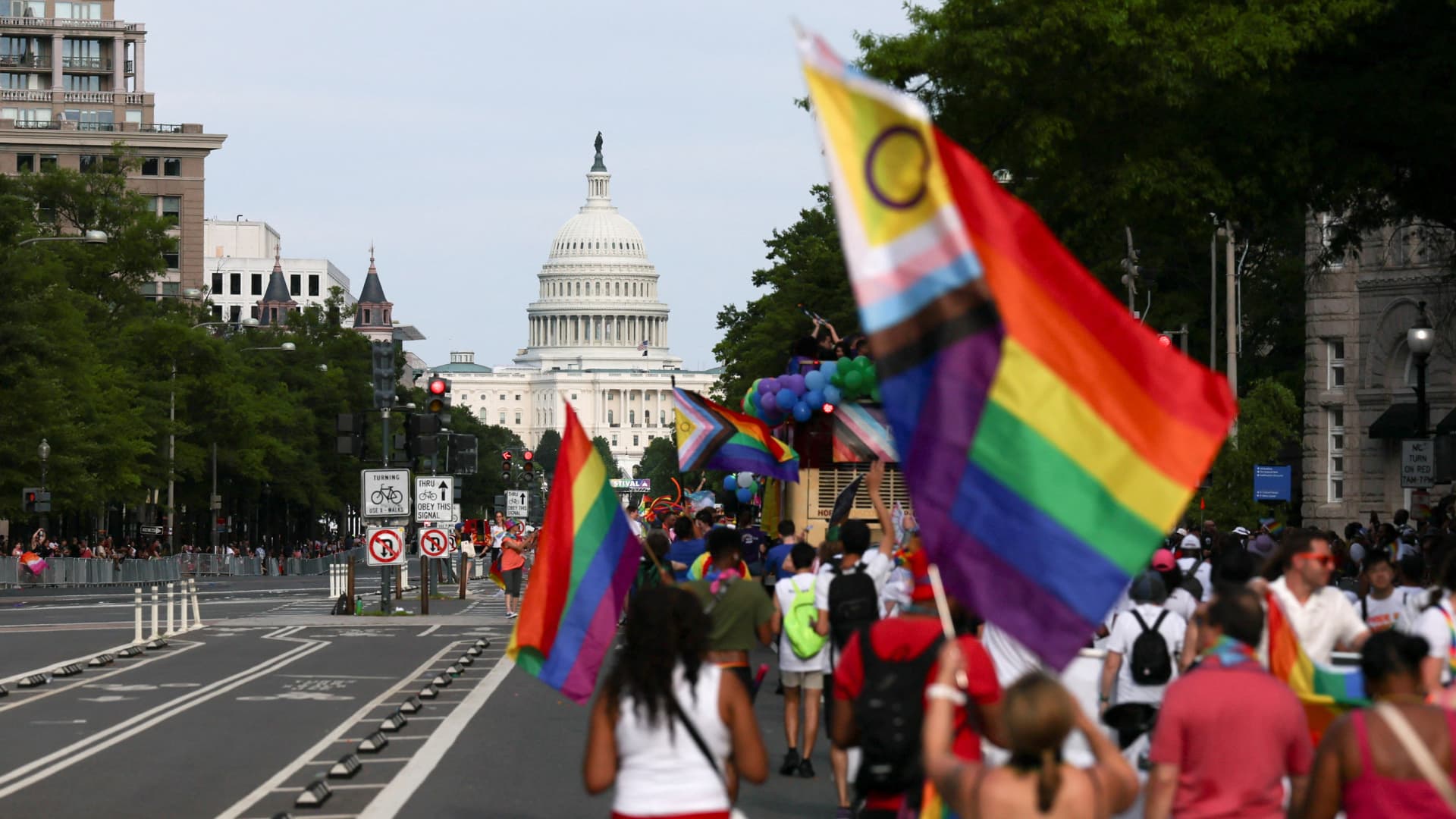
Corporate Sponsors Retreat from LGBTQ+ Pride Support
Corporations that once stood firmly behind LGBTQ+ Pride celebrations are now stepping back, leaving organizers to face new challenges in funding and planning.
Evolving Financial Landscape
This year has seen numerous Pride festivals across the nation grappling with sponsorship difficulties, leading to shifts in their programming and funding strategies. Traditionally consistent corporate partners are reconsidering or postponing their involvement, partly due to economic reasons, yet some suggest an inhospitable climate toward diversity initiatives is influencing these changes.
San Francisco Pride executive Suzanne Ford highlighted these shifts in a conversation with CNBC, pointing out how the political environment has evolved into a more challenging landscape.
Sponsorship Gaps
Pride organizations frequently secure annual agreements with corporations, which leaves them exposed if funding is suddenly withheld. Seattle and New York City Pride events are now addressing financial shortfalls reaching hundreds of thousands of dollars.
Some festivals chose to protect potential future relationships by not disclosing which sponsors have withdrawn, while others openly shared the names of companies pulling back.
Comcast, for instance, has shifted support to other Pride events within California, while Smirnoff, a Diageo brand, remains engaged with Pride events nationwide. Conversely, Nissan is reevaluating its spending, and Anheuser-Busch has yet to comment on their involvement.
Capital Pride Alliance, hosting the WorldPride event, noted the absence of prior backers such as Comcast and Deloitte, who have pulled out amid uncertainty.
Corporate Reevaluations in a Shifting Climate
Economic turbulence, safety considerations, and concerns over potential loss of federal funding are deterring many companies. There's a growing sense of disillusionment as businesses recalibrate their support amid governmental pressures opposing DEI efforts.
Though some companies are still pledging their allegiance, their financial contributions have been significantly scaled back. For instance, Denver Pride reports a 62% decrease in expected donations from returning partners.
Pride organizations are also revising their affiliations with firms that appear to be retracting previous commitments to diversity and inclusion. This scrutiny adds complexity to their already strained relations.
Reassessing Corporate Collaborations
Pride events, like Seattle Pride, are carefully considering whether to reengage with past sponsors whose recent actions don't align with group values. For example, Boeing's reported dissolution of its DEI team highlights ongoing concerns.
Even established partnerships, like that of Twin Cities Pride and Target, have been reassessed and sometimes declined, indicating a shift towards principled stances over financial necessity.
Expanding Funding Horizons
In response to these financial uncertainties, many LGBTQ+ organizations are looking to diversify their funding sources, turning increasingly to community contributions and local government support.
Community-led funding efforts have proven successful, with several organizations reporting substantial gains from grassroots campaigns. For instance, Twin Cities Pride successfully raised a significant amount through crowdfunding to counterbalance cuts from corporate sponsors.
There's a collective movement towards minimizing corporate dependency by enhancing community relations and increasing awareness of the continuous work these organizations do beyond Pride festivities.
While Pride organizations acknowledge the critical role of corporate sponsors, they emphasize that inclusion and accessibility for the community remain their top priorities.
Leave a Reply